
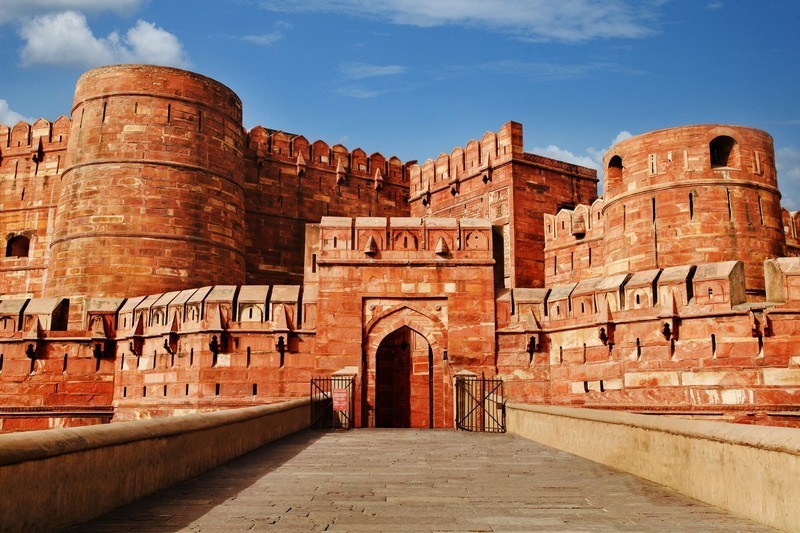
- Ancestry and Identity: Alauddin Hasan Bahman Shah, originally known as Zafar Khan, was an Afghan or Turkish commander serving under the Delhi Sultanate. Medieval chronicler Ferishta states he was originally an employee of a Brahmin astrologer named Gangu, which allegedly led to his adoption of the title “Bahman Shah.” Modern historians discount this as a myth, showing that he claimed descent from the legendary Persian hero Bahman, son of Isfandiyar.
- Revolt Against Delhi: He established the Bahmani Kingdom in 1347 CE by leading a successful rebellion of the Amiran-i-Sadah (Centurions / elite revenue and military officers) against the oppressive and centralizing administrative policies of Sultan Muhammad bin Tughlaq of the Delhi Sultanate.
- Coronation: Following the short-lived rebellion led by Ismail Mukh (who voluntarily abdicated in favor of Zafar Khan), Zafar Khan ascended the throne at Daulatabad under the title Sultan Alauddin Hasan Bahman Shah al-Wali.
Capital Selection and Strategic Consolidation
- Establishment of Ahsanabad: Shortly after his coronation, Bahman Shah shifted the political headquarters from Daulatabad to Gulbarga, renaming the city Ahsanabad, which served as the capital of the kingdom until 1425 CE.
- Territorial Expansion: He spent his eleven-year reign launching relentless military expeditions to secure the borders of the young kingdom. He successfully annexed strategic outposts including Goa, Dabhol, Mandu, Bhongir, and parts of the Konkan coast, expanding the sultanate from the Wainganga River in the north to the Krishna River in the south.
Administrative Framework of Alauddin Hasan Bahman Shah
The Taraf System
- Provincial Division: To ensure structured governance over a sprawling territory, Bahman Shah divided the kingdom into four administrative provinces known as Tarafs.
- Provincial Capitals: The four original Tarafs were established around key military and economic strongholds: Gulbarga, Daulatabad, Berar, and Bidar.
- Governance by Tarafdars: Each Taraf was governed by an administrative head called a Tarafdar or Amir. These governors possessed autonomous powers to collect revenue, maintain local standing armies, and make civil appointments, a system that later led to structural instability when central power waned.
Key Administrative Positions under the Founder
| Designation | Administrative Role and Functions |
| Vakil-us-Sultanat | The Prime Minister or Chief Lieutenant of the Kingdom; coordinated overall administration. |
| Wazir-i-Kull | Supervisor of all other ministers; held judicial and supervisory oversight. |
| Amir-i-Jumla | Minister of Finance; managed imperial accounts, revenue collection, and the treasury. |
| Wazir-i-Asraf | Minister of Foreign Affairs and Royal Court Ceremonies. |
| Kotwal | Chief of Police and custodian of law and order in the imperial capital. |
Geopolitical Conflicts and Economic Foundations
The Raichur Doab Dispute
- The Resource Flashpoint: The reign of Bahman Shah initiated a multi-century geopolitical rivalry between the Bahmani Kingdom and the contemporary Vijayanagara Empire (founded in 1336 CE by Harihara I and Bukka Raya I).
- The Economic Catalyst: The conflict primarily focused on the control of the Raichur Doab, a highly fertile tract of land situated between the Krishna and Tungabhadra rivers. This region was vital for controlling agricultural wealth and key trade routes leading to the Arabian Sea ports.
- Krishna-Godavari Delta Conflict: Concurrently, Bahman Shah launched campaigns against the Hindu rulers of Warangal (the Musunuri Nayaks) and the Reddis of Kondavidu to establish control over the prosperous diamond mines and textile production hubs of the eastern delta.
Maritime Trade and Revenue Models
- Port Management: Bahman Shah prioritized the conquest of western coastal ports like Chaul and Dabhol to directly tap into international oceanic trade lanes.
- The Arabian Trade Nexus: These ports allowed the Bahmani Kingdom to import warhorses from Arabia and Persia, giving them a distinct military advantage over regional rivals. It also facilitated the influx of foreign Muslim scholars, soldiers, and administrators, collectively called the Afaqis or Gharibs.
- Taxation System: The primary state revenue depended on the Khiraj (land tax collected from agricultural fields), Jizya (tax on non-Muslim subjects), and duties levied on commercial goods passing through maritime ports and internal toll check-posts.
Socio-Cultural Legacy and Structural Fractures
Indo-Persian Architecture and Patronage
- The Gulbarga Fort: Bahman Shah commissioned the fortification of Gulbarga, introducing military architecture that blended local Deccani stonecrafting with imported Persian styles.
- The Jami Masjid of Gulbarga: Though completed after his death by his successor Muhammad Shah I, the foundational plan of this mosque—unique because it lacks an open courtyard and is fully covered by a massive central dome and smaller cupolas—was conceived during his consolidation phase.
- Religious Demographics: Bahman Shah adopted a pragmatic policy toward the majority Hindu population, refraining from aggressive religious conversions to avoid internal rebellions during the critical phase of state foundation. He initiated the practice of inducting local Hindu chiefs into the lower rungs of land administration.
The Seeds of Dynastic Fractures
- The Deccani vs. Afaqi Chasm: The composition of Bahman Shah’s court laid the foundation for a permanent socio-political rift. The native Deccani Muslims resented the growing influence, high administrative ranks, and royal favors granted to the foreign Afaqis (immigrants from Iran, Iraq, and Central Asia).
- Evolution into Deccan Sultanates: This internal factionalism reached a crisis point over the subsequent two centuries. Following the execution of Prime Minister Mahmud Gawan in 1481 CE, the central authority collapsed entirely, causing the five separate regional entities of the Deccan Sultanates to break away by 1527 CE.
| Sultanate Branch | Dynasty | Year of Secession | Key Territorial Base |
| Bijapur | Adil Shahi | 1489 CE | Karnataka / Western Deccan |
| Ahmadnagar | Nizam Shahi | 1490 CE | Western Maharashtra |
| Berar | Imad Shahi | 1490 CE | Northern Maharashtra |
| Bidar | Barid Shahi | 1492 CE | Central Deccan (Later Bahmani Capital) |
| Golconda | Qutb Shahi | 1518 CE | Telangana / Eastern Deccan |