
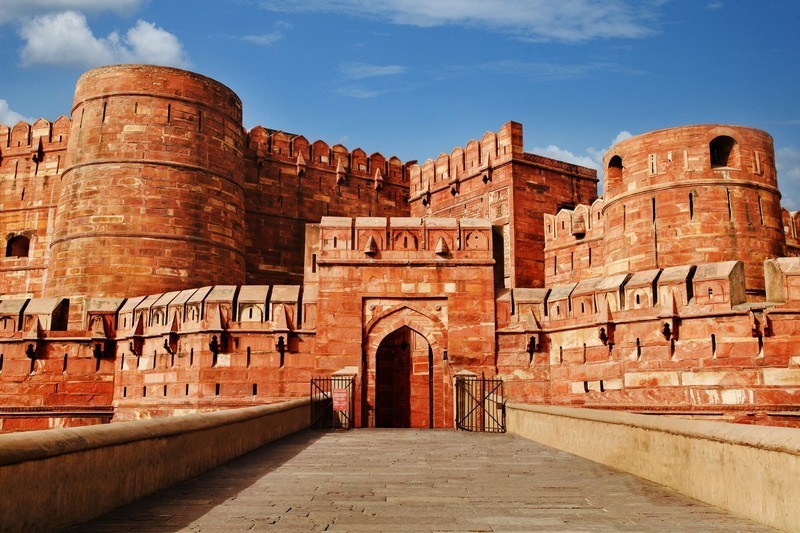
Following the decline of the Umayyad and Abbasid Caliphates’ direct control over Sindh after the initial 712 CE conquest by Muhammad bin Qasim, the region evolved into a highly complex geopolitical zone. In medieval Indian history, Sindh’s dynamics were managed across three distinct regional fronts:
- The Western Frontier (The Iranian-Afghan Highlands Interface): Encompassing the Makran coast, the Bolan Pass, and the rugged borders of Baluchistan. This zone functioned as the primary gateway for central Asian trade, nomadic migrations, and military incursions from successive Islamic empires such as the Ghaznavids, Ghorids, and Arghuns.
- The Eastern Plain (The Rajputana Desert Interface): Bordering the Thar Desert, the semi-arid tracts of Marwar (Jodhpur), Jaisalmer, and the Bhati Rajput principalities. This frontier witnessed constant shifting of border outposts, territorial skirmishes, and inter-dynastic marriages with Rajput clans.
- The Southern Maritime Delta (The Arabian Sea-Gujarat Coastline): Comprising the fertile Indus River delta, the salt flats of the Rann of Kutch, and major ports like Debal and Lahori Bandar. This zone was the maritime engine of Sindh, facilitating trade networks with the Persian Gulf, East Africa, and the Gujarat Sultanate.
Topographical Factors in Statecraft and Warfare
The geography of Sindh was dictated by the shifting courses of the Indus River. Agriculture and human settlement depended on the Kacha (riverine floodplains), while the surrounding desert and deltaic marshes provided natural defensive barriers. Military strategy relied heavily on flat-terrain cavalry maneuvers in the north and amphibious riverine warfare using specialized boat fleets (Ghrabs) in the southern delta.
Key Dynasties, Sovereigns, and Sovereignty Shifts
The Soomra Dynasty
Following the fragmentation of Abbasid authority in the 11th century, the indigenous Soomra Rajput clan, who had embraced Ismaili Shia Islam, established independent rule over Sindh. Making Mansura and later Muhammad Tur their capitals, the Soomras successfully defended Sindh against early Ghaznavid raids. They integrated local socio-religious customs and oversaw a renaissance of early Sindhi vernacular literature, particularly the epic romance of Umar Marvi.
The Samma Dynasty and the Jam Title
In 1351 CE, the Samma dynasty, a Rajput clan that later converted to Sunni Islam, overthrew the Soomras. The Samma rulers assumed the unique hereditary title of Jam. Under prominent sovereigns like Jam Sanjar and Jam Nizamuddin II (Jam Nindo), the Samma kingdom achieved its cultural and economic peak. They shifted the capital to Thatta, converting it into a global commercial hub, and successfully checked the expansionist attempts of the Delhi Sultanate under the Tughlaqs.
The Arghun and Tarkhan Annexations
In the early 16th century, the Samma dynasty collapsed under pressure from the Arghuns, a dynasty of Mongol-Turkic extraction driven out of Kandahar by Babur. Shah Beg Arghun captured Thatta in 1520 CE. The Arghuns were subsequently succeeded by the Tarkhan dynasty. This era was marked by brutal multi-front wars, the sack of Thatta by Portuguese mercenaries in 1555 CE, and the eventual assimilation of Sindh into the Mughal Empire under Akbar in 1591–1592 CE through the military campaigns of Khan-i-Khanan Abdur Rahim Khan.
| Dynasty / Ruling House | Historical Period | Primary Capital | Definitive Sovereign | Key Frontier Confrontation / Geopolitical Impact |
|---|---|---|---|---|
| Soomra Dynasty | c. 1026 – 1351 CE | Mansura / Muhammad Tur | Jam Umar Soomra | Resisted Ghaznavid incursions; consolidated indigenous Ismaili control over the delta. |
| Samma Dynasty | c. 1351 – 1524 CE | Thatta / Samui | Jam Nizamuddin II (Jam Nindo) | Defeated the Tughlaq forces of Delhi; fostered maritime trade with Gujarat and the Gulf. |
| Arghun Dynasty | c. 1524 – 1554 CE | Sukkur / Bukkur | Shah Beg Arghun | Displaced from Kandahar; introduced central Asian military technology to the Indus valley. |
| Tarkhan Dynasty | c. 1554 – 1592 CE | Thatta | Mirza Jani Beg | Fractured by internal civil strife; capitulated to the Mughal forces of Emperor Akbar. |
Administrative Infrastructure and Resource Mobilization
The Arbabi and Wadero Feudal Land Grid
The administrative layout of medieval Sindh combined central Asian administrative structures with indigenous tribal systems. Land was categorized into Eradazi (state-managed agricultural tracts) and Jagirs (fiefs assigned to military commanders). At the local level, administration relied on indigenous intermediaries:
- The Waderos: Large hereditary landholders who managed agrarian output, resolved local civil disputes, and maintained law and order in the villages.
- The Arbab: Tribal chieftains responsible for organizing labor for canal clearing, acting as local judicial officers, and collecting land revenue for the central treasury.
The Central Bureaucratic Framework
The central government at Thatta operated through a structured council of ministers designed to manage revenue collection and frontier security:
- Wakil-i-Sultana: The Prime Minister and chief advisor to the Jam or Mirza, coordinating inter-provincial governance.
- Diwan-i-Ala: The head of fiscal administration, managing agricultural taxes and trading custom accounts.
- Mir-i-Bahr: The Lord of the Admiralty, a critical office responsible for building, maintaining, and deploying the state’s riverine naval fleets and regulating the port of Lahori Bandar.
Fiscal Management and Hydraulic Economics
The state’s financial sustainability relied on agricultural production along the Indus floodplains and maritime commerce:
- Batai System: Land revenue collected in kind, calculated by physically dividing the agricultural harvest between the cultivator and the state, ranging from one-third to one-fourth of the total yield.
- Charkhi Tax: A specialized irrigation tax levied on fields watered via Persian wheels (Charkhas) installed along canals and Indus tributaries.
- Mahsul: Customs duties and transit tolls levied on international merchant caravans crossing the western passes and foreign ships docking at the deltaic ports.
Socio-Religious Governance and Cultural Landmarks
The Rise of Sufism and the Makli Necropolis
The post-Arab medieval phase in Sindh witnessed a major religious shift from Ismaili Shia dominance to Sunni Islam, largely driven by the arrival of Sufi saints from the Suhrawardiyya and Qadiriyya orders. The Samma rulers actively patronized these mystics, establishing Thatta as a center of Islamic scholarship. This period saw the growth of the Makli Necropolis near Thatta. Covering an area of approximately 10 square kilometers, this site contains thousands of intricately carved sandstone tombs, mausoleums, and canopy monuments, showcasing a unique fusion of Hindu-Rajput architectural motifs with Islamic geometric tilework.
The Syncretic Cult of Uderolal / Jhulelal
The multi-front commercial interactions of Sindh fostered a unique socio-religious synthesis, exemplified by the dual veneration of Jhulelal / Uderolal. Revered by Sindhi Hindus as an incarnation of the river deity Varuna and by Sindhi Muslims as the saint Khwaja Khizr (Zinda Pir), this deity symbolized the sacred nature of the Indus River. The cult served as a socio-religious bridge, maintaining communal harmony between the ruling Muslim elite and the influential Hindu mercantile community (Lohanas) during periods of frontier instability.
High-Yield Facts for UPSC Prelims
The Title of Jam
The title Jam used by the Samma dynasty is a linguistic blend reflecting their dual heritage. It links to the ancient Persian mythological king Jamshid, satisfying Islamic court protocols, while maintaining roots in the local Sanskritized dialects of the western Indus and Kutch frontiers, denoting a tribal patriarch or leader.
The Portuguese Sack of Thatta (1555 CE)
During a civil war between rival Tarkhan claimants, Mirza Isa Khan Tarkhan requested military assistance from the Portuguese governor at Goa. A fleet commanded by Pedro Barreto Rolim arrived at Thatta. Finding the dispute already settled, the Portuguese forces sacked the defenseless city, slaughtered thousands of citizens, and looted its rich textile warehouses, marking a violent European entry into the medieval Sindhi frontier.
The Chachnama Historiography
While originally composed in Arabic during the early 8th century, the Chachnama was translated into Persian by Ali Kufi in 1216 CE under the patronage of the Nasiruddin Qabacha administration in Sindh. This text remains the primary literary source for reconstructing the transition from the pre-Islamic Rai and Chach dynasties to the medieval Islamic polities of the region.
The Lahori Bandar Trade Hub
Situated on the western mouth of the Indus delta, Lahori Bandar succeeded Debal as Sindh’s premier international seaport during the Samma-Tarkhan eras. It was globally renowned for exporting Sindon (premium fine muslin cotton cloth), indigo, and leather goods to the wider Indian Ocean maritime network.
The Battle of Bhambore
Fought during the transition from the Soomras to the Sammas, this engagement established the Samma dynasty’s control over the southern delta. It effectively cut off the Delhi Sultanate’s access to the Arabian Sea coast through Sindh for over a generation.
Last Modified: June 22, 2026