
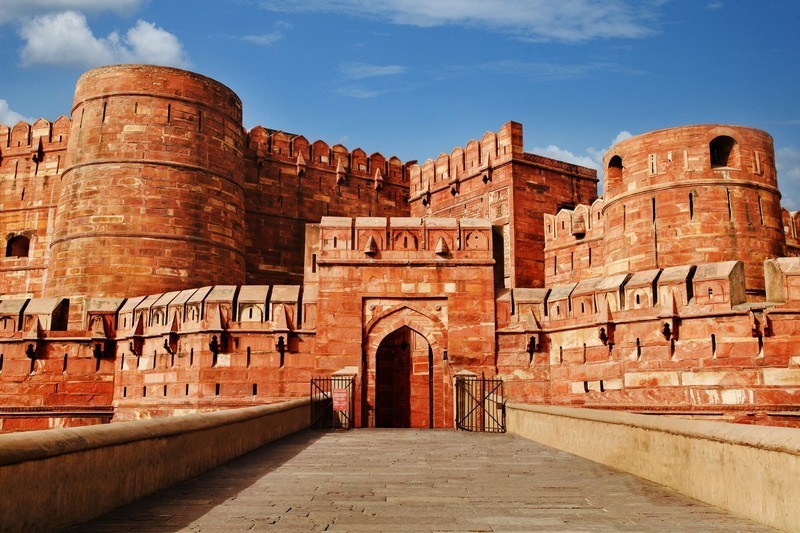
Persianate political culture refers to a synthesis of Sassanian administrative traditions, Islamic theological frameworks, and Turco-Mongol military customs. Under the Ghurid Empire (1148–1215 CE), this culture became the primary instrument for legitimizing power in the Indian subcontinent. The Ghurids, though ethnically Ghori-Tajik, adopted the Persian language, court etiquette, and bureaucratic systems, which they subsequently transplanted into the Delhi Sultanate.
Pillars of Persianate Governance
The implementation of this culture in India was defined by several structural elements that transformed the nature of kingship and administration.
The Concept of Kingship
The Ghurids and early Delhi Sultans abandoned the decentralized, feudal model of the Rajput states in favor of an absolute monarchy rooted in Persian political theory.
- The ruler was framed as the Shadow of God on Earth (Zill-i-Ilahi), emphasizing the divine sanction of his authority.
- Political legitimacy was derived from the Caliphate, with coins and the Khutba (sermon) often citing the Abbasid Caliph to provide a universal Islamic mandate.
- The court operated on strict protocols of Adab (refined conduct), distancing the ruler from the common populace and local nobility.
Bureaucratic and Administrative Framework
The Persianate model introduced a centralized civil service that operated alongside the military apparatus.
- The Diwan-i-Wizarat (Finance Department) managed the Iqta system, ensuring that revenue extraction was systematic and mapped.
- Munshis (secretaries) and Dabirs (bureaucrats) became essential fixtures in the administration, ensuring that state communication followed standardized Persian templates.
- Persian became the lingua franca of administration, judiciary, and high culture, effectively creating a barrier to entry for those not trained in the dabiri (secretarial) arts.
The Iqta System: Integrating Military and Civil Rule
The Iqta was the central administrative innovation imported by the Ghurids. Unlike the hereditary land grants of the preceding period, the Iqta functioned as a temporary assignment of revenue collection.
- The Muqti or Wali (holder of the Iqta) did not own the land; they were authorized to collect land tax to maintain troops and provide a surplus to the central treasury.
- This system prevented the rise of permanent, localized hereditary land-holding classes, allowing the Sultan to maintain central control by transferring officials across different regions.
Turkish Military Success and Persianate Influence
The success of the Turkish military in India was facilitated by the professionalization of the Mamluk (slave-soldier) corps through a Persianate lens.
Strategic Advantages of the Persianate Military Model
- Centralized Logistics: The Persianate administrative machine ensured that military campaigns were backed by reliable tax revenue, allowing for longer deployments.
- Meritocratic Hierarchy: The Bandagan (slaves) system encouraged social mobility based on military capability, a direct contrast to the caste-based armies of the time.
- Urbanization as Strategy: The Turks favored the consolidation of urban centers (Qasbahs). These towns acted as administrative hubs and military outposts, extending the reach of the Persianate culture into the hinterlands.
Key Aspects of Indo-Persian Synthesis
| Feature | Traditional Indian Model | Persianate Turkish Model |
| Sovereignty | Decentralized, feudal loyalties | Centralized, absolute monarchy |
| Land Management | Hereditary land grants (Samanta) | Transferable Iqta system |
| Language of Record | Sanskrit/Regional scripts | Persian (Farsi) |
| Military Base | Militia-based, caste-dependent | Professional, slave-soldier corps |
Literary and Architectural Patronage
Persianate culture prioritized the patronage of scholars, poets, and architects to solidify the Sultan’s status as a civilized ruler.
- Historical Chronicles: Works like the Tabaqat-i-Nasiri by Minhaj-i-Siraj provided the ideological framework for the Ghurid expansion, depicting the conquest as a divinely ordained triumph.
- Architecture: The transition from temple architecture to the Arcuate style (use of arches and domes) signaled the arrival of a new aesthetic. The Qutb Minar complex is the definitive example of incorporating Persian geometric precision with local craftsmanship.
- Sufi Interaction: The patronage of the Chisti and Suhrawardi orders by the Sultans served to win legitimacy among the urban and rural populace, blending Persianate Sufism with Indian mystical traditions.
Notable Contributions to Indian Administration
- The Wazir emerged as the most powerful official after the Sultan, overseeing the entire fiscal machinery of the state.
- The Barid-i-Mumalik (head of the intelligence department) maintained a network of spies across the empire, a practice derived from the Sassanian administrative manuals.
- The Mushrif-i-Mumalik (accountant general) and Mustawfi-i-Mumalik (auditor general) established strict fiscal audits, a hallmark of the sophisticated Persianate financial tradition.