
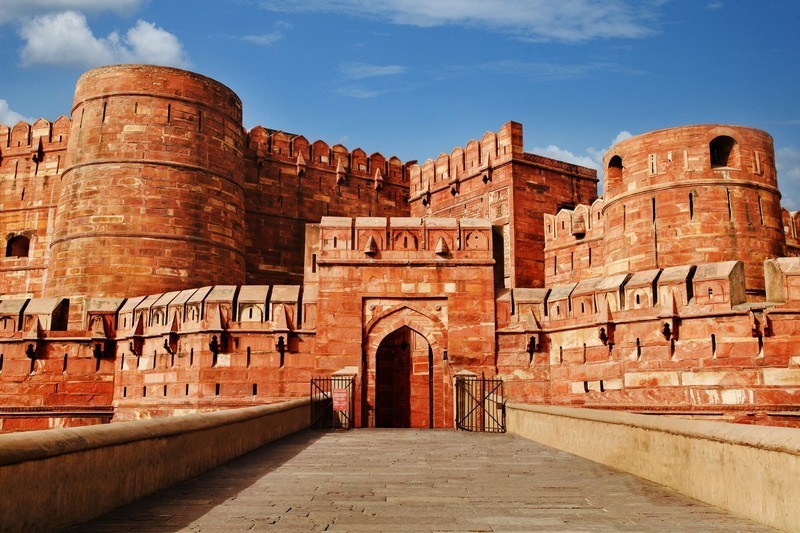
The Chishti Order (Silsila) was founded originally at Chisht, a small town near Herat in western Afghanistan, by Khwaja Abu Ishaq Shami (d. 940 CE). However, its systematic institutionalization and geometric expansion within the Indian subcontinent were pioneered by Khwaja Moinuddin Chishti (popularly revered as Gharib Nawaz or Benefactor of the Poor), who migrated to India in 1192 CE during the geopolitical transition marked by the Ghurid conquests. Settling permanently in Ajmer, Rajasthan, he established a decentralized mystical lineage that shaped the socio-religious fabric of the Delhi Sultanate and the subsequent Mughal Empire.
The Philosophy of Wahdat-ul-Wajood (Unity of Being)
The metaphysical core of the Chishti order is anchored in the doctrine of Wahdat-ul-Wajood, formulated by the Andalusian mystic Ibn al-Arabi. This paradigm posits that the Creator and the creation are fundamentally non-dual; the physical universe is a mirror manifestation of the singular Divine Reality. This pantheistic approach shared direct epistemological parallels with the Advaita Vedanta of Adi Shankara, facilitating an organic intellectual dialogue with indigenous Hindu ascetic traditions.
Doctrine of Renunciation and Separation from State Politics
A defining operational characteristic of the early Chishti masters was their adherence to Faqa (voluntary poverty) and Tark-i-Duniya (renunciation of worldly material pursuits). Unlike the contemporary Suhrawardi order, the Chishtis maintained a strict policy of absolute detachment from imperial courts and state administration:
- They completely rejected state-sponsored land endowments (Inam or Madad-i-Maash).
- They refused to accept administrative titles or judiciary portfolios such as Sheikh-ul-Islam.
- The Khanqah (hospice) portals were kept closed to ruling monarchs, asserting that royal wealth corrupted mystical purity.
The Unbroken Chain: Chronology of Prominent Chishti Preceptors
The institutionalization of the Chishti Silsila occurred through an authoritative succession line known as the Shajra, which systematically mapped the mystical geography of Northern and Central India.
| Sufi Master (Sheikh) | Active Period / Death Year | Primary Headquarters | Textual Canon / Hagiographical Archive | Key Historical Fact / Trivia |
| Khwaja Moinuddin Chishti | 1143–1236 CE | Ajmer, Rajasthan | Anis al-Arwah (Discourses compiled by his disciple) | Established the Indian base; his shrine (Dargah) received extensive structural patronage from Akbar. |
| Qutbuddin Bakhtiyar Kaki | 1173–1235 CE | Mehrauli, Delhi | Dalil al-Arifin | Direct disciple of Moinuddin; the architectural landmark Qutb Minar was named to honor his memory by Iltutmish. |
| Fariduddin Ganjshakar (Baba Farid) | 1179–1266 CE | Pakpattan (Ajodhan), Punjab | Fawa’id al-Salikin | Pioneer of Punjabi mystical poetry; focused on manual labor and rural agrarian integration. |
| Nizamuddin Auliya | 1238–1325 CE | Ghiyaspur, Delhi | Fawa’id al-Fu’ad (Recorded by Amir Hasan Sijzi) | Known as Mahbub-i-Ilahi (Beloved of God); witnessed the rise and fall of seven Delhi Sultans but visited none. |
| Nasiruddin Chirag-i-Dehlvi | 1274–1356 CE | Delhi | Khair al-Majalis (Compiled by Hamid Qalandar) | Reconciled ecstatic Chishti meditative practices (Sama) with orthodox Islamic scriptural legalism (Sharia). |
| Syed Muhammad Gesudaraz | 1321–1422 CE | Gulbarga, Deccan | Jawami al-Kalam | Known as Banda Nawaz (Benefactor of God’s Creatures); expanded the Chishti footprint into the Bahmani Kingdom. |
Socio-Cultural Syncretism and Interaction with the Bhakti Movement
The Chishti Khanqahs functioned as egalitarian, democratic spaces that actively bridged rigid medieval caste and community divisions.
The Khanqah-Matha Interface and Yogic Adaptations
The open design of Chishti communal kitchens (Langar) required all visitors—irrespective of birth, gender, or social stratification—to sit in identical rows (Pangat) on the floor to eat. This broke down traditional Brahminical laws regarding ritual pollution. Chishti masters engaged in continuous intellectual exchanges with Nath Panthi Yogis and Sidhas. This dialogue led to the structural translation of the Sanskrit Hatha-Yoga text Amritakunda into Persian and Arabic under the title Hauz-al-Hayat (The Pool of Life). Consequently, Chishti ascetics adopted advanced physical techniques, including Habas-i-Dam (regulated pranayama breath control) and Chilla-i-Ma’kusa (forty days of continuous inverse meditation suspended upside down in a well).
Epistemological Integration with the Sikh Canon
The deep spiritual harmony between the early Chishti framework and the emerging Nirguna Bhakti wave is verified by the composition layout of the Guru Granth Sahib (compiled by Guru Arjan Dev in 1604 CE). The text incorporates 112 Slokas (couplets) and 4 Shabads (hymns) authored by the Chishti master Baba Farid. This represents the earliest surviving written record of medieval Punjabi literature.
Literary Revolution: Vernacular Dialects and Allegorical Masterpieces
The Chishti order systematically bypassed elite court languages like classical Persian and Arabic, adopting local dialects to interface directly with common trading and agrarian populations.
Genesis of Hindavi, Dakhni, and regional Poetics
- Hindavi Expansion: Early Delhi Chishtis combined Persian vocabulary with localized Khari Boli, Awadhi, and Braj Bhasha grammar to develop Hindavi (the structural ancestor of modern Hindi and Urdu) as a viable medium for spiritual instruction.
- Dakhni Proliferation: Following the Tughlaq-driven population shifts to the south, Gesudaraz used a regional blend of Arabic-Persian scripts with local Deccani syntaxes called Dakhni, producing pioneering literary prose tracts like Mi’raj al-Ashiqin (Lover’s Ascent).
The Premakhyan Poetic Genre
Chishti scholars in Northern India popularized Premakhyans—allegorical romantic epics composed in Awadhi verse that utilized local Rajput folklore to illustrate complex Sufi concepts.
- Padmavat (1540 CE): Authored by Malik Muhammad Jayasi, a poet heavily influenced by Chishti thought, the text uses the historical siege of Chittor as a spiritual allegory where Alauddin Khilji represents worldly illusion (Maya) and Padmini represents the divine intellect (Aql).
- Other Essential Tracts: Key texts include Kutuban’s Mrigavati (1503 CE) and Manjhan’s Madhumalati (1545 CE), both which map the soul’s painful, multi-stage quest to merge with the Divine through the metaphor of human romantic longing (Ishq).
Influence on Performing Arts, Classical Music, and Architecture
The Chishti order viewed artistic performance not as an empty worldly distraction, but as a valid mechanism for spiritual elevation (Sama).
Institutionalization of Qawwali and Musical Ragas
Amir Khusrau, the premier disciple of Nizamuddin Auliya, blended Indo-Persian musical systems to establish Qawwali—a distinct genre of congregational devotional singing featuring rapid rhythmic shifts and repetitive mystical phrases designed to induce spiritual ecstasy (Wajd). Khusrau is credited with:
- Inventing or modifying key subcontinental instruments including the Sitar (by fusing the three-stringed Persian Sehtar with indigenous lutes) and the Tabla (by splitting the traditional Mridangam).
- Formulating new hybrid musical Ragas and Gharanas such as Yaman, Aiman, Gora, and Qaol, which embedded Persian poetic couplets within traditional Indian classical structures.
Architectural Evolution of the Dargah Complex
The architectural layout of Chishti shrines evolved under state patronage into complex civic monuments displaying unique Indo-Islamic structural features:
- Mazar (Tomb Chamber): Square or octagonal structures topped by bulbous domes, featuring central sarcophagi surrounded by marble screens.
- Jali Work: The extensive use of delicate, geometric marble lattice screens (Jali) at the Ajmer and Fatehpur Sikri shrines. These screens served a dual purpose, filtering intense solar glare while providing private, textured architectural alcoves for personal meditation.
- The Buland Darwaza: Built by Emperor Akbar at Fatehpur Sikri in 1575 CE to commemorate his military victories in Gujarat, this massive red sandstone gateway forms the formal southern entrance to the Friday Mosque and the tomb complex of the Chishti saint Sheikh Salim Chishti.
Technical, Technological, and Economic Intersections
The operational maintenance of large-scale Chishti Khanqahs required systematic interaction with contemporary material industries and technologies.
Urban Micro-Economies and Artisan Guild Networks
Chishti hospices operated on the structural principle of Futuh (unsolicited, anonymous charitable donations). In accordance with institutional mandates, all capital received daily had to be completely spent before sunset on community feeding and welfare. This constant distribution of wealth stimulated localized market nodes by funding artisan guilds, including oil-pressers, terracotta potters, tanners, and weavers. The expansion of the order coincided with the subcontinental diffusion of the treadle-powered spinning wheel (Charkha) and the cotton-carder’s bow (Kaman). Chishti poets frequently used the mechanical steps of cotton carding, yarn spinning, and loom weaving as spiritual metaphors for purifying the human heart.
Agrarian Expansion and Hydraulic Infrastructures
In the arid frontier zones of Sindh and the Punjab, Chishti networks received tracts of waste land grants from the state. They mobilized local pastoral communities to clear forests and establish settled farming communities. To secure agriculture in these newly cleared lands, Chishti settlements oversaw the installation of the Persian Wheel (Saqia)—a mechanical water-lifting device featuring a gear-driven chain of buckets powered by draught animals. This irrigation technology turned arid frontier zones into highly productive rice and wheat belts, generating the food surplus necessary to support growing pilgrim routes.
Information Storage: Scribing Systems and Paper Chemistry
The institutional necessity to duplicate, distribute, and preserve copies of Chishti Malfuzat (recorded table-talks/discourses) and Maktubat (epistolary letters) drove the growth of the manual paper-making industry. Scribes used standardized scripts like Nasta’liq and Shikasta to record texts on indigenous cotton-layered paper (Tulapat). To safeguard these manuscript collections against humidity, rot, and insects within monastic archives, scholars added Harital (yellow arsenic sulfide) to their inks. This chemical functioned as a permanent insecticide and anti-fungal shield, ensuring the long-term preservation of medieval texts.
Last Modified: June 22, 2026