
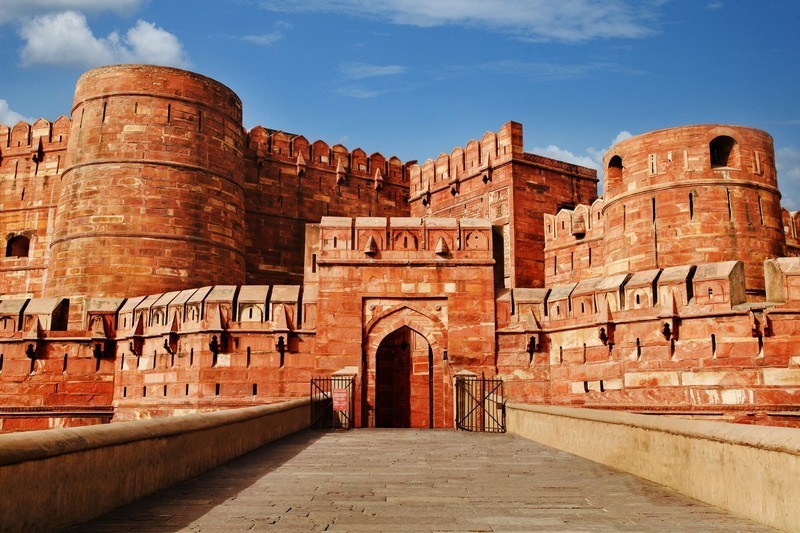
The term “Khalji Revolution” refers to the political and social transition that occurred in 1290 CE with the accession of Jalaluddin Firuz Khalji to the throne of the Delhi Sultanate. This event marked the end of the Ilbari (Slave) Dynasty and the commencement of the Khalji Dynasty, signaling a profound change in the composition of the ruling elite and the nature of the state in medieval India.
Socio-Political Context and the End of Ilbari Supremacy
The Ilbari Turks, who ruled from 1206 to 1290 CE, maintained a rigid monopoly over high administrative and military positions. Only those of “noble” Turkic lineage were considered eligible for the highest offices.
- By the late 13th century, the growing influence of the non-Turkic population and the dissatisfaction of lower-ranking military officers created a divide.
- The Khaljis, while of Turkic origin, had long settled in Afghanistan and had adopted Afghan customs, language, and culture. Due to this, the traditional Ilbari nobility in Delhi perceived them as foreigners or “non-Turks.”
- Jalaluddin Khalji’s rise effectively shattered the exclusive racial monopoly of the Ilbari Turks, paving the way for a more diverse and merit-based administrative structure.
Drivers of the Khalji Revolution
The revolution was not merely a change in dynastic rule but represented several key shifts in the Sultanate’s power dynamics:
- Broadening of the Power Base: The rise of the Khaljis signified that the state was no longer the exclusive preserve of a small, hereditary group of elite Turks.
- Meritocracy over Lineage: The new regime began to favor military ability and loyalty over ancestral claims to noble status.
- Shift in Capital Dynamics: Jalaluddin initially chose Kilokhri (a suburban development) as his capital rather than the traditional center of power at Delhi, symbolizing a departure from the established political order.
Key Features of the Post-Revolution Administration
The administrative transformation initiated during this period set the tone for the subsequent expansionist policies of the dynasty under Alauddin Khalji.
| Feature | Change Under Khalji Dynasty |
| Nobility | Inclusion of Indian Muslims and non-Turkish ethnic groups. |
| Military Focus | Greater emphasis on professionalism and mobility in cavalry. |
| State Legitimacy | Shift from purely religious/tribal legitimacy to a more centralized, autocratic model. |
| Administrative Scope | Increased centralization of tax collection and market regulation. |
Historical Significance and Analysis
The Khalji Revolution is considered a watershed moment in the historiography of the Delhi Sultanate by scholars such as M. Habib, who popularized the term.
- Impact on the Nobility: The revolution forced the existing elite to adapt to a more inclusive administration, reducing the xenophobic tendencies of the previous ruling class.
- State Secularism and Pragmatism: While the rulers were Muslims, the Khalji administration displayed high levels of political pragmatism. Decisions were increasingly based on state necessity rather than the rigid mandates of the orthodox Ulema.
- Military Expansionism: The transition allowed for a more aggressive foreign policy. Freed from the constraints of the old nobility, the state was able to mobilize resources for the rapid conquest of the Deccan and the defense against the Mongol threat.
Trivia and Key Facts for Prelims
- The Khaljis belonged to the Khalaj tribe, which had migrated from Central Asia to Afghanistan long before their arrival in India.
- The term “Khalji Revolution” was explicitly coined by historian Mohammad Habib to emphasize that this was a social shift, not just a palace coup.
- Jalaluddin Khalji, the architect of this revolution, was 70 years old at the time of his accession, making him the oldest Sultan to ascend the throne of Delhi.
- The transition from the Ilbari to the Khalji dynasty is the first major instance of a non-hereditary, merit-driven regime change in the history of the Delhi Sultanate.
- The policy of “conciliation” adopted by Jalaluddin in the early years of the revolution—aimed at pacifying the disgruntled Turkish nobles—often resulted in him being criticized as a “weak” ruler by his contemporaries.