
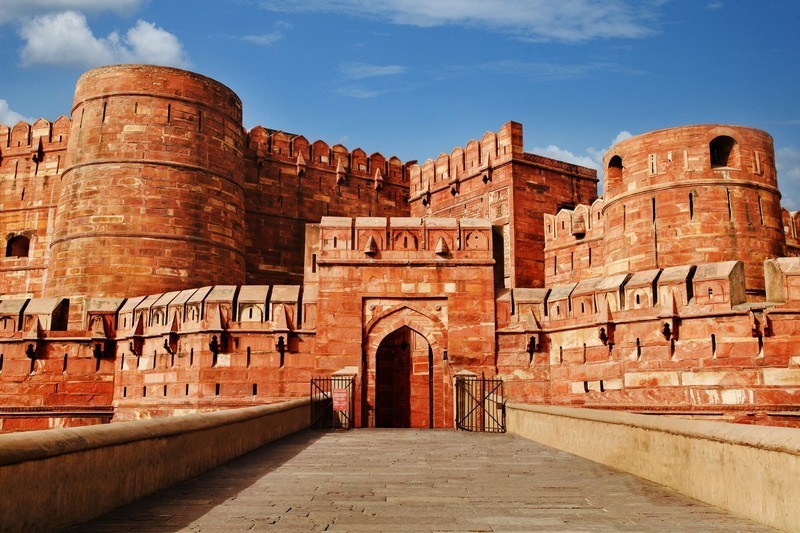
The Nayankara System was the defining political, military, and land-tenure innovation of the Vijayanagara Empire (1336–1646 AD). Developed to sustain a highly militarized state against continuous Deccan conflicts, it reached structural maturity during the Tuluva Dynasty under Krishnadevaraya. The system was derived from the institutional elements of the Iqta system of the Delhi Sultanate and the Kakatiya military assignments. Under this framework, the Vijayanagara sovereign held absolute ultimate ownership over all territorial lands and delegated governance of vast tracts, known as Amaram, to military commanders designated as Nayakas (or Palegars).
Legal Rights and Obligations of the Nayakas
Military Obligations
In exchange for their assigned Amaram lands, the Nayakas were legally bound to maintain a fixed, standard quota of infantry, cavalry, and war elephants. These standing contingents were kept trained and equipped for immediate deployment whenever the central crown mobilized for military campaigns.
Fiscal Obligations
The Nayakas held absolute revenue collection rights over the peasantry and artisans within their designated territory. Out of the total land revenue collected, the Nayakas were legally mandated to split the revenue into three functional streams:
- Troop Maintenance: One portion was used to maintain their mandatory military contingent and upkeep local fortifications.
- Imperial Tribute: One portion was paid as a direct annual cash tribute to the royal central treasury (Attavanam) during prominent state festivals like Mahanavami.
- Personal Income: The remaining portion was kept by the Nayaka as personal income to maintain their localized administration and court.
Judicial and Civil Responsibilities
The Nayakas functioned as local administrative heads. They were responsible for maintaining law and order, administering primary justice based on customary laws, clearing forests for agrarian expansion, and constructing irrigation works like tanks and canals to optimize agricultural yields.
Institutional Differences with Other Systems
| Parameter of Comparison | Vijayanagara Nayankara System | Delhi Sultanate Iqta System | Mughal Mansabdari System |
| Primary Character | Dominantly military-feudal with deep roots in local land tenure. | Administrative and fiscal mechanism for revenue collection. | Bureaucratic, non-hereditary military grading system. |
| Heritability | Tended to become highly hereditary over time, especially during weak rulers. | Strictly non-hereditary; frequent transfers of Iqtadars. | Strictly non-hereditary; post-death confiscation of property (Zabt). |
| Territorial Link | Nayakas established deep local ties, patronizing regional temples and languages. | Holders (Muqtis) had no permanent organic ties to the assigned land. | Mansabdars were detached from the lands (Jagirs), which were frequently rotated. |
| Local Autonomy | High degree of judicial, police, and fiscal autonomy within the Amaram. | Limited autonomy; subject to strict audits by central Diwan officials. | High administrative control but bounded by imperial regulations. |
Central Control and Strategic Checkbalances
To prevent the Nayakas from morphing into independent regional rulers, the Vijayanagara central administration institutionalized specific political checkbalances:
- The Spy Network (Spasashas): The central crown deployed a massive network of secret agents to continuously monitor the activities, wealth accumulation, and political alliances of the Nayakas.
- Royal Representatives (Sthanas): The emperor stationed central bureaucrats inside the headquarters of powerful Nayakas to act as regular links between the provincial court and the central Secretariat.
- Frequent Transfers: During the peak of the empire under the Sangama and Tuluva dynasties, the central authority exercised the right to frequently transfer Nayakas across different Rajyas to break their local power bases.
- Compulsory Attendance at Court: Nayakas were legally required to permanently station a high-ranking representative (Vakil) at the imperial capital and personally attend the annual Navaratri festival to present gifts, validating their political subordination.
Historical Attestations by Foreign Chroniclers
Account of Domingos Paes (1520 AD)
The Portuguese traveler documented that Krishnadevaraya could mobilize over a million armed soldiers within days because of the efficient network of Nayakas. He noted that the Nayakas were fiercely disciplined under strong monarchs but held massive wealth inside their private provinces.
Account of Fernao Nuniz (1535 AD)
Nuniz provided a highly comprehensive fiscal and numerical breakdown of the Nayankara system during the reign of Achyuta Deva Raya. He recorded the exact revenue figures remitted by individual top Nayakas to the central treasury, detailing how the empire was structurally partitioned among approximately two hundred distinct military chiefs.
Role in the Decline and Post-Talikota Transition
The inherent structural flaw of the Nayankara system was its dependence on a powerful central monarch. Following the catastrophic defeat of the empire at the Battle of Talikota (1565 AD) and the subsequent destruction of the capital city Hampi, the central authority of the subsequent Aravidu Dynasty weakened. The Nayakas stopped transferring revenue tributes to the crown and converted their Amaram lands into independent kingdoms. This institutional fragmentation led to the rise of prominent autonomous states in the deep south, including the Nayakas of Madurai, the Nayakas of Tanjore, the Nayakas of Gingee, and the Keladi Nayakas of Ikkeri, which ultimately redefined the geopolitical landscape of post-medieval South India.
Nayankara System Fact-Sheet for UPSC Prelims
- Amaram: The specific revenue-yielding land territory assigned by the Vijayanagara monarch to a military commander.
- Amara-Nayaka: The formal designation given to the military commander holding an Amaram assignment.
- Attavanam: The central imperial revenue secretariat that monitored the revenue registers and tribute defaults of the Nayakas.
- Mooru Rayara Ganda: An imperial title assumed by rulers like Krishnadevaraya, meaning “King of Three Kings,” signifying his suzerainty over powerful regional Nayakas.
- Palegars (or Polygars): A localized term for smaller, armed chieftains under the Nayankara system who managed heavily fortified hills (Palayams) and maintained local insurgent armies.
- Kalyana Kanika: A marriage tax levied across the Amaram territories, which was centrally abolished by Krishnadevaraya to prevent local over-taxation by predatory Nayakas.
- Rajaniti Advice: In his Telugu treatise Amuktamalyada, Krishnadevaraya explicit warns future kings that allowing Nayakas to remain in a single province for too long encourages insubordination and local peasant oppression.