
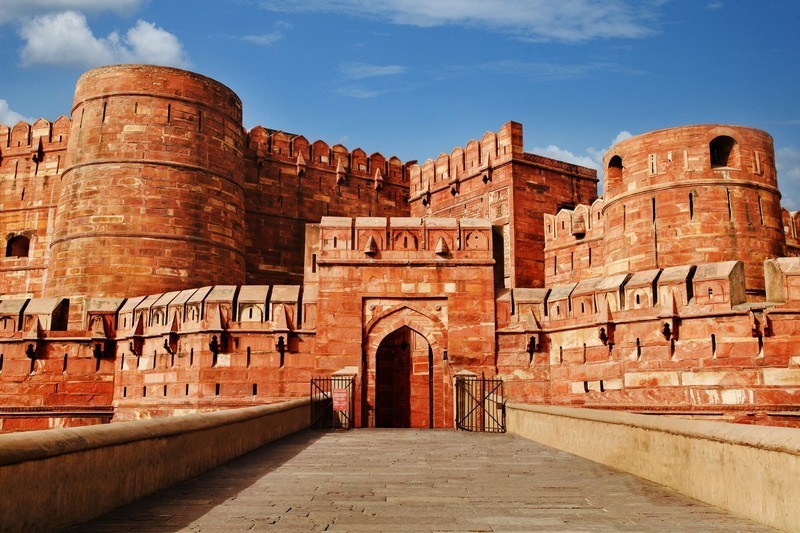
The Delhi Sultanate era witnessed a profound synthesis between Islamic administrative structures and indigenous Indian socio-economic traditions. While the political authority was held by the Turkic and Afghan elite, the day-to-day functioning of the state—particularly in revenue collection, agriculture, and commerce—relied heavily on the interaction between the Muslim ruling class and the Hindu population.
Impact on the Agrarian Economy
The agrarian base of the Sultanate remained predominantly Hindu in its social composition. The state’s economic policy necessitated the cooperation of traditional rural power holders to ensure the steady flow of revenue.
- Rural Intermediaries: The Sultanate utilized existing village headmen known as Khuts, Muqaddams, and Chaudharis for tax collection. These officials were predominantly Hindu and retained their local authority under the Sultanate’s broader administrative framework.
- Taxation Dynamics: The levying of Kharaj (land tax) and the collection of Jizya created a distinct economic relationship. Jizya, while categorized as a religious tax on non-Muslims, functioned economically as a protection tax, which legally exempted the Hindu population from military service.
- Agricultural Continuity: Despite political changes at the center, agricultural practices remained largely unchanged. The state’s demand for cash revenue compelled peasants to engage with market mechanisms, facilitating the integration of village produce into urban supply chains.
Military Composition and Social Dynamics
The military of the Sultanate was not a monolithic entity; it was a complex social structure that evolved to incorporate diverse groups, eventually necessitating interactions between Muslim commanders and Hindu soldiers.
- Military Recruitment: While the core of the central army (Hashm-i-Qalb) consisted of Turkic, Persian, and Afghan soldiers, the peripheral and provincial armies increasingly included local Hindu recruits.
- Military Technology and Exchange: The interaction between the Sultanate forces and local Rajput or regional warriors led to a cross-pollination of military tactics. The use of elephants, traditional to Indian warfare, was adopted by the Sultans, while the Turks introduced advanced cavalry techniques, the horseshoe, and improved stirrups to the Indian theater.
- Employment in the State: The state bureaucracy required a large number of accountants and scribes. Due to the high literacy in Sanskrit and local dialects, Hindus were frequently employed in the lower and middle tiers of the revenue department (Diwan-i-Wizarat), bridging the administrative gap between the Sultan and the peasantry.
Urbanization and Mercantile Exchange
Urban centers under the Sultanate became the primary sites of cultural and economic synthesis. The growth of these cities was fueled by a symbiotic relationship between Muslim state patrons and the indigenous merchant classes.
- Mercantile Networks: The Multani and Sah merchant communities, who were largely Hindu and Jain, were instrumental in the Sultanate economy. They acted as financiers to the nobility and facilitated long-distance trade, often functioning as bankers (Sarrafs) for the state.
- Karkhanas and Labor: In imperial workshops (Karkhanas), Muslim administrators oversaw a labor force that was overwhelmingly Hindu. This interaction fostered a unique artisanal culture, blending Perso-Islamic designs with traditional Indian craftsmanship, particularly in textiles, metalwork, and architecture.
- Social Mobility: The process of urbanization provided new opportunities for artisans and skilled laborers from diverse backgrounds to congregate in cities, weakening traditional caste-based occupational rigidities in urban settings compared to rural areas.
Religious and Social Interface
The interaction between Hinduism and Islam during the Sultanate period was defined by both political pragmatism and the emergence of syncretic movements.
- Administrative Pragmatism: The Sultans, despite their religious identity, often adopted a pragmatic approach toward their Hindu subjects to ensure stability. This included respecting local customs and granting land endowments to temples in some instances to ensure local cooperation.
- Sufi-Bhakti Interaction: The interaction between Sufi saints and the Bhakti movement saints provided a common ground for the masses. The Sufi emphasis on Ishq-e-Majazi (metaphorical love) and Wahdat-ul-Wajood (Unity of Being) resonated with the Bhakti traditions of monotheism and equality.
- Cultural Syncretism: This interaction manifested in the development of new musical styles (such as the fusion of Persian and Indian classical music), culinary traditions, and linguistic evolution, eventually leading to the emergence of Hindustani as a common language of communication.
Summary of Socio-Economic Interaction
| Interaction Domain | Key Hindu Role | Key Sultanate Role |
| Revenue Administration | Khuts/Muqaddams (Collection) | Wazir/Mustaufi (Supervision) |
| Trade and Finance | Multanis/Sahs (Capital/Banking) | Sultanate Protection/Regulation |
| Military | Local levies/Infantry | Turkic/Afghan Cavalry (Core) |
| Urban Production | Artisans/Craftsmen | State Patrons/Karkhana Oversight |
Key Trivia for Prelims
- The term Sah was commonly used to denote wealthy merchants and bankers during the Sultanate period.
- Ziauddin Barani, a prominent chronicler, frequently recorded the presence of Hindu administrative staff, often with a critical tone regarding their influence in the court.
- The Bhakti movement gained significant momentum during the Sultanate period, partly as a response to the cross-cultural contact between Islamic and Hindu theological frameworks.
- Despite the official stance of the Sultanate, many Sultans, including Muhammad bin Tughlaq, were known to hold discussions with Hindu Yogis, illustrating the intellectual exchange beyond the strictly political sphere.