
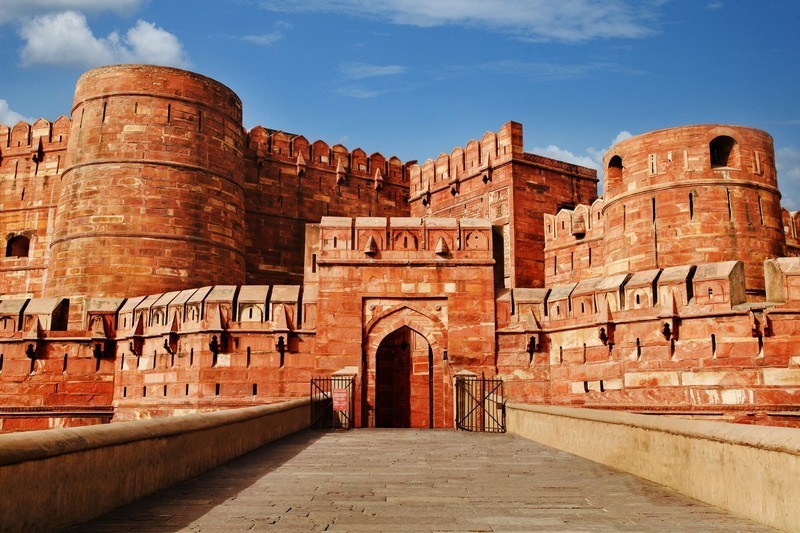
The Delhi Sultanate maintained an extensive network of forts and garrison towns to secure its borders, consolidate territorial control, and facilitate revenue collection. These fortifications were the physical manifestation of the Sultanate’s military power and administrative reach, serving as the logistical hubs for the cavalry and the centers for provincial administration.
Classification and Functions of Forts
Sultanate fortifications served dual purposes: offensive bases for expansion and defensive bastions against external threats, particularly Mongol incursions and local uprisings.
- Frontier Forts: Strategically located along the northwestern frontier, these forts served as the first line of defense against Mongol invasions. Notable examples include forts in the Multan, Dipalpur, and Samana regions, heavily fortified and garrisoned with veteran troops.
- Administrative/Provincial Forts: These forts served as the headquarters for provincial governors (Iqtadars). They ensured the stability of the surrounding region, acted as treasury repositories, and provided protection for the governor’s administrative staff.
- Strategic Interior Forts: Situated along major trade routes and fertile river valleys (like the Doab), these forts allowed for the quick movement of troops to suppress rebellions and monitor the movement of agricultural produce destined for the capital.
Garrison Organization
The garrison (Thana) was the operational unit of the Sultanate military infrastructure. The administration of these units was tightly controlled by the central government to prevent local commanders from acting independently.
- Thandar: The officer in charge of a garrison (Thana). They were responsible for maintaining the fort’s defenses, monitoring local security, and reporting on the regional stability to the capital.
- Troop Composition: Garrisons typically consisted of a mix of cavalry, infantry, and specialized units. The size of the garrison was determined by the strategic importance of the location and the potential for local unrest.
- Provisioning: Garrisons were supplied through the local revenue collected from the surrounding districts (Iqtas) or through direct supplies from the central government. In frontier areas, the state ensured that granaries were kept full to withstand potential sieges.
Administrative Controls and Oversight
To ensure that garrison commanders remained loyal and efficient, the Sultanate implemented strict monitoring procedures.
- Central Audits: The Ariz-i-Mumalik (Head of the Ministry of War) conducted periodic inspections of garrison troop strength and the state of fortifications.
- Financial Accountability: The revenue derived from the territories assigned to a garrison was subject to central audit, ensuring that resources were spent on military maintenance rather than personal accumulation.
- Rotation Policy: To prevent the development of local power bases, Sultans frequently rotated Thandars and Iqtadars between different fortresses.
Military Infrastructure and Siege Engineering
Sultanate forts were designed to withstand both prolonged sieges and rapid mobile attacks. The engineering of these structures underwent significant evolution throughout the 13th and 14th centuries.
- Fortification Features: Walls were often reinforced with high ramparts and broad moats. The use of double walls and specialized gateways became common in the Tughlaq period.
- Siege Engines: The garrisons were equipped with mechanical artillery, including Manjaniqs (catapults) and Maghribis (trebuchet-like engines), which were essential for both defending the fort and launching counter-offensives.
- Logistics: Each major fort maintained a dedicated storehouse for arms (Sila-khana) and provisions (Ambar-khana), ensuring self-sufficiency during isolated conflicts.
Socio-Economic Impact of Garrisons
The presence of a garrison town fundamentally altered the socio-economic landscape of the surrounding rural area.
- Market Development: Garrison towns became centers of trade. Merchants and artisans gravitated toward these fortified areas to provide goods and services to the soldiers, often leading to the growth of new urban centers.
- Rural-Urban Nexus: The garrison served as the interface where agrarian surplus (tax) was collected and converted into cash to pay the troops, further integrating the rural economy into the state’s fiscal framework.
- Social Heterogeneity: Garrison towns were typically melting pots of different ethnicities, including Turks, Afghans, Tajiks, and converted local Muslims, fostering a unique military-dominated urban culture.
Key Military and Administrative Roles in Fortifications
| Official | Function |
| Thandar | Commander of a garrison or fortified post. |
| Kotwal | Administrator responsible for law, order, and security within a city/fort. |
| Ariz-i-Mumalik | Central authority overseeing the readiness of all garrisons. |
| Shahna-i-Mandi | Officer ensuring food supply and price regulation in garrison town markets. |
Historical Trivia for UPSC Aspirants
- The Tughlaq rulers, particularly Ghiyasuddin and Firoz Shah, were prolific builders of forts; the city of Tughlaqabad stands as a prime example of massive defensive architecture.
- During the reign of Alauddin Khalji, the garrison at Delhi was significantly expanded, and new fortifications were constructed to support his extensive standing army and market regulations.
- The Mongol threat specifically prompted the fortification of the northwestern corridor; towns like Uch and Multan were transformed into formidable military bastions during the Sultanate era.
- The Iqta system was intrinsically tied to the garrison structure, as the revenue from a given land grant was often meant to pay for the soldiers stationed within the local fort.