
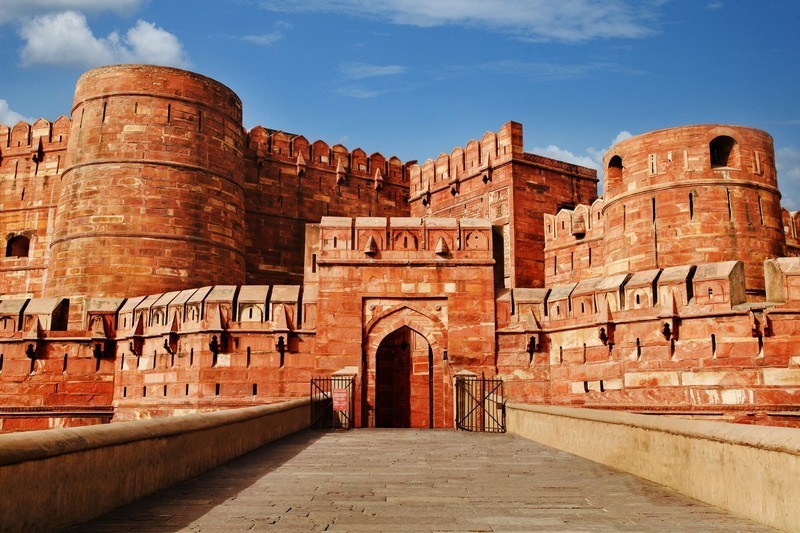
The periodization of Indian history into “Ancient,” “Medieval,” and “Modern” is a conceptual framework that has undergone intense academic scrutiny. In the Indian context, this tripartite division was largely influenced by colonial historiography, which aimed to organize the vast temporal stretch of Indian history into manageable, though often biased, units.
Origins of Tripartite Periodization
The foundational framework for periodization in India was popularized by the British historian James Mill in his The History of British India (1817). Mill categorized Indian history into three distinct civilizational ages:
- Hindu Period: Roughly equated with the Ancient era, often viewed as the “Golden Age.”
- Muslim Period: Equated with the Medieval era, often portrayed by colonial scholars as a period of decline, stagnation, or foreign subjugation.
- British Period: The Modern era, characterized as the period of “civilizing” influence and administrative rationalization.
Historiographical Critiques
Modern historians argue that this framework is heuristically unsatisfactory and politically sensitive for several reasons:
- Communal Bias: By equating religious identity with chronological eras, the model tends to create a narrative of religious conflict, often oversimplifying complex socio-political realities.
- Political Utility: The “Muslim invader” versus “Hindu victim” dichotomy has been used in political discourse to foster communal divisions, ignoring the composite nature of the ruling elite and the syncretic developments in culture, administration, and military organization.
- Ignoring Socio-Economic Dynamics: The traditional periodization focuses excessively on ruling dynasties and invasions, neglecting the evolution of social, economic, and regional structures that transcend religious boundaries.
Defining the “Medieval” Period
There is no consensus on the precise chronological start and end dates for the medieval period. Historians have proposed varying reference points:
| Perspective | Proposed Start / Watershed | Basis of Argument |
| Traditional/Textbook | 1206 CE | Establishment of the Delhi Sultanate. |
| Early Medievalists | 600–700 CE | Transition from Gupta decline, emergence of regional states, and land grants. |
| Badauni’s Account | 1000 CE | The conquests of Sultan Mahmud of Ghazna in Punjab and Multan. |
| Arab Invasion | 711 CE | The Arab conquest of Sindh and Gujarat. |
The Concept of “Early Medieval”
To bridge the gap between the classical “Ancient” and the later “Medieval” (Sultanate/Mughal) periods, historians introduced the concept of “Early Medieval” (roughly 600–1300 CE). This period is defined by:
- Political Fragmentation: The shift from centralized empires (like the Guptas) to a mosaic of shifting regional powers.
- Feudalism Debate: Marxist historians (e.g., R.S. Sharma) proposed an “Indian Feudalism” model, suggesting that land grants to Brahmins and officials during this era led to the decentralization of political and economic power.
- Regional Cultures: The crystallization of distinct regional identities, languages, and temple architecture styles.
Major Schools of Thought
The debate over periodization has evolved through different schools of historical writing:
- Colonial Historiographers: Focused on empiricist accounts using coins, inscriptions, and chronicles to establish dynastic chronologies, largely reinforcing the Hindu-Muslim-British divide.
- Nationalist Historians: Attempted to recover India’s past and express cultural pride, often challenging the “decline” narrative of the medieval period by highlighting cultural achievements.
- Marxist Historians: Shifted the focus from ruling personalities to socio-economic structures, identifying changes in land ownership, revenue rights, and agrarian relations as the true markers of historical transition.
- Post-Colonial and Subaltern Scholars: Critiqued the “grand narratives” of colonial and nationalist history, advocating for a more inclusive history that incorporates marginalized voices, regional perspectives, and world-historical contexts.
Conclusion: Towards a New Framework
Contemporary scholarship increasingly emphasizes the need for a secular and more nuanced periodization. Many historians argue for viewing Indian history as part of the broader history of the world, focusing on global exchange networks, trade, and technological diffusion rather than relying on religious labels to define temporal boundaries. The challenge remains to develop a framework that captures the fundamental unity of Indian history while acknowledging its profound regional, linguistic, and social diversity.
Last Modified: June 16, 2026