
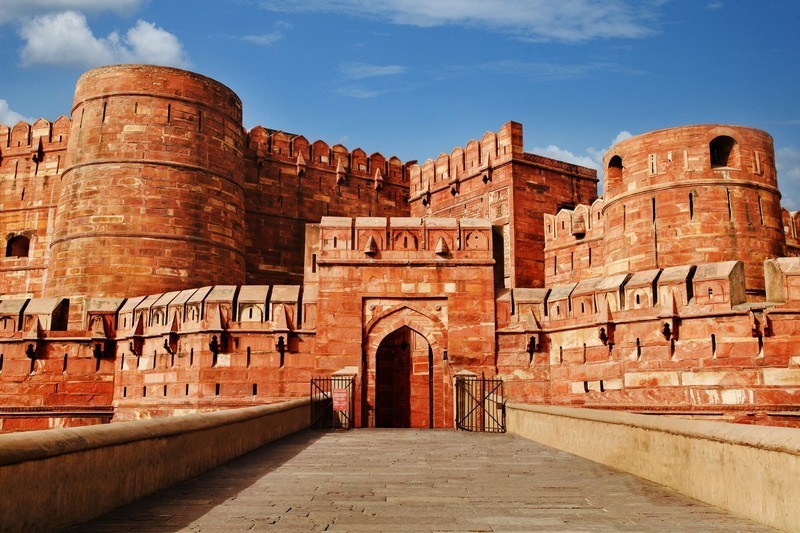
The cities of Gaur (Lakhnavati) and Pandua (Firuzabad), located in the modern Malda district of West Bengal, served as the twin capitals of the Bengal Sultanate between the 13th and 16th centuries. Their strategic location near the confluence of the Ganga and Mahananda rivers allowed successive regional dynasties to assert geopolitical independence from the central authority of the Delhi Sultanate.
Evolution of Lakhnavati (Gaur)
- Pre-Sultanate Foundation: Originally known as Lakshmanavati, the city was developed by King Lakshmana Sena of the Sena Dynasty as a major political and cultural seat.
- The Khalji Conquest: In 1202–1204 CE, Ikhtiyar uddin Muhammad bin Bakhtiyar Khalji captured Lakhnavati, establishing it as the administrative headquarters of the early Muslim governors under the Delhi Sultanate.
- The Imperial Demarcation: Sultan Ghiyasuddin Tughlaq formally designated Lakhnavati as the administrative hub of North Bengal to decentralize and monitor the highly rebellious province.
Rise and Prominence of Firuzabad (Pandua)
- The Strategic Shift: In 1342 CE, Shamsuddin Ilyas Shah, the founder of the Ilyas Shahi Dynasty, shifted the permanent imperial capital from Gaur to Pandua, renaming it Firuzabad. This move was driven by tactical considerations, as Pandua offered superior natural riverine defenses against invasions from Delhi.
- The Imperial Sieges: Pandua served as the defensive anchor of Bengal sovereignty during the historic sieges of the mud-fortress of Ekdala by Sultan Firuz Shah Tughlaq in 1353 CE and 1359 CE.
- The Return to Gaur: In 1435 CE, upon the restoration of the Ilyas Shahi Dynasty, Sultan Nasiruddin Mahmud Shah shifted the capital back to Gaur due to changes in river courses that affected Pandua’s water supply and maritime connectivity.
Urban Architecture and the Bengal Provincial Idiom
Gaur and Pandua served as the primary canvas for the evolution of the Bengal Provincial Style of architecture. Due to geographical constraints, local builders departed from the imperial stone patterns of Delhi, relying heavily on local high-fired red bricks, lime-surkhi mortar, and rich terracotta ornamentation.
Distinctive Structural Features
- The “Bangla” Curved Cornice: Architects adapted the sloping, curved bamboo thatch roofs of traditional rural Bengali huts into permanent brick structures. This design allowed quick drainage during heavy monsoon rains and was later adopted by Mughal emperors in Agra and Delhi as the Bangla pavilion style.
- The Brick-and-Terracotta Medium: Because natural stone quarries were scarce in the delta, structures were built of brick and covered with deep-relief terracotta plaques featuring chain, hanging lamp, and lotus motifs.
- Stucco and Glazed Tiles: During the Hussain Shahi era, buildings in Gaur increasingly featured vibrant blue, green, white, and yellow glazed tiles, showing architectural influences from Central Asia and Persia.
Monumental Matrix of Gaur and Pandua
The twin capitals contain several key structures that illustrate the structural transition from early architectural experiments to mature regional designs.
| Monument | Location | Builder / Patron | Structural Type & Key Design Features |
| Adina Mosque | Pandua | Sikandar Shah (1374 CE) | Hypostyle congregational mosque; the largest in the Indian subcontinent at the time; features a monumental barrel-vaulted central nave and the elevated Badshah-ka-Takht (Royal Gallery) supported by basalt stone pillars. |
| Eklakhi Mausoleum | Pandua | Jalaluddin Muhammad Shah (c. 1425 CE) | Prototype of the single-domed square tomb layout in Bengal; features thick brick walls, an octagonal interior layout, a slightly curved cornice line, and fine terracotta work. |
| Dakhil Darwaza | Gaur | Barbak Shah / Nusrat Shah (15th Century) | A massive, multi-tiered triumphal gateway built entirely of small red bricks; served as the main ceremonial entrance to the citadel of Gaur; decorated with delicate terracotta reliefs. |
| Firoz Minar | Gaur | Saifuddin Firuz Shah (1489 CE) | A 26-meter-high, five-story victory tower; the lower three stories are polygonal while the upper two are circular; shares structural and functional similarities with the Qutub Minar of Delhi. |
| Bara Sona Masjid | Gaur | Nasiruddin Nusrat Shah (1526 CE) | The largest standing monument in Gaur; a rectangular structure faced with dark basalt stone; originally featured extensive gold gilding on its eleven interior domes. |
| Chota Sona Masjid | Gaur | Wali Muhammad (Hussain Shahi Era) | A five-bay mosque featuring stone facing over a brick core; decorated with shallow stone carvings influenced by indigenous wood-carving techniques. |
| Qadam Rasul Mosque | Gaur | Nasiruddin Nusrat Shah (1531 CE) | Built to house a stone relic bearing the footprint impression of the Prophet Muhammad; features a single dome and a triple-arched front veranda with a curved roofline. |
Socio-Religious and Economic Foundations
The Sufi Urban Network
- The Chishti Centers: Pandua developed as a major spiritual center under the influence of prominent Chishti Sufi saints, including Alaul Haq Pandavi and his successor Nur Qutb Alam. Their holy shrines (Dargahs) received extensive royal land grants (Madad-i-Maash) and served as parallel centers of social and political authority.
- The Hub of Syncretism: The interaction between the Sufi institutions in Pandua and local communities fostered a regional cultural synthesis, contributing to the development of the syncretic Satyapir cult during the Hussain Shahi era.
Commercial and Global Maritime Links
- The Global Mint Towns: Both Gaur and Pandua were designated as central Mint Towns (Dar-ul-Zarb), issuing high-purity silver Taka coins that regulated the fiscal system of the entire delta.
- The Textiles Trade: European and Chinese travelers, including the Ming court diplomat Ma Huan in 1413 CE, described these capitals as dense, prosperous cosmopolitan hubs. They documented a thriving textile industry that produced fine muslin fabrics exported worldwide via the port of Chittagong.
- The Portuguese Interface: In the early 16th century, Portuguese merchants visited the court at Gaur, referring to it as a grand city. Sultan Ghiyasuddin Mahmud Shah granted them trading privileges, making Gaur one of the earliest contact points between European mercantile groups and the Bengal Sultanate.
Decline and Architectural Legacy
Political Upheaval and Natural Disasters
- The Afghan Invasions: In 1538 CE, the Afghan leader Sher Shah Suri defeated the Hussain Shahi dynasty and sacked Gaur, plundering its wealth and disrupting its administrative networks.
- The Humayun Occupation: The Mughal Emperor Humayun occupied Gaur for several months, renaming it Jannatabad (Heavenly City) due to its lush gardens and grand brick palaces.
- The Mughal Subjugation: Following the Battle of Rajmahal in 1576 CE, Akbar’s general Munim Khan annexed Bengal into the Mughal Empire. Munim Khan moved his headquarters to Gaur, but a devastating plague broke out in 1575–1576 CE due to contaminated water networks, causing a mass evacuation of the population.
- The Permanent Abandonment: The administrative capital was subsequently moved to Tanda, then to Rajmahal, and eventually to Dhaka. Gaur and Pandua were abandoned to the surrounding forests, preserving their brick monuments as historical records of medieval Bengal’s architectural tradition.
UPSC Prelims Historical Trivia
The Royal Giraffe Diplomatic Mission
In 1414 CE, during the reign of Saifuddin Hamzah Shah, the court at Pandua received a live African giraffe brought by East African merchant networks across the Indian Ocean. The Sultan sent the animal as a diplomatic gift to the Ming Emperor Yongle in Beijing. The Chinese court viewed the animal as the mythical Qilin (unicorn), a symbol of celestial favor for both states.
The Archeological Enigma of Ekdala
For decades, British antiquarians debated the exact location of the mud-fortress of Ekdala, which successfully repulsed the imperial armies of Delhi twice. Modern archaeological surveys place it in the Dhanjirhat region of Dinajpur. The fortress relied on natural river channels and deep marshlands, which neutralised the heavy cavalry of the Delhi Sultanate during the monsoon season.
Pre-Islamic Spolia in the Adina Mosque
Closer inspection of the stone steps leading to the Badshah-ka-Takht in the Adina Mosque reveals carved figures of elephants, lotus borders, and human figures salvaged from pre-existing Sena and Pala dynasty temples. Architects incorporated these basalt stone blocks into the foundation courses and flooring, showcasing the reuse of local materials during the early stages of sultanate construction.
Last Modified: June 22, 2026