
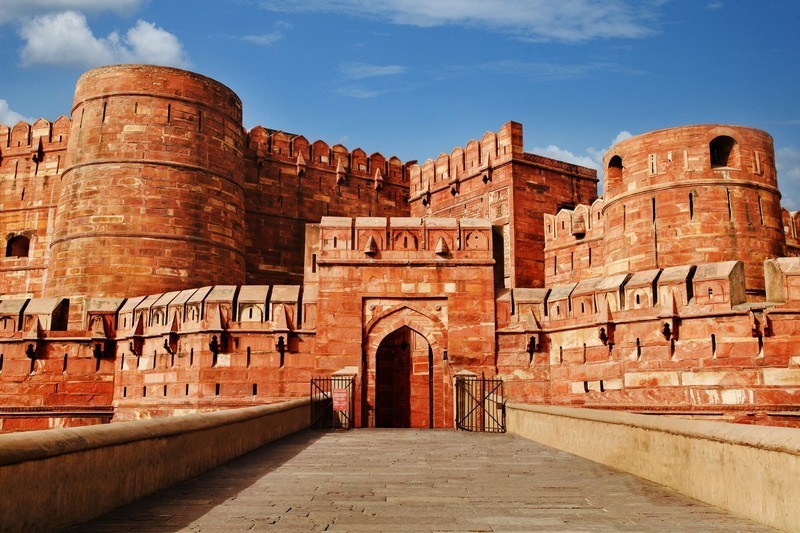
The Gurjara-Pratihara dynasty emerged as a major power in Northern India during the 8th century, with roots traced to the Gurjara clans of Gujarat and Rajasthan. They gained prominence by acting as a bulwark against the westward expansion of the Arab Caliphate from Sindh. The dynasty claimed descent from the legendary Lakshmana, who served as a ‘Pratihara’ (door-keeper) to his brother Rama, thus cementing their status within the Rajput hierarchy.
Key Rulers and Consolidation
- Nagabhata I (c. 730–756 CE): The founder of the dynasty who checked the Arab invasions, establishing his capital at Avanti (Ujjain).
- Vatsaraja (c. 775–805 CE): Expanded the kingdom significantly and initiated the long-standing Tripartite Struggle by seizing Kannauj from the Ayudha dynasty.
- Nagabhata II (c. 805–833 CE): Rebuilt the power of the dynasty after initial setbacks against the Rashtrakutas and made Kannauj the permanent capital.
- Mihira Bhoja (c. 836–885 CE): Known as the most powerful ruler of the dynasty; he expanded the empire from the Indus in the west to the border of Bengal in the east. His administration is noted for its stability and patronage of Vaishnavism.
- Mahendrapala I (c. 885–910 CE): Maintained the empire’s territorial integrity and was a great patron of literature, notably supporting the poet Rajashekhara.
The Gurjara-Pratiharas in the Tripartite Struggle
The dynasty served as one of the three primary pillars of the century-long Tripartite Struggle, competing against the Palas and the Rashtrakutas. Their objective was control over the Gangetic Doab, particularly the city of Kannauj, which functioned as the symbolic seat of imperial authority.
Strategic Dynamics
- Northern Hegemony: The Pratiharas viewed themselves as the natural successors to the Vardhana empire, using their control of Kannauj to assert legitimacy over North India.
- The Southern Threat: The Rashtrakutas, particularly under rulers like Dhruva and Govinda III, repeatedly invaded the Pratihara heartland to prevent them from becoming too powerful, forcing the Pratiharas to fight on two fronts.
- Eastern Rivalry: Constant border friction with the Pala dynasty defined the conflict in the Gangetic plains, with control of the region shifting multiple times between the two powers.
Administrative and Military Structure
The Pratihara state functioned through a decentralized administrative model that incorporated feudal elements.
| Administrative Term | Function |
| Mahasamanta | High-ranking feudatories or governors who maintained local order. |
| Bhukti | Provinces, administered by an official known as an Uparika. |
| Mandala/Vishaya | Districts, the smaller administrative units under the Bhukti. |
| Kavacha | Refers to the protective military armor; the Pratiharas were renowned for their superior cavalry. |
- Military Focus: The Pratihara army relied heavily on a massive, well-trained cavalry. Arab travelers of the era, such as Al-Masudi, specifically praised the Pratihara horses and the King’s ability to mobilize a vast force of mounted soldiers.
- Arab Relations: Despite their enmity with the Arab forces in Sindh, the Pratiharas maintained complex diplomatic and trade relations with Arab merchants, who played a significant role in the coastal economy of Gujarat.
Cultural and Literary Contributions
The reign of the Gurjara-Pratiharas saw a significant flourishing of Sanskrit literature and architectural development.
- Literary Patronage: The poet Rajashekhara, who authored works like ‘Karpuramanjari’ and ‘Kavyamimamsa’, lived in the court of Mahendrapala I and his son Mahipala.
- Architectural Legacy: The Pratiharas were instrumental in the development of the ‘Maru-Gurjara’ style of architecture. Notable examples include the temples at Osian (Rajasthan) and the Teli ka Mandir at Gwalior.
- Religious Policy: While primarily followers of Hinduism, particularly devotees of Vishnu and Shiva, they maintained a policy of religious tolerance, allowing the existence of Jain and Buddhist institutions within their territory.
Decline and Collapse
The decline of the Gurjara-Pratiharas in the 10th century was caused by a combination of internal and external factors:
- Rashtrakuta Invasions: The devastating invasion by the Rashtrakuta king Indra III in 916 CE severely damaged the prestige of the dynasty and sacked the capital, Kannauj.
- Rise of Feudatories: The weakening of central authority allowed prominent vassals to declare independence, including the Chandellas of Bundelkhand, the Paramaras of Malwa, and the Chaulukyas of Gujarat.
- Foreign Invasions: The fragmentation of the empire made North India vulnerable to the raids of Mahmud of Ghazni, who sacked Kannauj in 1018 CE, effectively ending the remnants of Pratihara influence.
UPSC Trivia for Prelims
- Arab Chronicles: Sulaiman, an Arab merchant, referred to the Pratihara king as ‘Juzr’ (a corruption of Gurjara) and praised the peace and security within his empire.
- Imperial Title: Pratihara kings adopted the title ‘Paramabhattaraka Maharajadhiraja Parameshwara’ to signify their imperial status.
- Capital Shifts: The shift of the capital from Avanti (Ujjain) to Kannauj marked the transition of the dynasty from a regional power in Western India to a pan-North Indian empire.
- End of an Era: The fall of the Pratiharas created a power vacuum in North India, which ultimately facilitated the political transition toward the Rajput-dominated state system of the 11th and 12th centuries.