
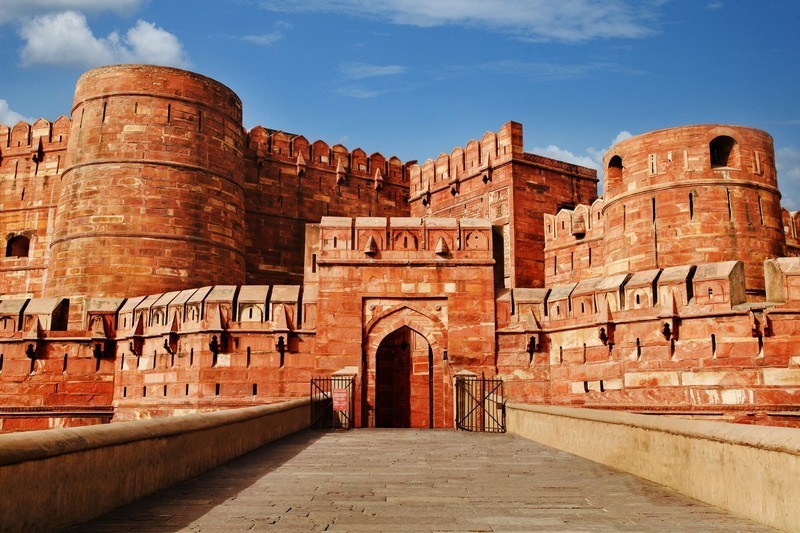
Mahmud Gawan, originally named Khwaja Mahmud Gilani, was a Persian merchant and scholar from the Gilan province of Iran who arrived at the Bahmani capital of Bidar in 1453 CE. Recognizing his extraordinary administrative intellect and military acumen, Sultan Alauddin Ahmad Shah II inducted him into the imperial nobility. Under Sultan Humayun Shah (r. 1458–1461 CE), Gawan was elevated to the status of Malik-ut-Tujjar (Chief of Merchants) and appointed as the Vakil-us-Sultanat (Prime Minister/Regent). He reached the pinnacle of his political power during the minority reign of Sultan Muhammad Shah III (r. 1463–1482 CE), serving as the de facto ruler of the Bahmani Kingdom.
The Deccani versus Afaqis Structural Rift
Gawan’s career unfolded against the backdrop of an intense, existential court conflict between the Dakhnis (indigenous Deccani Muslims, allied with African Habshis) and the Afaqis (foreign immigrants from Persia, Turkey, and Central Asia). As a prominent Shia Afaqi, Gawan sought to act as a political bridge, balancing administrative appointments between both factions. Despite his neutral pan-subcontinental vision, his sweeping administrative centralization eventually provoked a fatal conspiracy by the displaced Dakhni aristocracy.
Territorial Expansion and Military Strategy
Securing the Konkan Coast and Maritime Ports
Mahmud Gawan revolutionized the geopolitical footprint of the Bahmani Sultanate by launching extensive military campaigns into the Western Ghats. In 1469–1471 CE, he successfully neutralized the Hindu rajas of Sangameshwar and annexed the vital maritime port of Goa from the Vijayanagara Empire. He also secured the ports of Chaul and Dabhol, ensuring direct state control over lucrative Indian Ocean trade routes.
Eastern Campaigns and the Dual Front
On the eastern flank, Gawan successfully led Bahmani forces against the Gajapati rulers of Odisha and intercepted the expansionist designs of the Vijayanagara Empire in Telangana. He successfully captured Rajahmundry and Kondavir, expanding the Bahmani frontiers from the Arabian Sea to the Bay of Bengal, thereby turning the kingdom into an inter-oceanic empire.
Administrative and Fiscal Reforms
Restructuring the Taraf System
To break the semi-independent monopolies of provincial governors, Gawan dismantled the original administrative structure established by the kingdom’s founder. He divided the four sprawling ancestral provinces (Tarafs) into eight downsized administrative units, effectively halving the geographic and military resource base of individual governors.
| Original Ancestral Taraf | Divided Post-Reform Tarafs | First Appointed Governors & Factional Balance |
| Gulbarga | 1. Ahsanabad (Gulbarga) 2. Bijapur | Malik Hasan Bahri (Dakhni) Yusuf Adil Khan (Afaqi) |
| Daulatabad | 3. Daulatabad 4. Junnar | Yusuf Adil Khan (Afaqi) Malik Ahmad (Dakhni) |
| Berar | 5. Gawil 6. Mahur | Fathullah Imad-ul-Mulk (Dakhni) Khudawand Khan (Habshi) |
| Bidar | 7. Bidar 8. Telangana (Rajahmundry) | Mahmud Gawan (Afaqi) Azam Khan (Dakhni) |
Centralization of Fortifications and Cash Salaries
Prior to Gawan’s tenure, provincial Tarafdars exercised absolute control over all military bastions within their territory. Gawan decreed that only one fort in each province could remain under the governor’s direct command, while all other strategic fortifications were placed under Qiladars (fortress commanders) appointed directly by the Sultan. Furthermore, he reformed the military accounting system by making soldier payouts strictly cash-based (Naqd) from the central treasury, imposing severe penalties for maintaining under-strength regiments.
Revenue Measurement and Crown Lands
Gawan introduced a systematic land survey and classification model, centuries before the Mughals popularized the Zabt system. He measured agricultural plots, fixed state demand based on actual soil fertility, and significantly expanded the Khalisa (royal crown lands) at the expense of private Jagir land grants. This vastly increased the liquidity and financial solvency of the central treasury.
Intellectual Patronage and the Karez Engineering
The Madrasa of Mahmud Gawan at Bidar (1472 CE)
An accomplished mathematician, poet, and prose writer, Gawan transformed Bidar into a premier center of Islamic scholarship by funding the construction of a majestic three-story residential university (Madrasa) in 1472 CE. Built in the Central Asian Timurid style, the architecture featured monumental arched porticos (iwans) and brilliant green, white, and turquoise glazed tilework containing Quranic calligraphy.
The Imperial Library and Global Academic Network
The Bidar Madrasa housed a world-class academic repository containing over 3,000 rare manuscripts from Persia, Arabia, and the Mediterranean. Gawan maintained an active correspondence with leading global Renaissance scholars like the Persian poet Jami and the philosopher Jalaluddin Dawani, paying salaries out of his personal mercantile fortune to invite overseas scientists to teach in the Deccan.
Diffusion of Persian Hydrological Technology
Under Gawan’s administrative oversight, advanced Persian engineering was applied to solve the water scarcity issues of the arid laterite Bidar plateau. He supervised the expansion of the Karez (Qanat) system—a subterranean water-supply network composed of sloped underground tunnels and vertical inspection shafts that transported groundwater using gravity directly to civic settlements, public fountains, and royal palaces.
The Chakan Plot, Execution, and Imperial Collapse
The Forged Treason Letter
In 1481 CE, a faction of Dakhni nobles led by Malik Hasan Bahri forged a treasonous document using Gawan’s personal seal. The letter falsely implicated the Prime Minister in a conspiracy to partition the Deccan with the Vijayanagara Empire. An intoxicated Sultan Muhammad Shah III believed the forgery and summarily ordered the immediate execution of Gawan by decapitation at Kondapalli.
Political Fragmentation into the Deccan Sultanates
The execution of Mahmud Gawan removed the institutional check holding the factional nobility together. Upon realizing the forgery, the Sultan died of grief within a year, and the central Bahmani administration collapsed. The Tarafdars used their localized armies and fortified networks to assert complete sovereignty, fracturing the state into five independent successor regimes known as the Deccan Sultanates.
| Successor Sultanate | Rebel Governor / Founder | Dynasty Established | Ultimate Historic Fate |
| Bijapur | Yusuf Adil Khan (Gawan’s Protege) | Adil Shahi | Annexed by Aurangzeb into the Mughal Empire (1686 CE) |
| Ahmadnagar | Malik Ahmad (Son of Malik Hasan) | Nizam Shahi | Annexed by Shah Jahan into the Mughal Empire (1633 CE) |
| Golconda | Sultan Quli Qutb-ul-Mulk | Qutb Shahi | Annexed by Aurangzeb into the Mughal Empire (1687 CE) |
| Berar | Fathullah Imad-ul-Mulk | Imad Shahi | Annexed by the Ahmadnagar Sultanate (1574 CE) |
| Bidar | Qasim Barid / Amir Ali Barid | Barid Shahi | Annexed by the Bijapur Sultanate (1619 CE) |
Essential UPSC Prelims Facts and Historical Trivia
Literary Contributions
Mahmud Gawan authored two celebrated compilations of medieval prose and poetry: Riyaz-ul-Insha (a collection of his administrative and personal diplomatic letters) and Manazir-ul-Insha (a treatise on Persian composition and literary style).
Gunpowder Warfare Pioneer
Gawan is credited with introducing advanced artillery corps and firearms (Karkhanas) into the Bahmani army on a large scale. His siege of Goa in 1472 CE saw the early tactical deployment of gunpowder mining to breach fort walls, shifting the balance of medieval siege warfare in South India.
Foreign Correspondence
Gawan’s letters in Riyaz-ul-Insha reveal that he maintained active diplomatic ties with the Ottoman Sultan Mehmed II (the conqueror of Constantinople), attempting to forge a strategic commercial axis linking the Deccan ports with Europe.
Last Modified: June 22, 2026