
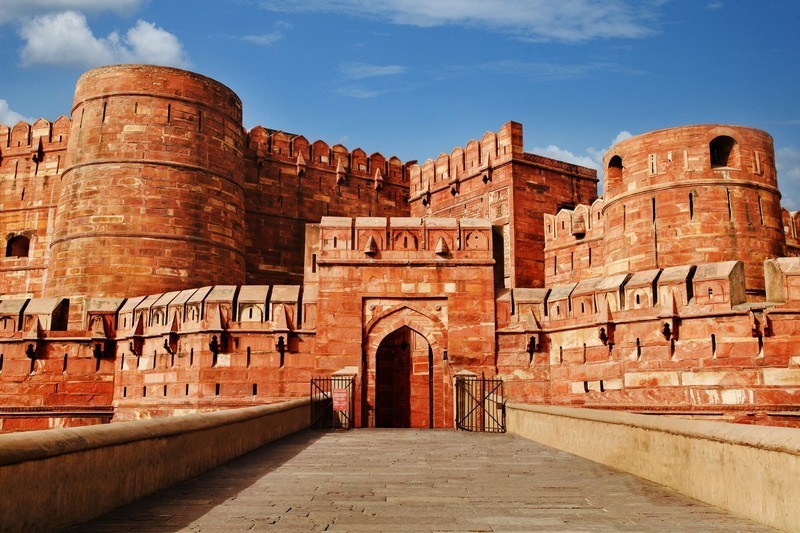
Alauddin Khalji was the most powerful and significant ruler of the Khalji Dynasty. His reign marked the first major expansion of the Delhi Sultanate into Southern India and the implementation of radical administrative and economic reforms. He ascended the throne after assassinating his uncle, Jalaluddin Khalji, and ruled with an iron fist, centralizing power to an unprecedented degree.
Military Conquests and Territorial Expansion
Alauddin’s military strategy was defined by a two-pronged approach: neutralizing the Mongol threat in the North and initiating aggressive expansionist campaigns in the Deccan and South India.
- North Indian Campaigns: Alauddin conquered key Rajput strongholds to secure his northern borders. Notable victories included Gujarat (1299), Ranthambore (1301), Chittor (1303), Malwa (1305), and Siwana (1308).
- Deccan and South India Campaigns: Led by his trusted general Malik Kafur, these campaigns were aimed at extracting tribute rather than direct annexation.
- Devagiri (1307): Ruler Ramachandra Deva was defeated and forced to pay annual tribute.
- Warangal (1309): The Kakatiya ruler Prataparudra II surrendered and provided massive wealth.
- Dwarasamudra (1310): Hoysala ruler Vira Ballala III was subdued.
- Madurai (1311): The Pandya kingdom was raided for its immense gold and temple treasures.
- Mongol Policy: Alauddin successfully repelled several large-scale Mongol invasions. He implemented a permanent standing army, constructed new forts, and repaired old ones along the northwestern frontier to secure the empire.
Administrative and Economic Reforms
Alauddin is best remembered for his Market Control Policy, designed to maintain a large standing army at low costs.
- Market Regulations: He established three distinct markets in Delhi: one for food grains, one for cloth/sugar/herbs, and one for horses/slaves/cattle. Prices for every commodity were fixed.
- Supply Chain: He appointed Shahna-i-Mandi (market superintendents) to oversee supply and prices. Grain was collected as land revenue and stored in state granaries to prevent hoarding and shortages.
- Revenue Reforms: He introduced the measurement of land (paimaish) to determine tax liability. He increased land revenue (Kharaj) to 50% of the produce, payable in cash to ensure state liquidity.
- Intelligence Network: He established a highly efficient spy system, Barids (reporters) and Munhians (secret spies), to monitor the activities of his officials and nobles.
Key Administrative Features
| Aspect | Policy / Change |
| Military | Introduced the Dag (branding of horses) and Chehra (descriptive rolls of soldiers). |
| Land Revenue | Cash payments mandated; middleman (Khuts and Muqaddams) powers curtailed. |
| Social Control | Prohibited wine and social gatherings among nobles to prevent conspiracies. |
| Taxation | Imposed Jizya, Kharaj (land tax), Charai (grazing tax), and Ghari (house tax). |
Architectural Contributions
Alauddin was a prolific builder and sought to leave his mark on the urban landscape of Delhi.
- Alai Darwaza: The southern gateway to the Quwwat-ul-Islam Mosque, it is a masterpiece of early Islamic architecture in India, featuring the first use of the true arch and dome.
- Siri Fort: He constructed the second city of Delhi, known as Siri, which served as his capital to protect against Mongol raids.
- Hauz-i-Alai: A massive water reservoir, now known as Hauz Khas, built to supply water to the inhabitants of Siri.
- Jamat Khana Masjid: An important mosque within the Nizamuddin Auliya complex in Delhi.
Historical Significance and Legacy
Alauddin Khalji’s reign transformed the Sultanate from a regional power into an empire spanning the Indian subcontinent.
- Centralization: He effectively ended the power of the traditional nobility, asserting that the Sultan’s will was supreme.
- Economic Foundation: The surplus generated by his agrarian and market reforms allowed the Sultanate to sustain a massive military force without collapsing under fiscal pressure.
- Secular Governance: Despite the influence of the Ulema, Alauddin maintained that his state policies were based on the needs of the Sultanate rather than strict religious dogma, famously stating that he did not know what was lawful or unlawful, only what was good for the state.
- End of Dynasty: Following his death in 1316 CE, the empire faced internal instability. His son, Qutbuddin Mubarak Shah, ruled briefly before the dynasty was ultimately replaced by the Tughlaqs in 1320 CE.
Notable Facts for Aspirants
- Alauddin was the first Sultan to maintain a permanent, centralized standing army paid directly by the state in cash.
- Malik Kafur, often called Hazar Dinari because he was purchased for 1,000 dinars, was the pivotal commander behind the southern expansion.
- Amir Khusrau, the famous poet and musician, enjoyed the patronage of Alauddin and famously chronicled his campaigns in Khazain-ul-Futuh.
- The regulation of markets was so effective that even during periods of drought, the prices of essential commodities in Delhi remained stable throughout his reign.