
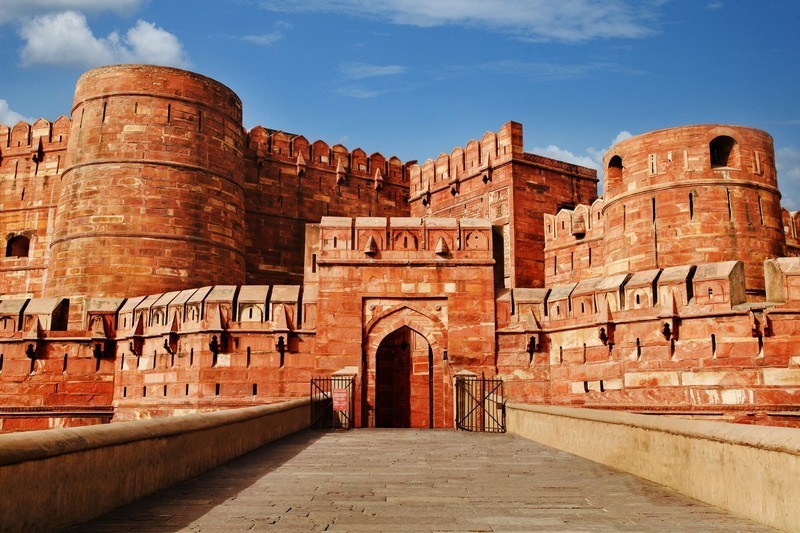
Raja Bhoja (reigned c. 1010–1055 CE) was the most illustrious monarch of the Paramara dynasty of Malwa. Often described as a ‘Philosopher-King,’ his reign represents the pinnacle of intellectual, cultural, and military activity in early medieval India. Based in his capital at Dhara (modern-day Dhar, Madhya Pradesh), Bhoja transformed Malwa into a premier center of learning and architectural excellence.
Political and Military Profile
Raja Bhoja’s reign was marked by near-constant warfare, as he sought to establish Paramara hegemony in a volatile political landscape.
- He actively participated in the shifting alliances of the 11th century, often finding himself in conflict with the Chalukyas of Kalyani in the south, the Kalachuris of Tripuri in the east, and the Solankis of Gujarat in the west.
- Despite frequent military setbacks, he maintained the integrity of the Malwa heartland, demonstrating resilience in the face of coalitions formed by his neighbors to check Paramara expansion.
- His military strategy emphasized the use of a professionalized cavalry, a hallmark of the period, which allowed him to project power across the Central Indian plateau.
- Epigraphic evidence suggests that his authority extended over a vast territory, including parts of modern-day Gujarat, Rajasthan, and Madhya Pradesh, though his direct control over these regions fluctuated throughout his long tenure.
Contributions to Literature and Science
Bhoja was a prolific polymath whose scholarship spanned multiple disciplines. He is unique among medieval Indian rulers for the sheer volume and diversity of his written works.
- Literary Works: He authored the Sarasvatikanthabharana, a comprehensive treatise on Sanskrit grammar and poetics, and the Tattva-prakasha, a philosophical work on Shaivism.
- Scientific Treatise: He compiled the Samaranganasutradhara, a monumental work on architecture, urban planning, and civil engineering. This text provides detailed instructions on the construction of palaces, temples, and even mechanical devices.
- Astronomy: He made significant contributions to the field of astronomy with his work, the Rajamriganka, which provided updated calculations for planetary positions.
- Intellectual Patronage: His court at Dhara functioned as a magnet for scholars, poets, and scientists. He actively funded libraries and schools, including the famous Saraswati Mandir, a royal college dedicated to Sanskrit studies.
Architectural Legacy
Raja Bhoja’s architectural vision left a lasting imprint on the landscape of Central India, characterized by grandiosity and advanced engineering.
- Bhojpur Temple: He commissioned the massive Bhojeshwar Temple in Bhojpur, dedicated to Shiva. Although left unfinished, the temple features one of the largest Shiva lingas in India, carved from a single block of sandstone, and showcases sophisticated structural masonry.
- Urban Development: He founded the city of Bhojpur and significantly expanded the urban infrastructure of Dhara.
- Water Management: He was a master of civil engineering, constructing the Bhoj Tal (Bhoj Wetland) in Bhopal. This vast artificial lake remains one of the largest man-made water bodies in India, serving both as a strategic defense mechanism and a sustainable water source for the region.
Key Facts and Data for UPSC Prelims
| Feature | Details |
|---|---|
| Reign Period | c. 1010–1055 CE |
| Capital | Dhara (modern-day Dhar) |
| Dynastic Status | Paramara Dynasty |
| Primary Intellectual Contribution | Polymath in Sanskrit, Architecture, and Astronomy |
| Major Architectural Works | Bhojeshwar Temple, Bhoj Tal |
| Contemporary Rivals | Western Chalukyas, Kalachuris, Solankis |
Trivia and Historical Context
- Bhoja’s extensive writings are frequently cited by historians to demonstrate the high level of intellectual engagement among medieval Indian royalty.
- The legend of ‘Bhoja-Prabandha’ (tales of Bhoja) became a popular genre of literature in the centuries following his death, emphasizing his role as an ideal patron of the arts and a generous ruler.
- Despite his military reputation, he is remembered in Indian historiography primarily for his patronage of Sanskrit literature, earning him the title of ‘Kaviraja’ (King of Poets).
- The unfinished state of many of his monumental projects, such as the Bhojeshwar temple, is often attributed to the constant state of war that required the diversion of royal resources toward military defense.
- His support for Shaivism did not preclude his interest in other religious traditions, and he was known to patronize Jain scholars within his kingdom, reflecting the religious pluralism of the Paramara state.