
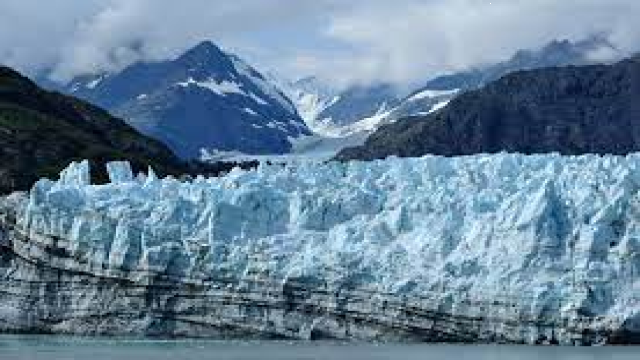
The Yamuna River originates at an altitude of approximately 6,387 meters from the Yamunotri Glacier, situated on the southwestern slopes of the Bandarpunch Peak in the Mussoorie Range of the Lower Himalayas, located in the Uttarkashi district of Uttarakhand. The immediate glacial melt pooling area is known as Saptrishi Kund.
Trajectory through the Himalayan Region
In its initial high-gradient course, the river cuts deep gorges through the Lesser Himalayas and the Shiwalik Range. It forms the geographical boundary between Himachal Pradesh and Uttarakhand. Before entering the plains, it receives major snow-fed Himalayan tributaries like the Tons and Giri rivers.
Entry into the Plains and Inter-State Course
The Yamuna debouches onto the Indo-Gangetic plains at Tajewala (Hathnikund Barrage) in the Yamunanagar district of Haryana. From this point, it flows southward, acting as a natural administrative boundary between Haryana and Uttar Pradesh. It passes through the National Capital Territory of Delhi, runs parallel to the Ganga River through the fertile Indo-Gangetic Doab, and flows past historical urban centers including Vrindavan, Mathura, and Agra.
Terminal Confluence
The river completes its independent course of 1,376 kilometers at Prayagraj (formerly Allahabad), Uttar Pradesh. Here, it merges with the Ganga River at the sacred Triveni Sangam, making it the longest and largest tributary of the Ganga River System.
Hydrological and Basin Parameters
| Parameter | Technical Details |
| Total Length | 1,376 kilometers |
| Total Basin Area | 3,66,223 square kilometers (Accounts for nearly 42.5% of the entire Ganga Basin) |
| Basin States and UTs | Uttarakhand, Himachal Pradesh, Haryana, Delhi, Uttar Pradesh, Rajasthan, and Madhya Pradesh |
| Physiographic Zones | Higher Himalayas, Lesser Himalayas, Shiwaliks, and Great Indo-Gangetic Plains |
| Average Annual Yield | Approximately 59 Billion Cubic Meters (BCM) |
Non-Peninsular (Himalayan) Tributaries
Tons River
The Tons is the largest and most voluminous Himalayan tributary of the Yamuna. It originates from the Bandarpunch glacier and carries more water than the main Yamuna stream before their confluence below Kalsi in Dehradun, Uttarakhand.
Giri River
The Giri River is an important right-bank Himalayan tributary that originates near Kupvi in Shimla district. It drains the southeastern part of Himachal Pradesh before merging with the Yamuna near Paonta Sahib.
Asan River
A minor left-bank tributary that drains the western part of the Doon Valley in Uttarakhand and joins the Yamuna near the border of Himachal Pradesh.
Hindon River
The Hindon is an entirely rain-fed, non-peninsular left-bank tributary that originates in the Shiwalik Range of Saharanpur district, Uttar Pradesh. It flows for about 400 kilometers through western Uttar Pradesh before joining the Yamuna downstream of New Delhi.
Peninsular Tributaries (The Deccan Plate Drainage)
The peninsular tributaries originate in the Central Highlands (Vindhyan and Aravalli ranges) and flow northward to meet the Yamuna. They contribute the majority of the river’s structural basin area.
Chambal River
The Chambal is the most significant peninsular tributary of the Yamuna.
- Origin: It rises near Mhow on the Malwa Plateau in the Vindhyan Range of Madhya Pradesh.
- Course: It flows north-northwest through Rajasthan, turns southeast, and forms the boundary between Madhya Pradesh and Rajasthan before joining the Yamuna in the Etawah district of Uttar Pradesh.
- Geomorphic Feature: The river is globally renowned for its Chambal Ravines, an extensive network of badland topography caused by severe gully erosion.
- Major Tributaries: Banas (right-bank, originating from Aravallis), Kali Sindh, Parbati, and Shipra.
Sind River
The Sind River originates on the Malwa Plateau in the Vidisha district of Madhya Pradesh. It flows northeastward across Madhya Pradesh and Uttar Pradesh to join the Yamuna near Jalaun district.
Betwa River
Historically known as Vetravati, the Betwa is a major right-bank peninsular tributary.
- Origin: It rises in the Vindhyan Range north of Hoshangabad in Madhya Pradesh.
- Course: It flows northeast across Madhya Pradesh and the Bundelkhand upland before emptying into the Yamuna near Hamirpur in Uttar Pradesh.
- Major Tributaries: Dhasan and Jamni rivers.
Ken River
The Ken River drains the eastern parts of the Bundelkhand region.
- Origin: It originates from the northwestern slopes of the Kaimur Range in the Jabalpur district of Madhya Pradesh.
- Course: It flows northwards through Madhya Pradesh and Uttar Pradesh, cutting through the rocky gorges of Panna, and meets the Yamuna at Chilla near Banda district.
Major Hydroelectric and River Valley Projects
Hathnikund Barrage
Located in Haryana, this structure replaced the vintage 1832 Tajewala Barrage. It acts as the primary water distribution node, diverting the Yamuna’s waters into the Western Yamuna Canal (towards Haryana) and the Eastern Yamuna Canal (towards Uttar Pradesh) for extensive agricultural irrigation.
Lakhwar-Vyasi Multipurpose Project
A major under-construction water-storage facility located in the Dehradun district of Uttarakhand. It features a concrete gravity dam on the Yamuna River aimed at clean peak-load power generation and drinking water supply to six upper basin states.
Kishau Dam Project
A proposed multipurpose project on the Tons River (tributary of Yamuna) located on the border of Himachal Pradesh and Uttarakhand, designed to augment lean-season water flows to Delhi and the National Capital Region.
Dams on the Chambal Cascading System
The Chambal tributary hosts a series of four major sequential water resource projects:
- Gandhi Sagar Dam: Located in Madhya Pradesh, it forms the first storage node in the cascade.
- Rana Pratap Sagar Dam: Located in Chittorgarh district, Rajasthan.
- Jawahar Sagar Dam: A pick-up dam located downstream in Rajasthan.
- Kota Barrage: A pure irrigation diversion structure that feeds the canal systems of Rajasthan and Madhya Pradesh.
Geopolitical, Strategic, and Environmental Profiles
Inter-State Water Sharing Agreements
The allocation of the waters of the Yamuna is regulated by a Memorandum of Understanding (MoU) signed in 1994 among the five basin states: Haryana, Uttar Pradesh, Rajasthan, Himachal Pradesh, and Delhi. The Upper Yamuna River Board (UYRB) regulates the allocation and seasonal distribution of water among these riparian states.
The Ken-Betwa River Interlinking Project
This project is India’s first operational river-linking initiative under the National River Linking Project (NRLP).
- Objective: It aims to transfer surplus water from the Ken River basin to the water-deficit Betwa basin via a 221-kilometer canal link.
- Irrigation Benefits: It provides critical irrigation to the drought-prone Bundelkhand region spanning parts of Madhya Pradesh and Uttar Pradesh.
- Ecological Concern: The project involves the submergence of a significant portion of the core area of the Panna Tiger Reserve, requiring mitigation measures for wildlife conservation.
Environmental Degradation and Ecological Status
The stretch of the Yamuna between Wazirabad Barrage and Okhla Barrage in Delhi, accounting for only 2% of its total length, contributes nearly 76% of the river’s total pollution load. The primary causes include the discharge of untreated domestic sewage through urban drains (like the Najafgarh drain) and industrial effluents. The National Green Tribunal (NGT) monitors the “Maili Se Nirmal Yamuna Revitalization Project” to enforce minimum environmental flows (e-flows).
Key Aquatic Biodiversity
- Gharial (Gavialis gangeticus): The National Chambal Sanctuary, situated on the Chambal tributary of the Yamuna, holds the largest surviving wild population of this critically endangered, fish-eating crocodilian.
- Red-Crowned Roofed Turtle (Batagur kachuga): A critically endangered freshwater turtle species whose primary global stronghold is restricted to the clean gravel bars of the Chambal River subsystem.
High-Yield Prelims Trivia
Antecedent Nature of Headwaters
The Himalayan tributaries of the Yamuna, specifically the Tons River, exhibit antecedent characteristics. They carved deep V-shaped valleys through the Himalayan axial granites before the complete tectonic uplift of the Lesser Himalayan structures.
Historical Trans-Basin Shifts
Geological and paleohydrological investigations indicate that the Yamuna River was once a major eastward-flowing tributary of the ancient Sarasvati River system. Tectonic upheavals on the Indo-Ganga divide during the late Pleistocene epoch tilted the local topography eastward, capturing the Yamuna into the Ganga drainage system and contributing to the desiccation of the western desert river channels.
The Yamuna Action Plan (YAP)
Launched in 1993 with bilateral financial assistance from the Japan International Cooperation Agency (JICA), the YAP represents one of India’s largest external-aided river rejuvenation schemes, running parallel to the central Ganga conservation frameworks.
Last Modified: June 5, 2026