

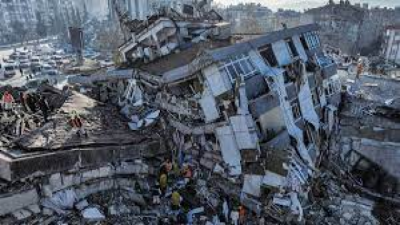
Earthquakes are natural disasters that have the potential to cause widespread destruction and loss of life. India, being a seismically active country, experiences numerous earthquakes throughout the year. Understanding the reasons behind these seismic events is crucial for effective disaster management and preparedness.
Tectonic Plate Boundaries
India lies at the intersection of several major tectonic plates, making it highly vulnerable to earthquakes. The most significant plate boundaries in India are the Indo-Australian Plate and the Eurasian Plate. The collision and convergence of these plates create immense stress on the Earth’s crust, leading to seismic activity.
- Example: The devastating 2001 Bhuj earthquake in Gujarat, measuring 7.7 magnitude, was caused by the collision between the Indian and Eurasian Plates.
Himalayan Seismic Belt
The northern region of India, particularly the Himalayan range, is one of the most seismically active zones in the country. The Himalayan Seismic Belt extends for approximately 2,400 kilometers and is prone to frequent earthquakes due to ongoing tectonic activity.
- Example: The 2015 Nepal earthquake, measuring 7.8 magnitude, also affected northern India, causing significant damage and casualties.
Interplate and Intraplate Earthquakes
India experiences both interplate and intraplate earthquakes. Interplate earthquakes occur at plate boundaries, whereas intraplate earthquakes occur within the tectonic plates. While interplate earthquakes are more common in regions like the Himalayas, intraplate earthquakes are observed in the peninsular region of India.
- Example: The 1993 Latur earthquake in Maharashtra, with a magnitude of 6.4, was an intraplate earthquake caused by the reactivation of ancient faults.
Subduction Zones
The presence of subduction zones in certain areas of India adds to the earthquake risk. Subduction zones occur where one tectonic plate is forced beneath another, creating intense pressure and potential for seismic activity.
- Example: The northeastern region of India, particularly the subduction zone of the Indian Plate beneath the Eurasian Plate, is highly prone to powerful earthquakes.
Geological Faults
Geological faults are fractures in the Earth’s crust where movement occurs, releasing accumulated stress in the form of earthquakes. India has several active fault zones, and the movement along these faults is a significant contributor to seismic events.
- Example: The Koyna region in Maharashtra is known for frequent seismic activity due to the Koyna Fault, with the 1967 Koyna earthquake (magnitude 6.3) being one of the most notable events.
Human-induced Earthquakes
In recent years, human activities have also been linked to inducing earthquakes. Activities such as reservoir-induced seismicity, mining, and hydraulic fracturing (fracking) can trigger earthquakes by altering the stress distribution in the Earth’s crust.
- Example: The Koyna earthquake mentioned earlier is considered a human-induced earthquake resulting from the construction of the Koyna Dam.
The following table illustrates major Earthquakes in India over the past few years.
| Earthquake Event | Date | Magnitude (Richter) |
| Bhuj, Gujarat | January 26, 2001 | 7.7 |
| Nepal Earthquake (affecting India) | April 25, 2015 | 7.8 |
| Latur, Maharashtra | September 30, 1993 | 6.4 |
| Koyna, Maharashtra | December 11, 1967 | 6.3 |
Earthquakes in India are primarily driven by tectonic plate movements, especially along plate boundaries and subduction zones. The Himalayan Seismic Belt and geological faults play significant roles in making certain regions more prone to seismic activity. Additionally, human-induced activities have emerged as potential triggers for earthquakes in specific areas.
Last Modified: April 16, 2026