
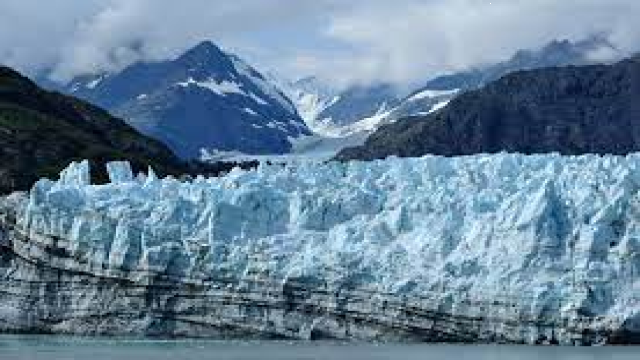
The Himalayan mountain range is the youngest, loftiest, and most structurally complex fold mountain system in the world. Its formation is explained by the Plate Tectonics Theory, which details the collision between the Indian Plate and the Eurasian Plate.
Tectonic Origin and Uplift
During the Late Cretaceous period, the Indian plate detached from Gondwanaland and drifted northward at a relatively high velocity. Around 40 to 50 million years ago (Eocene Epoch), the Indian Plate collided with the Eurasian Plate, leading to the closure of the ancient Tethys Ocean. The horizontal compression of the marine sediments accumulated within the Tethys geosyncline resulted in their intense folding, giving rise to the Himalayan mountain system. This process of uplift is episodic and remains active today, making the entire region tectonically unstable and highly prone to earthquakes.
Evidence of Active Uplift
- Frequent Seismic Activity: Regular occurrences of high-intensity earthquakes along the plate boundaries.
- Fluvial Geomorphology: Deep gorges cut by antecedent rivers like the Indus, Satluj, and Brahmaputra, indicating that river incision has kept pace with land uplift.
- Varying Altitudes: Recent measurements indicate a gradual, ongoing increase in the height of major peaks, including Mount Everest.
Major Structural Longitudinal Ranges
The Himalayas do not form a single continuous ridge but comprise three parallel, structurally distinct longitudinal mountain ranges separated by major tectonic fault lines.
1. The Great Himalayas (Himadri / Inner Himalayas)
- Characteristics: This is the most continuous, northernmost, and elevated range of the system. It features an asymmetrical core composed of ancient crystalline rocks like granite, schist, and gneiss, flanked by metamorphosed sedimentary layers.
- Dimensions: Maintains an average elevation of over 6,000 meters above sea level and a width ranging between 15 to 30 km.
- Prominent Peaks: Mount Everest (8,848.86 m), Kanchenjunga (8,586 m), Makalu (8,481 m), Dhaulagiri (8,167 m), and Nanga Parbat (8,126 m).
- Glaciers: It is the source of major perennial rivers and hosts massive ice bodies, including the Gangotri, Yamunotri, and Milam glaciers.
2. The Lesser Himalayas (Himachal / Middle Himalayas)
- Characteristics: Located south of the Great Himalayas, this range exhibits highly compressed, altered, and fractured rock formations, primarily consisting of metamorphosed sedimentary and volcanic rocks.
- Dimensions: Altitude varies from 3,700 to 4,500 meters, with a width of approximately 50 km.
- Prominent Ranges: The Pir Panjal Range (the longest and most critical range in this zone), Dhauladhar Range, Nag Tibba, and Mahabharat Range.
- Socio-Economic Value: Houses famous hill stations including Shimla, Mussoorie, Nainital, and Darjeeling, as well as scenic structural valleys like the Kashmir Valley, Kangra Valley, and Kullu Valley.
3. The Outer Himalayas (Shiwaliks)
- Characteristics: The southernmost and youngest structural component of the Himalayas. It is composed of unconsolidated sediments, cobbles, and clay brought down by rivers from the higher ranges to the north.
- Dimensions: Elevation ranges between 900 and 1,100 meters, with a width varying from 10 to 50 km.
- The ‘Duns’ Formation: The longitudinal structural valleys lying between the Lesser Himalayas and the Shiwalik ranges are termed ‘Duns’ in the west and ‘Duars’ in the east. Examples include Dehra Dun, Kotli Dun, and Patli Dun.
Tectonic Boundaries and Fault Lines
The sequential alignment of the Himalayas is bounded by major longitudinal thrust faults. These structural zones represent the suture lines of distinct tectonic events.
- Indus-Tsangpo Suture Zone (ITSZ): The structural line of collision that marks the northern boundary of the Great Himalayas, separating them from the Trans-Himalayan Karakoram and Ladakh ranges.
- Main Central Thrust (MCT): A major tectonic fault zone that separates the Great Himalayas (Himadri) from the Lesser Himalayas (Himachal).
- Main Boundary Thrust (MBT): The fault line that separates the Lesser Himalayas from the younger Outer Himalayan Shiwalik range.
- Himalayan Frontal Fault (HFF): The outermost boundary fault that separates the Shiwalik hills from the northern alluvial plains of India.
Regional (West to East) Classification
Apart from the longitudinal zones, Sir Sidney Burrard classified the Himalayas into four distinct regional units based on river valleys.
| Regional Division | Latitudinal Extension | Key Geographical Features | Notable Peaks & Passes |
| Punjab / Kashmir Himalayas | Between Indus and Satluj Rivers | Features Karewa formations (lacustrine deposits of clay and silt calibrated with sand, critical for Zafran/Saffron cultivation). Contains Zaskar, Ladakh, and Pir Panjal ranges. | Nanga Parbat; Zozi La, Banihal Pass. |
| Kumaon Himalayas | Between Satluj and Kali Rivers | Western part is called Garhwal Himalayas; eastern part is Kumaon. Source of Ganga and Yamuna. Characterized by prominent lakes. | Nanda Devi (7,817 m), Kamet, Trishul; Lipu Lekh Pass. |
| Nepal Himalayas | Between Kali and Teesta Rivers | Tallest and longest continuous section of the Himalayas (800 km). Dominated by massive alpine glaciers. | Mount Everest, Kanchenjunga, Cho Oyu. |
| Assam Himalayas | Between Teesta and Brahmaputra Rivers | Narrow width, steep gradients, and high rainfall. Transitions into the syntaxial bend turning southwards into Purvanchal. | Namcha Barwa, Gyala Peri; Bomdi La Pass. |
The Purvanchal or Northeastern Hills
At the easternmost extremity of the Brahmaputra gorge, the Himalayan range undergoes a sharp, southward syntaxial bend, forming a series of low-altitude hills known as the Purvanchal.
Salient Characteristics
- Composition: Primarily composed of strong, marine sedimentary sandstones, quartzites, and shales.
- Ecology: Characterized by parallel ranges and deep valleys covered with dense, humid subtropical forests.
- Sub-Ranges:
- Patkai Bum: Forms the international boundary between Arunachal Pradesh and Myanmar.
- Naga Hills: Contains Mount Saramati (3,826 m), the highest peak of this section.
- Manipur Hills: Houses the unique, freshwater Loktak Lake, famous for floating phumdis (heterogeneous masses of vegetation, soil, and organic matter) and the Keibul Lamjao National Park.
- Mizo (Lushai) Hills: Characterized by soft, unconsolidated formations forming the “Molasses Basin”.