
The term “Caucasoid” has its roots in anthropological classification, serving as one of the major racial categories historically used to describe human diversity.
Historical Context of Caucasoid
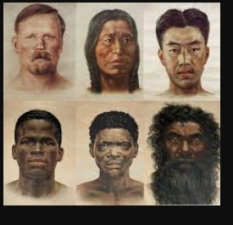
Anthropologists have long attempted to categorize and understand human diversity. The concept of Caucasoid emerged in the 18th century when Johann Blumenbach, a German anthropologist, proposed a five-race classification system. Blumenbach labeled the European population as “Caucasian” based on his belief that the people of the Caucasus Mountains represented the archetype of the “white” or “European” race.
Modern Interpretations
In contemporary discussions, the term Caucasoid is often used in a broader sense to describe populations originating from Europe, the Middle East, and parts of South Asia. However, it is crucial to note that the use of racial categories in anthropology has been widely criticized for oversimplifying human diversity and perpetuating harmful stereotypes.
Genetic Diversity and the Fallacy of Race
Recent advancements in genetic research have debunked the idea of race as a biological reality. Human genetic diversity is continuous and does not neatly fit into discrete categories. Genetic studies emphasize that there is more genetic diversity within racial groups than between them, challenging the traditional concept of Caucasoid as a distinct and homogenous group.
Controversies Surrounding Caucasoid
The term Caucasoid has faced criticism for its association with outdated racial theories and its potential to reinforce stereotypes. Critics argue that using racial categories oversimplifies the complex nature of human diversity, leading to misunderstandings and perpetuating discriminatory attitudes.
Examples of Caucasoid Populations
While the concept of Caucasoid is problematic, it is essential to recognize the diverse populations that have been historically categorized under this term. Some examples include:
- Europeans: Populations from the European continent, with diverse ethnicities and cultures. b. Middle Easterners: People from the Middle East, encompassing a wide range of ethnicities, religions, and linguistic groups. c. South Asians: Certain populations in South Asia, although this classification is often contested due to the region’s vast diversity.
Key Data
To better understand the diversity within populations labeled as Caucasoid, let’s explore key anthropological and genetic data in a table:
| Population | Genetic Diversity | Cultural Variability | Linguistic Differences |
| Europeans | High | Diverse | Multiple languages |
| Middle Easterners | Moderate | Rich | Linguistic diversity |
| South Asians | Varied | Vast | Numerous languages |
In conclusion, the concept of Caucasoid has a complex history rooted in anthropological attempts to classify human diversity. However, in the modern era, the use of racial categories like Caucasoid is increasingly recognized as scientifically inaccurate and socially problematic.
Last Modified: December 23, 2024