
India, a land renowned for its diverse culture and heritage, is also home to a wealth of mineral resources that have played a significant role in shaping its economy and development trajectory. With a geological heritage spanning millions of years, India boasts a varied array of mineral reserves that contribute to its industrial and economic growth.
The Abundant Reserves: A Panorama of India’s Mineral Wealth
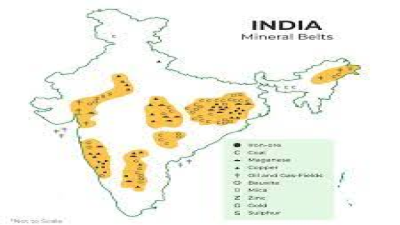
India is bestowed with a wide spectrum of minerals, ranging from metallic and non-metallic to energy minerals. The subcontinent’s geographical diversity has contributed to the formation of various types of minerals across different regions.
- Metallic Minerals: India is a major global player in the production of key metallic minerals such as iron ore, bauxite, and chromite. The state of Odisha is renowned for its vast iron ore reserves, making it a crucial hub for steel production. The country’s chromite deposits in the Sukinda Valley are one of the largest in the world.
- Non-Metallic Minerals: India is also rich in non-metallic minerals like limestone, gypsum, dolomite, and mica. Rajasthan’s Bhilwara district is famed for its high-quality mica deposits, making India the largest mica producer globally.
- Energy Minerals: The energy sector is fueled by minerals like coal, crude oil, and natural gas. India’s coal reserves are substantial, and the nation ranks among the top coal producers globally. The extraction of crude oil occurs predominantly in the western state of Gujarat.
Strategic Significance: Catalysts for Industrial Growth
Mineral resources are the backbone of modern industries, supporting sectors like manufacturing, construction, and energy production. The availability of these resources has a direct impact on a nation’s industrial capabilities and economic resilience.
- Construction Industry: Minerals like limestone, sand, and granite are integral to the construction sector. They are used in the production of cement, concrete, and building materials.
- Manufacturing Sector: Metallic minerals such as iron, aluminum, and copper are essential for manufacturing machinery, automobiles, and electronic devices. India’s steel industry, heavily reliant on iron ore, is a prime example.
- Energy Generation: The energy sector relies on minerals like coal, oil, and natural gas. Coal, as a significant energy source, powers thermal power plants across the country.
India’s Position on the Global Mineral Stage
India’s mineral wealth has propelled it onto the global mineral map, making it a vital player in various industries and trade networks.
- Steel Production: India is the second-largest steel producer globally, driven by its robust iron ore reserves and growing demand for infrastructure.
- IT and Electronics: Mica, a critical component in electronics manufacturing, is a major export from India. However, concerns about unethical mica mining practices have led to calls for responsible sourcing.
- Renewable Energy: The shift toward renewable energy sources like solar power demands minerals like quartz and silica, used in photovoltaic cells and panels.
Key Mineral Resources of India
| Mineral | Major Reserves | Main Producing States | Strategic Importance |
| Iron Ore | Odisha, Chhattisgarh, Karnataka | Steel Production | Crucial for steel industry |
| Coal | Jharkhand, Chhattisgarh, Odisha | Energy Generation | Primary energy source for electricity |
| Bauxite | Odisha, Gujarat, Maharashtra | Aluminum Production | Key material for manufacturing |
| Mica | Andhra Pradesh, Rajasthan | Electronics Manufacturing | Vital for electronics production |
| Chromite | Odisha, Karnataka | Stainless Steel Production | Essential for stainless steel production |
| Limestone | Andhra Pradesh, Rajasthan | Construction Industry | Primary raw material for cement production |
| Crude Oil | Gujarat, Rajasthan, Assam | Energy and Petrochemicals | Fuels transportation and petrochemical industries |
Challenges and Future Prospects
Despite its mineral wealth, India faces challenges such as environmental concerns, unsustainable extraction practices, and ethical issues in mining certain minerals. To ensure sustainable growth, it’s imperative for India to adopt responsible mining practices, focus on conservation, and implement stringent regulations.
India’s mineral resources, spanning a wide range of metallic, non-metallic, and energy minerals, have positioned it as a formidable player on the global stage. These resources have not only contributed significantly to the nation’s industrial growth but have also established India as a vital link in the global supply chain.
Last Modified: February 22, 2024