
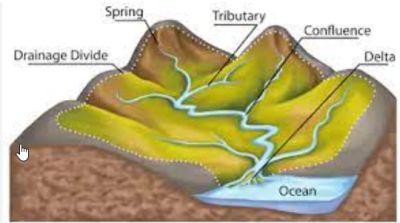
India, endowed with a complex network of rivers and drainage systems, is a land of diverse hydrological features. The drainage system of the country is broadly classified into open and closed basins, each contributing significantly to the nation’s water resources. India’s drainage system is a vital component of its geographical makeup, determining the flow and distribution of water across the nation. The open and closed basins form the backbone of this system, influencing water availability, agricultural practices, and overall ecosystem health.
Open Basins
- Definition and Characteristics: Open basins, also known as exorheic basins, are those where the rivers flow into an ocean or a sea. The drainage in these basins is outward, ensuring a continuous discharge of water into larger water bodies. The major open basin in India is the Ganga Basin, covering a substantial part of Northern India.
- Examples: The Ganga Basin is a prime example of an open basin in India. The Ganga River, along with its tributaries like the Yamuna and the Son, drains into the Bay of Bengal. This basin is agriculturally productive, supporting a large population through the fertile plains it irrigates.
- Key Data
To provide a clear overview of the significance of open basins, here is a table highlighting key data related to the Ganga Basin:
| Parameter | Value |
| Area | 1,080,000 square kilometers |
| Length of Ganga River | 2,525 kilometers |
| Major Tributaries | Yamuna, Son, Gandak, Kosi |
| Drainage into | Bay of Bengal |
| Population Supported | Over 500 million |
Closed Basins
- Definition and Characteristics: Closed basins, also known as endorheic basins, are characterized by rivers that do not reach an ocean or sea. Instead, the water is retained within the basin, forming inland lakes or salt flats. The Thar Desert in Northwestern India is a prime example of a closed basin.
- Examples: The Sambhar Salt Lake in Rajasthan exemplifies a closed basin. The rivers in this basin, such as the Luni River, do not flow into any ocean. Instead, they terminate in the Sambhar Lake, which has high salinity due to the lack of an outlet.
- Key Data
Let’s take a look at key data associated with the Sambhar Salt Lake closed basin:
| Parameter | Value |
| Area | Approximately 5,000 square kilometers |
| Major River | Luni River |
| Terminal Lake | Sambhar Salt Lake |
| Salinity | High |
| Endorheic Region | Thar Desert |
Importance of Open and Closed Basins
- Water Resource Management: Open basins play a pivotal role in supporting agriculture and sustaining a large population due to their outward drainage into oceans or seas. They are crucial for maintaining riverine ecosystems and are often centers of economic activity. Closed basins, while not contributing to the sea, are essential for local water resources. Inland lakes within closed basins often serve as vital sources for irrigation, supporting agriculture in arid regions. However, they also face challenges such as salinization.
- Biodiversity and Ecosystems: Open basins, with their continuous water flow, support diverse ecosystems. The Ganga Basin, for instance, is known for its rich biodiversity, including various species of fish and other aquatic life. Closed basins, on the other hand, present unique ecosystems adapted to the challenges of an enclosed water system. Flora and fauna in closed basins have evolved to thrive in environments with fluctuating water levels and high salinity.
Challenges and Conservation Efforts
- Challenges: Both open and closed basins face challenges, including pollution, over-extraction of water, and climate change impacts. The Ganga, despite its importance, is grappling with pollution issues, affecting both human populations and ecosystems. Closed basins, with their vulnerability to salinization, require careful management to prevent degradation.
- Conservation Efforts: Numerous initiatives are underway to address these challenges. For the Ganga Basin, the Namami Gange project focuses on cleaning and rejuvenating the river. In closed basins, sustainable water management practices are being implemented to prevent further salinization and degradation.
India’s drainage system, comprising open and closed basins, reflects the nation’s geographical diversity and the intricate interplay of rivers, lakes, and seas. While open basins are crucial for supporting large populations and diverse ecosystems, closed basins contribute to local water resources in arid regions.
Last Modified: December 23, 2024