
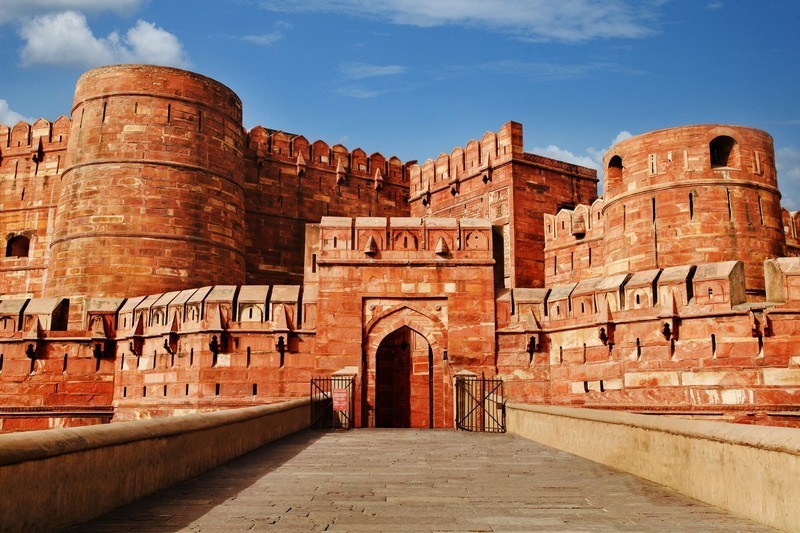
The Ghaznavid dynasty, established by Subuktigin in 977 CE at Ghazni (modern-day Afghanistan), represents the first systematic Turkish military intrusion into Northern India. Unlike the earlier, decentralized Arab administrative experiment in Sindh, the Ghaznavids operated as a centralized, professionalized military state. Their primary focus was resource extraction, frontier security, and the dismantling of the Hindu Shahi kingdom, which had long acted as a buffer between the Indian heartland and the Central Asian plateau.
Mahmud of Ghazni: Motives and Military Mechanics
Mahmud of Ghazni (r. 998–1030 CE), the son of Subuktigin, conducted 17 major expeditions into India between 1000 and 1027 CE. His campaigns marked the transition from territorial administrative control to high-intensity, mobile raiding warfare.
- Financial Objectives: The plunder of immense gold and silver reserves from affluent temple-towns and urban administrative hubs was essential to maintain his massive mercenary army and the grandeur of his court at Ghazni.
- Strategic Consolidation: By annexing the Punjab region, Mahmud secured a permanent forward military base, providing the necessary staging ground for deeper raids into the Indo-Gangetic plains.
- Tactical Superiority: The Ghaznavid army employed highly mobile Turkish horse archers. This maneuverability consistently outclassed the traditional Indian armies, which relied heavily on slow-moving, infantry-dominated elephant corps.
- Administrative Innovation: Mahmud pioneered an early form of the Iqta system—a fiscal mechanism where military commanders were granted revenue collection rights from specific territories in return for maintaining troops, ensuring a steady military supply line without over-burdening the central treasury.
Key Military Expeditions and Targets
Mahmud’s campaigns were characterized by speed and precision, targeting the structural economic foundations of regional Indian kingdoms.
- Hindu Shahi Defeat (1001–1008 CE): Mahmud successfully dismantled the Hindu Shahi kingdom of Jayapala and Anandapala, effectively destroying the primary frontier defense against Central Asian incursions.
- Thanesar (1014 CE): This raid signaled the Ghaznavid intent to target the spiritual and economic power centers of North India.
- Mathura and Kannauj (1018 CE): These campaigns shattered the prestige of the Gurjara-Pratihara remnants and signaled that no major North Indian power was immune to Turkish cavalry tactics.
- Somnath Temple (1025 CE): The most famous expedition, this raid on the wealthy Gujarat temple served as both a massive financial windfall and a significant psychological blow to the political legitimacy of regional Indian rulers.
Comparative Analysis: Arab vs. Ghaznavid Incursions
| Feature | Arab Conquest (712 CE) | Ghaznavid Raids (11th Century) |
|---|---|---|
| Primary Goal | Trade security and territorial administration | Resource extraction and plunder |
| Base of Operations | Mansura/Multan (Sindh) | Ghazni (Afghanistan) |
| Religious Policy | Dhimmi status; pragmatic bureaucracy | Temple plunder; military garrisoning |
| Military Focus | Naval power and local infantry | Centralized Turkish horse archers |
| Long-term Effect | Scientific/Mathematical diffusion | Strategic collapse of Northwest frontiers |
Intellectual and Cultural Synthesis
Despite the destructive nature of the military raids, the Ghaznavid court fostered a period of intense intellectual activity that became a defining feature of the era.
- Al-Biruni’s Contribution: The polymath Al-Biruni accompanied Mahmud’s expeditions and authored the Kitab-ul-Hind (Tarikh-al-Hind). It remains the most objective and comprehensive socio-cultural study of 11th-century India, detailing the caste system, scientific achievements, and religious philosophy.
- Utbi’s Chronicles: The court historian Utbi recorded the military campaigns in Tarikh-i-Yamini, providing a vital primary source for Ghaznavid state structure.
- Knowledge Transmission: These contacts acted as a bridge for the movement of Indian scientific knowledge, specifically the decimal system, trigonometry, and advanced astronomy, into the Islamic world and eventually to Europe.
Structural Vulnerabilities of Indian Kingdoms
The success of the Ghaznavids was predicated on the internal systemic weaknesses of the Indian states of that period.
- Political Fragmentation: The North Indian political landscape was divided among competing powers (e.g., Chandellas, Paramaras, and surviving Pratihara elites). Their inability to form a unified military front allowed Mahmud to defeat them sequentially.
- Tactical Rigidity: Indian military command consistently relied on static battle formations and heavy infantry, which failed to adapt to the hit-and-run tactics of the Central Asian light cavalry.
- Intelligence Deficits: Most regional rulers lacked coordinated intelligence on the frequency and logistical scale of the Ghaznavid incursions, consistently resulting in unpreparedness at key administrative centers.
Historical Legacy and Transition
By the death of Mahmud in 1030 CE, the Ghaznavids had permanently shifted the geopolitical center of gravity in North India. The occupation of Punjab created a permanent “frontier” that served as the blueprint for later Turkish rulers. This military infrastructure was eventually inherited by the Ghurids, who in 1192 CE pivoted from raiding to the systematic territorial governance that birthed the Delhi Sultanate in 1206 CE.
Last Modified: June 19, 2026