
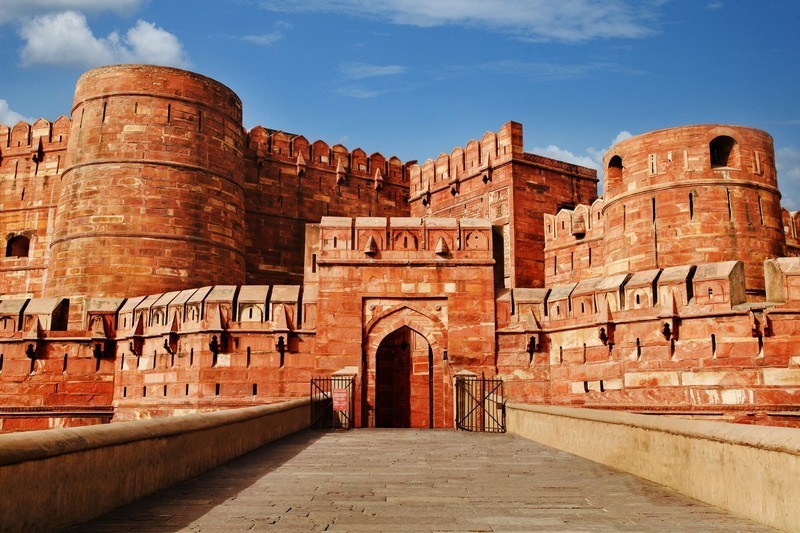
The raid on the Somnath Temple in 1025 CE, conducted by Sultan Mahmud of Ghazni, stands as the most prominent military expedition during the Turkish incursions into India prior to the establishment of the Delhi Sultanate in 1206 CE. Situated on the southern coast of the Kathiawar Peninsula in present-day Gujarat, the temple was not merely a religious site but a critical administrative and financial node of the Chaulukya (Solanki) dynasty.
Objectives and Motivations
- Wealth Extraction: The temple was widely regarded as one of the wealthiest in India. Its plunder served to provide the bullion and precious metals required to finance the Ghaznavid military machine, which relied heavily on mercenary cavalry.
- Psychological Warfare: By targeting a symbol of such immense religious and political prestige, Mahmud aimed to demoralize regional Indian rulers and consolidate his reputation as a “ghazi” (warrior for faith) within the Islamic world.
- Strategic Positioning: Gujarat was a vital hub for maritime trade connecting India with the Middle East. Controlling or destabilizing this region served to weaken the economic resilience of the Indian states.
The Military Expedition (1025 CE)
- The Route: Mahmud’s army traveled through Multan and across the Thar Desert, a route previously considered impassable for a large military force. This displayed the high level of logistical planning and intelligence-gathering maintained by the Ghaznavid state.
- The Siege: Upon reaching Somnath, the Ghaznavid forces encountered stiff resistance from the local garrison. Mahmud utilized his superior siege equipment and highly mobile cavalry to breach the temple’s defenses.
- The Aftermath: Following the capture and looting of the temple, Mahmud returned to Ghazni via the Sindh desert to avoid potential blockades by regional Hindu confederacies.
The Socio-Political Environment in Gujarat
- Chaulukya Kingdom: At the time of the raid, Bhima I was the ruler of the Chaulukya dynasty. The relative lack of a centralized Indian response to the raid highlighted the political fragmentation of the period.
- Temple Economy: Temples like Somnath functioned as decentralized banks, repositories of donations, and landowners. They were integrated into the agrarian tax system, making them logical targets for any force seeking to cripple regional governance.
- Regional Resistance: While the Chaulukyas could not prevent the raid, the logistical difficulty of Mahmud’s return journey, hampered by hostile local tribes, showcased the inherent risks and limitations of Turkish raids into the deep Indian interior.
Historical Records and Documentation
- Contemporary Accounts: The raid is documented by court historians such as Gardizi and later chroniclers like Ibn al-Athir. These accounts emphasize the sheer volume of gold, silver, and precious stones captured.
- Al-Biruni’s Silence: Notably, Al-Biruni, who accompanied Mahmud’s earlier campaigns and authored Kitab-ul-Hind, does not provide a detailed contemporary account of the Somnath raid in his work, focusing instead on the scientific and philosophical aspects of Indian civilization.
- Later Interpretations: The raid was frequently romanticized in later medieval Persian chronicles, which served to enhance the stature of Mahmud as a ruler.
Comparative Impact of Ghaznavid Raids
| Feature | Somnath Raid (1025 CE) | General Ghaznavid Raids (1000–1027 CE) |
| Primary Target | Religious/Economic hub | Fortified urban/administrative centers |
| Psychological Impact | High (Symbolic significance) | Moderate (Operational significance) |
| Logistic Difficulty | Extremely high (Desert crossing) | High (Mountain/Plain transit) |
| Long-term Consequence | Wealth drain; status symbol | Weakening of North Indian frontier defenses |
Strategic Consequences for India
- Frontier Breakdown: The raid confirmed that the political powers of North and West India were unable to defend their own religious and economic centers, a realization that accelerated the transition toward later, more permanent Turkish territorial control.
- Shift in Warfare: The event underscored the obsolescence of stationary, temple-based wealth storage and the failure of traditional infantry-heavy armies against highly mobile cavalry.
- Intelligence Failure: The ability of Mahmud to cross the Thar Desert without detection by regional intelligence networks underscored a catastrophic failure in inter-state communication among Indian kingdoms.
Trivia and Key Facts
- The Lingam: Historical accounts suggest the temple housed a celebrated Shiva Lingam, which became the central focus of the iconoclastic aspect of the raid.
- Logistics: Mahmud’s army reportedly carried their own water supplies during the desert crossing, a testament to the logistical professionalism of the Ghaznavid military.
- End of the Ghaznavid Era: Although the raid brought immense wealth to Ghazni, it did not lead to the permanent occupation of Gujarat, as the Ghaznavids remained primarily focused on their Central Asian frontiers and the Punjab.
- Symbolism: In modern historical discourse, the raid on Somnath is often studied not only for its medieval context but as a significant touchstone in the historiography of communal relations in the Indian subcontinent.