
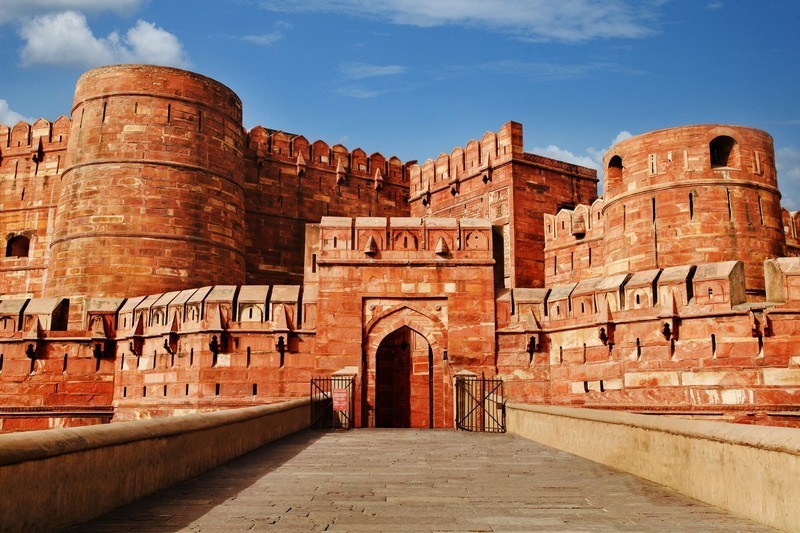
The Battle of Chandawar was a decisive military confrontation between the Ghurid forces, led by Muhammad Ghori, and the Gahadavala dynasty, commanded by King Jayachandra. Following the Second Battle of Tarain (1192 CE), which crippled the Chahamana power, the victory at Chandawar effectively eliminated the second major North Indian power, paving the way for the consolidation of Ghurid authority over the Gangetic heartland.
Strategic Context and Geographic Significance
The conflict took place near Chandawar on the banks of the Yamuna River, located in present-day Uttar Pradesh between the cities of Etawah and Kannauj.
- The Gahadavalas, under Jayachandra, controlled the fertile region of the Doab and the historically significant capital of Kannauj.
- By 1194 CE, Ghori had already established a foothold in Delhi and Ajmer. Kannauj remained the last major political entity capable of challenging the Ghurid expansion in Northern India.
- The control of the Gahadavala kingdom was essential for the Ghurids to secure their dominance over the eastern trade routes and the rich agricultural plains of the Ganges.
Military Mobilization and Leadership
Muhammad Ghori commanded an army primarily composed of elite Turkish cavalry, which had been refined through successive campaigns in Punjab and Rajasthan. King Jayachandra led the Gahadavala forces, which featured a large contingent of war elephants, a hallmark of traditional Indian military architecture. Despite the strategic importance of the region, the Gahadavalas were unable to coordinate a joint defense with other surviving Rajput remnants, leaving them to face the Ghurid military machine in isolation.
Tactical Conduct of the Battle
The battle was fought with intensity, with the Gahadavala army initially showing significant defensive strength.
- The Ghurid forces deployed their standard tactical model: high-speed horse archers and flanking maneuvers.
- The turning point occurred when Muhammad Ghori directed a focused assault on the center of the Gahadavala line.
- During the heat of the engagement, an arrow struck Jayachandra in the eye, causing him to fall from his elephant.
- The collapse of the Gahadavala commander led to widespread panic and chaos within the Indian ranks, resulting in a rout of the Gahadavala army.
Consequences and Impact on Ghurid Hegemony
The victory at Chandawar had profound implications for the political landscape of medieval India.
- End of Gahadavala Dominance: The defeat decimated the Gahadavala military and administrative structure, effectively ending their rule over the Gangetic plains.
- Consolidation of the Doab: The Ghurids gained control over Kannauj, Varanasi, and the surrounding territories, which provided the financial and agricultural base necessary to sustain their Indian administration.
- Expansion to the East: The defeat of Jayachandra removed the last major territorial barrier between the Ghurids and the eastern regions of Bihar and Bengal, facilitating the subsequent expeditions of Bakhtiyar Khalji.
- Psychological Dominance: The loss of the two most powerful North Indian kings (Prithviraj Chauhan at Tarain and Jayachandra at Chandawar) within a span of two years left regional principalities demoralized and unable to offer unified resistance.
Comparative Summary: Key Battles of Ghurid Expansion
| Battle | Year | Opponent | Strategic Consequence |
|---|---|---|---|
| First Battle of Tarain | 1191 CE | Prithviraj Chauhan | Ghurid retreat; temporary Rajput success |
| Second Battle of Tarain | 1192 CE | Prithviraj Chauhan | Collapse of Chahamana power; Delhi captured |
| Battle of Chandawar | 1194 CE | Jayachandra | End of Gahadavala power; control of Gangetic heartland |
Historical Trivia and Facts
- The Gahadavalas of Kannauj were often cited by contemporary Persian chroniclers as one of the most powerful and wealthy dynasties of North India.
- Kannauj, the theater of the struggle, had been the imperial center of Northern India since the time of Harsha. Its fall to the Ghurids held immense symbolic weight.
- The victory at Chandawar allowed the Ghurids to loot the immense treasury of Kannauj, which further financed their continued expansion into Eastern India.
- Modern historical interpretations of the battle rely primarily on accounts from chroniclers such as Hasan Nizami, who served under the Ghurid administration and later the Mamluk dynasty.
- The Battle of Chandawar is considered the final step in the primary phase of Ghurid conquest, after which Ghori returned to Ghazni, leaving his generals to administer the Indian territories.