
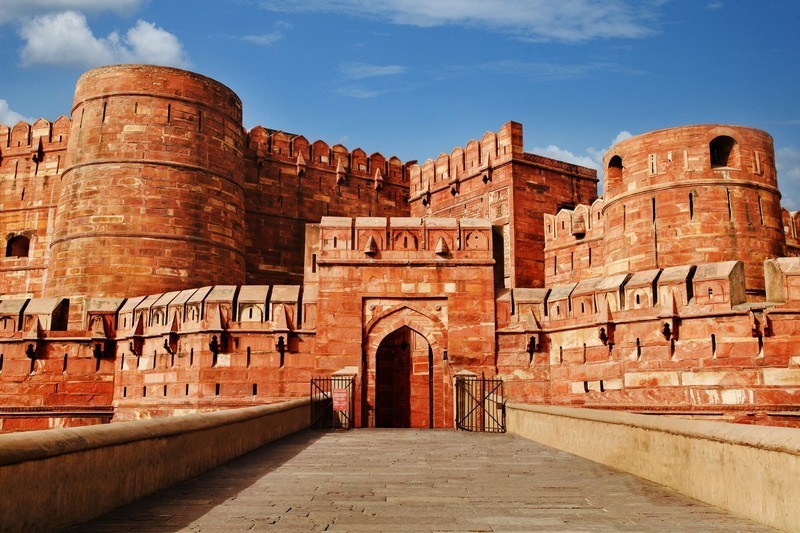
The transition from Ghurid raids to the establishment of the Delhi Sultanate (1206 CE) marks a pivotal transformation in medieval Indian history. The Ghurids, led by Mu’izz ad-Din Muhammad Ghori, were a Tajik-Persianate dynasty from the Ghor region of Afghanistan. Unlike the Ghaznavids, who primarily sought wealth through seasonal plunder, the Ghurids aimed to establish a sustainable territorial empire.
Foundation and Key Military Engagements
The success of the Ghurids was predicated on the systematic dismantling of North Indian political structures through high-intensity military campaigns.
- Battle of Kayadara (1178 CE): Fought in Gujarat, this battle saw the forces of Mularaja II (Chaulukya dynasty) and Queen Naikidevi defeat Muhammad Ghori. This remained one of the few instances where early Ghurid expansion was checked.
- First Battle of Tarain (1191 CE): Prithviraj Chauhan of the Chahamana (Chauhan) dynasty defeated Ghori. The victory, while significant, was not followed by a proactive counter-offensive to secure the frontier.
- Second Battle of Tarain (1192 CE): This is considered the watershed moment of medieval Indian history. Ghori’s superior cavalry tactics, including the feigned retreat and concentrated archery, overwhelmed the Rajput forces. The death of Prithviraj Chauhan effectively ended Chahamana hegemony.
- Battle of Chandawar (1194 CE): Qutb ud-Din Aibak, Ghori’s commander, defeated Jayachandra of the Gahadavala dynasty near Kannauj. This victory consolidated Ghurid control over the entire Gangetic heartland.
Military Superiority and Tactical Advantages
The Turkish success was rooted in a military doctrine that prioritized mobility, discipline, and technological edge.
- Cavalry Dynamics: The Turkish forces utilized the composite bow and stirrups, which granted them unparalleled stability, speed, and accuracy on horseback.
- Meritocratic Hierarchy: The Mamluk (slave-soldier) system enabled the recruitment of elite commanders based on battlefield competence rather than dynastic lineage.
- Logistical Continuity: Turkish armies maintained secure supply lines back to the Central Asian steppes, ensuring a constant supply of horses and veteran reinforcements.
- Tactical Adaptability: The use of the feigned retreat—pretending to flee to break the opponent’s formation—allowed Turkish forces to exploit the rigidity of Indian infantry-heavy armies.
Socio-Political Vulnerabilities of Indian Kingdoms
The collapse of the existing political order was driven by structural weaknesses that the Turkish invaders successfully exploited.
- Fragmented Sovereignty: India was governed by a decentralized feudal structure (Samanta system). The lack of a centralized military command prevented a unified national defense.
- Over-reliance on Static Assets: Rajput armies depended on massive hill forts and slow-moving war elephants. Elephants often became a liability, causing chaos in their own ranks when wounded.
- Inter-state Rivalries: Intense competition between clans, particularly the Chahamanas and Gahadavalas, prevented the formation of a sustainable military alliance against the foreign threat.
- Lack of Strategic Depth: The Rajput model relied on the protection of regional capitals. Once these centers fell, the political structure lacked the flexibility to conduct effective long-term guerrilla resistance.
Institutional Innovations: The Iqta System
The Ghurids introduced the Iqta system, a cornerstone of the Delhi Sultanate’s administrative stability that differed significantly from Indian land-tenure models.
- Non-Hereditary Assignments: Unlike the hereditary land grants of the Rajput era, an Iqta was a transferable revenue assignment.
- Fiscal Control: The Muqti (holder of the Iqta) was authorized to collect land tax to maintain troops and provide a surplus to the central treasury.
- Centralized Oversight: Because Iqtas were routinely transferred, officials were prevented from building entrenched, autonomous local power bases, keeping them dependent on the Sultan.
Comparative Governance Structures
| Feature | Rajput Polity | Ghurid/Turkish Model |
| Governance Model | Decentralized Feudalism | Absolute Centralized Monarchy |
| Military Base | Hereditary Feudal Levies | Professional Slave-Soldier Corps |
| Land Tenure | Permanent Land Grants | Transferable Iqta System |
| Bureaucracy | Minimal/Localized | Extensive (Dabirs/Munshis) |
| Language | Sanskrit/Regional Vernaculars | Persian (Farsi) |
Evolution into the Delhi Sultanate
Following the death of Muhammad Ghori in 1206 CE, the Ghurid Empire decentralized into three major power centers, each controlled by a prominent Mamluk commander. Qutb ud-Din Aibak established his base in Delhi/Lahore, Tajuddin Yildiz in Ghazni, and Nasir ad-Din Qabacha in Multan/Uchch.
- Establishment of the Mamluk Dynasty: Qutb ud-Din Aibak’s coronation in 1206 CE marks the official transition from an expansionist Ghurid outpost to the independent Delhi Sultanate.
- Urbanization Strategy: The Turks consolidated power by fortifying urban nodes known as Qasbahs, which served as administrative and military hubs for projecting power into the rural hinterlands.
- Sufi Integration: The Sultanate actively patronized the Chishti and Suhrawardi Sufi orders, which helped integrate the new Turkish political elite into the social fabric of the Indian populace.
Historical Trivia
- The term Mamluk refers to a soldier-slave who, upon completing training and conversion, was often more loyal to the Sultan than to tribal or kinship factions.
- The arcuate style (true arch and dome) in Indian architecture was introduced by the Ghurids, seen prominently in the Quwwat-ul-Islam mosque and the Qutb Minar, signaling a break from the trabeate (beam-and-lintel) style of the previous era.
- The Tabaqat-i-Nasiri, written by Minhaj-i-Siraj, serves as a primary contemporary Persianate chronicle detailing the political ideology and expansionist justifications of the Ghurid commanders.