
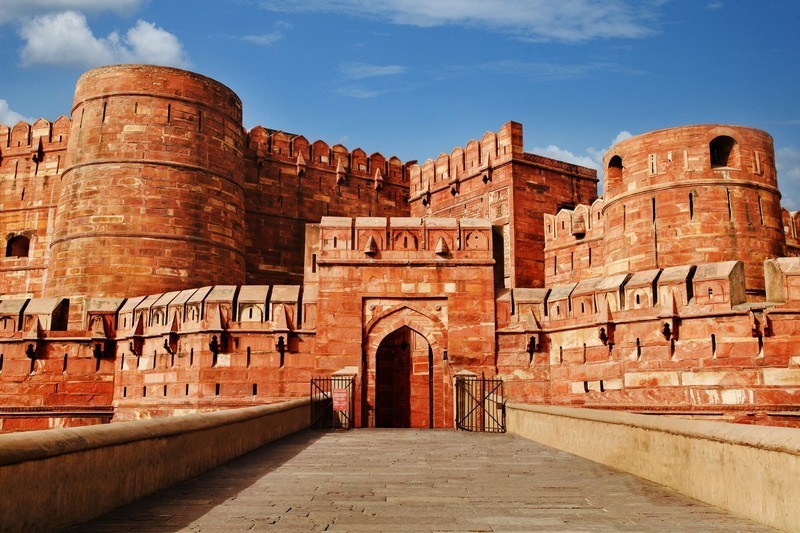
The Mamluk Dynasty, often referred to as the Slave Dynasty or the Ilbari Dynasty, marked the inception of the Delhi Sultanate. The term Mamluk is derived from the Arabic word meaning “owned,” denoting soldiers of slave origin who rose to become a professional military and administrative elite. Following the death of Muhammad Ghori in 1206 CE, his empire fractured. Qutb ud-Din Aibak, his most trusted commander, consolidated power in India, effectively decoupling the Indian territories from the Ghurid heartland in Afghanistan.
Foundation under Qutb ud-Din Aibak (1206–1210 CE)
Qutb ud-Din Aibak was a Turkic slave purchased by Muhammad Ghori, who rose through the ranks to become his commander-in-chief.
- Aibak established his capital at Lahore, while Delhi served as a strategic military center.
- He is credited with initiating the construction of the Quwwat-ul-Islam mosque in Delhi and the Qutb Minar, signaling the architectural transition from the trabeate (beam-and-lintel) style to the arcuate (arch-and-dome) style.
- He earned the title Lakh Bakhsh (giver of lakhs) for his immense generosity.
- His death in 1210 CE, following a fall from his horse while playing Chaugan (polo), led to a brief succession crisis before Iltutmish ascended the throne.
Consolidation under Iltutmish (1211–1236 CE)
Shams ud-Din Iltutmish is considered the real founder of the Delhi Sultanate. He transitioned the state from a loose collection of military outposts into a centralized monarchy.
- He successfully navigated the threat of the Mongol leader Genghis Khan by refusing shelter to the Khwarazmian prince Jalal ad-Din Mingburnu, thereby preventing an invasion.
- Iltutmish established the Turkan-i-Chahalgani (The Corps of Forty), an elite group of forty Turkic slave officers who controlled the administration and military.
- He introduced the Iqta system, a unique administrative mechanism where land revenue was assigned to officers in lieu of salary. This system prevented the rise of hereditary local landowners.
- He issued two foundational coins of the Sultanate: the silver Tanka and the copper Jital.
- Iltutmish was the first to receive a formal investiture from the Abbasid Caliph of Baghdad, granting him legal legitimacy as the Sultan of India.
Era of Razia Sultan (1236–1240 CE)
Razia Sultan holds the distinction of being the first and only female ruler of the Delhi Sultanate. Her reign challenged the patriarchal norms of the Turkic nobility.
- She ascended the throne after bypassing her brothers, asserting her right through popular support and her father’s nomination.
- Razia discarded traditional female attire and observed the public conduct of a monarch, leading to friction with the Chahalgani nobility who resented her assertion of independent authority.
- Her reliance on non-Turkic officers, such as the Abyssinian slave Jamal ad-Din Yaqut, further alienated the Turkic aristocracy, leading to conspiracies that eventually resulted in her deposition and death.
Consolidation under Ghiyas ud-Din Balban (1266–1287 CE)
Balban transformed the Sultanate into an absolute, autocratic monarchy. His political philosophy focused on elevating the prestige of the Sultan to prevent internal dissent.
- He introduced Persian court etiquettes such as Sijda (prostration) and Paibos (kissing the feet of the Sultan).
- Balban propagated the theory of Zill-i-Ilahi (Shadow of God on Earth), framing the Sultan as divinely appointed.
- He implemented a policy of “blood and iron” to suppress internal rebellions, particularly among the Mewatis and the Rajput chieftains.
- He dismantled the Chahalgani power structure, ensuring the nobility remained subservient to the monarch.
- He established the Diwan-i-Arz, a dedicated military ministry, to strengthen the central army against both internal rebellions and external Mongol threats.
Administrative and Military Structures
The Mamluk rulers utilized specific institutional frameworks to maintain control over a diverse and often hostile territory.
- The Iqta System:
- Iqtadar/Muqti: The holder of the land grant who was responsible for revenue collection and maintaining troops.
- Transferability: Iqtas were not hereditary; they were frequently transferred to prevent the official from becoming too powerful in a single region.
- Intelligence Network:
- Barid-i-Mumalik: The head of the state intelligence department. Spies were stationed in all provinces to report directly to the Sultan, providing an early warning system against insubordination.
- Military Organization:
- Turkish forces relied on heavy and light cavalry, specifically employing archers who could fire while on horseback. This provided a decisive tactical advantage over the infantry-centric armies of the Indian interior.
Comparative Overview of Mamluk Monarchs
| Ruler | Key Achievement | Political Impact |
| Qutb ud-Din Aibak | Established Delhi base | Formalized Ghurid control |
| Iltutmish | Real founder of Sultanate | Standardized currency and Iqta system |
| Razia Sultan | Challenged gender norms | Asserted absolute monarchical power |
| Balban | Absolute autocracy | Centralized power; crushed nobility |
Historical Trivia
- The tomb of Iltutmish in Delhi is a landmark of early Indo-Islamic architecture, characterized by intricate geometric carvings.
- Balban did not engage in significant territorial expansion, preferring to consolidate and defend the existing frontiers, particularly against the persistent threat of the Mongols in the northwest.
- The Mamluk dynasty ended in 1290 CE when Jalal ud-Din Khalji, an elderly noble, overthrew the grandson of Balban, signaling the transition to the Khalji dynasty.