
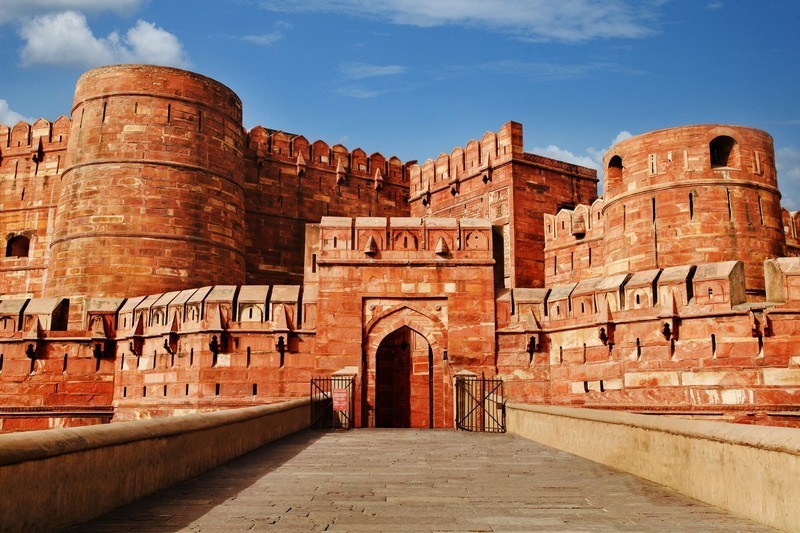
The Quwwat-ul-Islam (Might of Islam) Mosque, located within the Qutb Minar complex in Mehrauli, Delhi, stands as the earliest surviving mosque built by the Delhi Sultans. Construction was commissioned by Qutb-ud-Din Aibak in 1192 CE, immediately following the victory of Muhammad Ghori in the Second Battle of Tarain. The mosque serves as a primary example of the rapid transition of architectural styles during the onset of the Mamluk dynasty.
Construction Methodology and Symbolic Significance
The mosque was constructed by repurposing architectural elements from existing structures, a common practice during the initial phase of Turkish expansion.
- Historical records indicate the demolition of 27 Hindu and Jain temples to provide materials for the mosque’s construction.
- The structure reflects the transition from the traditional Indian trabeate (beam-and-lintel) style to the Islamic arcuate (arch-and-dome) style.
- The original prayer hall featured a screen of five corbelled arches, which served as a monumental facade. The central arch, significantly larger than the others, highlights the Persian influence on early Delhi Sultanate architecture.
- The mosque is cited in contemporary inscriptions as the Quwwat-ul-Islam, symbolizing the consolidation of Turkish military and political dominance over the conquered Chauhan territory.
Phases of Expansion and Modification
The mosque underwent significant structural expansions during the reigns of subsequent Mamluk rulers, reflecting the growing consolidation of the Sultanate.
- Iltutmish (1211–1236 CE) expanded the mosque by tripling its original area. He added a new colonnade and further embellished the arched screen, incorporating more refined geometric and floral motifs.
- Alauddin Khalji (1296–1316 CE) later added the Alai Darwaza, a monumental gateway that showcases a more sophisticated application of the true arch and dome technique using red sandstone and white marble.
Key Architectural Features
The mosque provides a synthesis of local Indian craftsmanship and Central Asian architectural concepts.
- Spolia Utilization: Large portions of the original structure, including columns and ceiling slabs, were sourced from demolished temples. These columns often feature intricate carvings of bells, lotus motifs, and garlands, which were occasionally defaced or plastered over to conform to Islamic aniconic traditions.
- Arcuate Facade: The massive screen, known as the ‘Maqsura,’ serves as the most prominent feature, representing the earliest attempts by Turkish builders to introduce the pointed arch into the Indian landscape.
- Courtyard Design: The mosque follows the classic hypostyle plan, consisting of a large rectangular courtyard surrounded by pillared cloisters.
Comparative Architectural Context
| Feature | Traditional Indian Style | Mamluk Architectural Style |
| Construction Technique | Trabeate (Beam-and-lintel) | Arcuate (True arch and dome) |
| Decorative Motifs | Figural imagery, lotus, bells | Geometric patterns, floral, calligraphy |
| Structural Focus | Massive stone pillars | Vaulted spaces and open courtyards |
| Primary Material | Sandstone/Stone slabs | Red sandstone, marble, mortar |
Historical Trivia and Significance
- The mosque remains a focal point for studying the early evolution of Indo-Islamic architecture, as it marks the precise moment where local Indian stonemasons began adopting Persianate design templates.
- The Qutb Minar, standing adjacent to the mosque, is often interpreted as the ‘Minaret’ for the Quwwat-ul-Islam mosque, designed to facilitate the call to prayer (Adhan).
- The iron pillar located in the courtyard of the mosque, which dates back to the Gupta period (specifically the reign of Chandragupta II), stands in juxtaposition to the Islamic structure, representing the continuity of Indian history beneath the new imperial order.
- The mosque was documented by the Persian chronicler Minhaj-i-Siraj in his work Tabaqat-i-Nasiri as the center of religious authority during the early decades of the Delhi Sultanate.
How would you like to proceed with your exploration of the Mamluk Dynasty or other facets of the Delhi Sultanate’s history?
Last Modified: June 19, 2026