
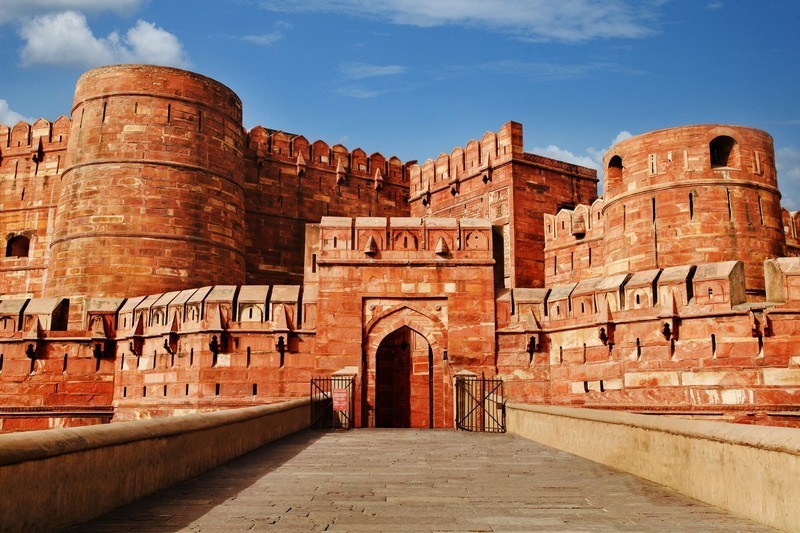
The Qutub Minar is a monumental minaret located in the Mehrauli complex of Delhi. Its construction was initiated by Qutb-ud-Din Aibak, the founder of the Mamluk Dynasty, around 1199 CE. Historically, the tower was intended to function as a ‘Mazana’ or minaret for the adjacent Quwwat-ul-Islam mosque, designed to facilitate the call to prayer (Adhan), while also serving as a victory monument commemorating the establishment of Turkish rule in India.
Architectural Evolution and Structural Phases
The construction of the Qutub Minar spanned the reigns of multiple Mamluk rulers, each contributing to its height and structural integrity.
- Qutb-ud-Din Aibak: Completed the first story of the minaret.
- Iltutmish: Added three more stories to the structure. Under his reign, the tower was effectively transformed into its recognizable form.
- Firoz Shah Tughlaq: Following lightning damage in 1369 CE, he replaced the top-most story and added a cupola, which was later damaged by an earthquake and replaced by the current entrance.
Architectural Features and Materials
The tower is a masterpiece of early Indo-Islamic architecture, blending Persianate design with local Indian construction techniques.
- Material: It is primarily constructed using red and buff sandstone, with white marble used in the later repairs and upper sections.
- Design: The tower tapers as it rises, with a base diameter of 14.3 meters and a top diameter of 2.7 meters.
- Surface Decoration: The exterior features alternating angular and rounded flutings. The surface is adorned with intricate carvings of verses from the Quran and floral motifs.
- Structural Transition: The lower stories retain elements of the trabeate (beam-and-lintel) style, while the upper stories reflect the more mature application of the arcuate (arch-and-dome) style championed by the later Mamluk builders.
Comparative Structural Phases
| Ruler | Construction Contribution | Structural Significance |
| Qutb-ud-Din Aibak | First story | Initiated the victory tower design |
| Iltutmish | Three additional stories | Defined the final height and taper |
| Firoz Shah Tughlaq | Top-most story | Restored structural integrity after damage |
Historical and Administrative Significance
The Qutub Minar serves as a primary reference point for the political and religious ambitions of the Mamluk Sultans.
- Legitimacy: By erecting a tower of such magnitude, the Mamluk rulers asserted their sovereignty and the permanence of Islamic governance in the heart of the conquered Rajput territories.
- Technological Synthesis: The project facilitated the training of local Indian stonemasons in Persianate geometric designs and arcuate structural methods, which became the blueprint for future Sultanate architecture.
- Symbolism: The tower stands as a testament to the patronage of the Sultanate over religious institutions, reinforcing the Sultan’s role as the protector of the faith.
Key Facts for UPSC Prelims
- The Qutub Minar is the tallest brick minaret in the world.
- It is part of the Qutub Complex, a UNESCO World Heritage Site since 1993.
- The inscriptions on the tower refer to Muhammad Ghori as the ‘Sultan’ and Qutb-ud-Din Aibak as his commander.
- The minaret is structurally supported by a system of corbelled balconies, a technique that was refined throughout its construction phases.
- The Alai Darwaza, built by Alauddin Khalji in 1311 CE, serves as the main southern entrance to the Quwwat-ul-Islam mosque and the Qutub Minar complex, representing the perfection of the true arch in India.
Trivia and Observations
- The tower is often misidentified as a victory tower built solely by Aibak, whereas it is technically a collective project of the Mamluk and later Tughlaq dynasties.
- The tapering shape of the minaret was a strategic engineering choice to ensure stability against wind pressure at high altitudes.
- The stone carvings on the minaret show clear evidence of the adaptation of traditional Indian motifs—such as lotus buds and bell-and-chain patterns—into the framework of Islamic calligraphic art.
- The Qutub Minar complex also houses the tomb of Iltutmish, which is notable for being one of the first buildings in India to feature the squinch arch, a crucial architectural innovation for supporting heavy domes.