
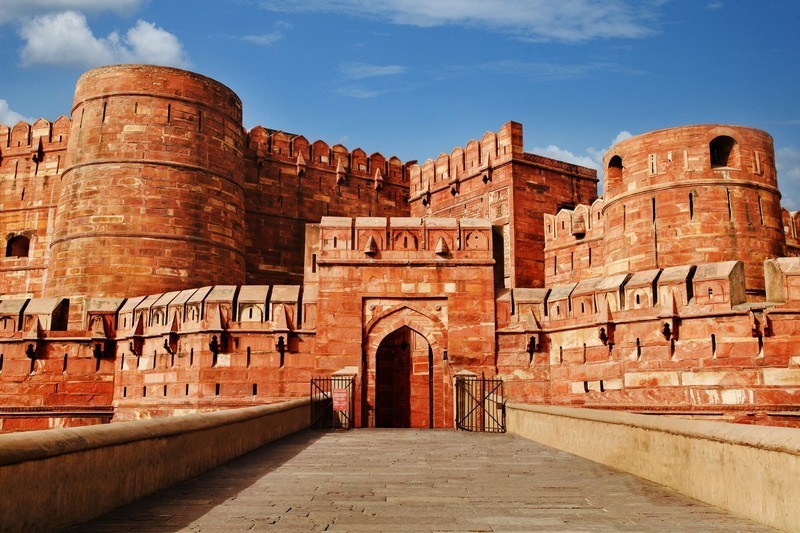
The Turkish nobility, primarily of Ilbari Turkic origin, formed the ruling stratum of the Delhi Sultanate during the Mamluk dynasty (1206–1290 CE). Unlike the landed aristocracy of the preceding Rajput states, the Turkish nobility was largely composed of Bandagan—military slaves who had undergone rigorous training and conversion to Islam. Their status was not hereditary in the traditional sense but was tied to their military service, administrative utility, and the patronage of the Sultan.
The Turkan-i-Chahalgani (Corps of Forty)
The most significant faction of the Turkish nobility was the Turkan-i-Chahalgani, or the “Corps of Forty,” institutionalized by Iltutmish. This group consisted of forty elite Turkic slave officers who held the highest positions in the civil and military administration.
- The Chahalgani functioned as the primary power brokers of the Sultanate, exerting control over state policy, revenue collection, and succession.
- During the period between the death of Iltutmish (1236 CE) and the ascension of Balban (1266 CE), the Chahalgani acted as “kingmakers,” frequently deposing or installing Sultans to protect their collective interests.
- Their influence often created a period of political instability, as the Sultans of this era were frequently reduced to figureheads under the domination of the nobility.
Socio-Political Dynamics and Factionalism
The Turkish nobility was not a monolithic bloc; it was marked by internal competition and factionalism.
- Ethnic Factions: Beyond the Ilbari Turks, the nobility included other Turkic groups and, occasionally, non-Turkic elements like Tajiks or Abyssinians. Conflicts often arose between these groups over preferential appointments and control of key Iqtas.
- Loyalty to the Sultan: The nobility’s loyalty was highly conditional, shifting based on the Sultan’s ability to provide military success, wealth distribution, and stability.
- Economic Power: The nobility derived its power from the Iqta system. As holders of these revenue assignments, they controlled significant financial resources, which they used to maintain private armies and influence regional politics.
Role of the Nobility in Governance
The Turkish nobility performed essential roles that kept the Sultanate functional despite political turbulence.
- Administrative Oversight: Members of the nobility served as Muqtis or Walis, overseeing tax collection and maintaining law and order in the provinces.
- Military Leadership: They commanded the Sultanate’s armies in campaigns against external threats, such as the Mongols, and in internal pacification efforts.
- Political Advisory: They constituted the inner circle of the Sultan’s court, offering counsel on foreign policy, legal matters, and the management of local vassals.
Balban’s Suppression of the Nobility
Ghiyas ud-Din Balban (1266–1287 CE), himself a member of the Chahalgani, fundamentally transformed the status of the nobility upon his accession to the throne.
- Dismantling the Chahalgani: Recognizing that the power of the “Forty” was the greatest threat to the monarchy, Balban systematically eliminated or neutralized them. He used various methods, including political exile, secret executions, and judicial punishment for minor infractions, to break their organized influence.
- Restoration of Monarchical Prestige: Balban asserted the divine right of the Sultan (Zill-i-Ilahi), requiring nobles to adhere to strict court etiquette, such as Sijda (prostration) and Paibos (kissing the feet). This was designed to diminish the status of the nobles and elevate the Sultan to an unapproachable authority.
- Meritocratic Integration: Balban sought to replace the old Turkic nobility with a new, more loyal cadre of officials, thereby reducing the Sultanate’s dependence on the established cliques.
Comparative Influence of the Turkish Nobility
| Period | Influence of Nobility | Sultan’s Position |
| Reign of Iltutmish | High, but subservient to Sultan | Supreme and autocratic |
| Post-Iltutmish to 1266 | Dominant (Kingmakers) | Weak/Figurehead |
| Reign of Balban | Suppressed and subservient | Absolute and autocratic |
Historical Trivia and Facts
- The Chahalgani was initially established by Iltutmish as a means to ensure a reliable and loyal administrative class to maintain the Sultanate’s stability.
- The exclusion of non-Turks from the higher echelons of the nobility was a major point of contention during the reign of Razia Sultan, whose promotion of the Abyssinian Jamal ad-Din Yaqut led to open rebellion by the Turkic elites.
- The struggle between the nobility and the monarchy during the Mamluk period served as a formative experience for the Delhi Sultanate, leading to the more rigorous centralized administrative models adopted by the subsequent Khalji and Tughlaq dynasties.
- Despite their internal power struggles, the Turkish nobility was instrumental in the gradual synthesis of Persianate administrative traditions with the diverse socio-economic realities of the Indian subcontinent.