
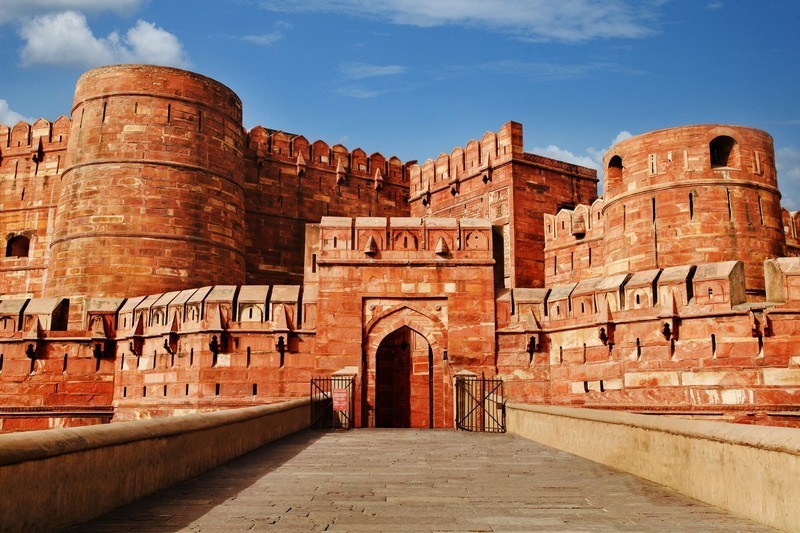
Siri Fort was the second of the seven historical cities of Delhi, established by Alauddin Khalji in the early 14th century (c. 1303 CE). Unlike the earlier cities of the Delhi Sultanate, which were primarily focused on administrative expansion, Siri was built as a direct strategic response to the existential threat posed by persistent Mongol invasions.
Strategic Foundation and Purpose
The primary motivation behind the construction of Siri was the defense of Delhi against Mongol incursions, which had reached the city’s outskirts during the reign of Alauddin Khalji.
- Defense against Mongols: After the siege of Delhi by the Mongol commander Targhi in 1303 CE, Alauddin recognized that the existing fortifications—centered around the Qila Rai Pithora and Kilokhri—were insufficient for modern defensive warfare.
- The “Siri” Nomenclature: According to historical accounts, the fort was named “Siri” because the foundation was laid on a site where thousands of severed Mongol heads (sir in Persian/Hindustani) were buried to serve as a deterrent.
- Urban Planning: The city was designed with a massive, oval-shaped layout protected by high, thick walls. It was intended to serve as a self-contained, garrisoned military capital, allowing the Sultan to house his permanent standing army and maintain a centralized supply of grain and weapons.
Architectural Features and Construction
Siri Fort represents a crucial transition in Indo-Islamic architecture, marking the introduction of more sophisticated structural techniques compared to the Slave Dynasty period.
- Materials and Technique: The walls were constructed using rubble masonry and lime mortar, a signature style of the Khalji period. The fort utilized the “true arch” and “dome” techniques, which allowed for stronger, more durable structural support.
- Hauz-i-Alai: To ensure the city remained self-sufficient during a siege, Alauddin commissioned a massive water reservoir adjacent to the fort, known as the Hauz-i-Alai (now commonly known as Hauz Khas). This reservoir ensured a consistent water supply for the garrisoned population.
- The Palace of Thousand Pillars: Historical records, particularly those by Ibn Battuta, describe the Qasr-i-Hazar Situn (Palace of Thousand Pillars) within the complex. It was noted for its grand halls and ornate decoration, serving as the seat of the Khalji government.
Key Historical Facts and Trivia
| Feature | Detail |
| Founder | Alauddin Khalji |
| Period of Construction | c. 1303–1304 CE |
| Strategic Location | South of the Mehrauli-Qutb complex |
| Primary Utility | Garrison city for the standing army |
| Current Status | Archaeological site maintained by the ASI |
- First “Islamic” City: Siri is often cited by historians as the first city in India built according to specific Islamic urban planning principles, distinct from the modifications made by previous Sultans to existing Rajput-era fortresses.
- End of the Khalji Era: The city remained the power center of the Sultanate until the fall of the Khalji dynasty. Following the rise of the Tughlaq Dynasty, Ghiyas-ud-din Tughlaq shifted the administrative center to Tughlaqabad, leading to the gradual decline of Siri.
- Modern Remains: Today, the fort is largely in ruins. The most prominent surviving structure is a section of the massive stone wall. The surrounding area has been repurposed into a sports complex, though the original perimeter remains protected.
Historical Assessment for UPSC
- Military Innovation: The construction of Siri signifies the Sultanate’s shift toward professional, defensive military urbanism. The fort allowed the state to manage a centralized standing army, which was the backbone of Alauddin’s market control and revenue reforms.
- Integration with Economy: Siri was not merely a fort; it was the nerve center of Alauddin’s economic regulations. Its proximity to the administrative hub allowed the Sultan to directly oversee the storage of grains collected as tax and the regulation of the markets that kept the city supplied.
- Shift in Power Dynamics: The transition from the Qutb complex (the center of the Slave Dynasty) to Siri signaled the transition of power from the old Turkish aristocratic elite to a new, more militarized and centralized ruling class represented by the Khalji Sultanate.