
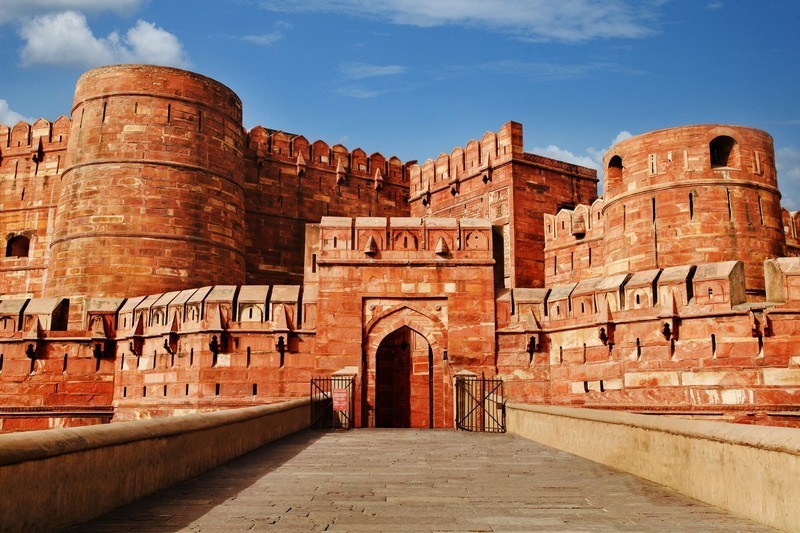
The Ranthambore expedition was a significant military campaign initiated by Alauddin Khalji to eliminate a powerful Rajput resistance in Rajasthan. Ranthambore was considered one of the most impregnable fortresses in northern India due to its geographical location atop a steep hill and its sophisticated defensive architecture. The fort was under the control of the Chauhan ruler Hammir Deva.
Strategic Causes of the Conflict
The conflict between Alauddin Khalji and Hammir Deva was driven by both geopolitical and internal administrative factors.
- Providing Shelter to Rebels: The immediate provocation was the asylum granted by Hammir Deva to Muhammad Shah, a prominent ‘New Muslim’ Mongol rebel who had fled from Alauddin’s court after a failed rebellion in the aftermath of the Gujarat campaign.
- Refusal to Surrender: Alauddin demanded the extradition of Muhammad Shah and his associates. Hammir Deva refused to surrender the refugees, viewing it as a breach of Rajput honor and the tradition of ‘Sharana’ (providing sanctuary).
- Strategic Expansion: Ranthambore occupied a critical position in the Aravalli region, and its subjugation was necessary for the Sultan to consolidate control over Rajasthan and neutralize potential threats to the routes leading toward Gujarat and the Deccan.
The Military Campaign
The siege of Ranthambore was characterized by long-drawn-out warfare, reflecting the difficulties the Sultanate army faced against traditional hilltop fortifications.
- Initial Failed Attempts: The first phase of the campaign, led by Ulugh Khan and Nusrat Khan, resulted in significant losses for the Sultanate forces. Nusrat Khan was killed during the siege operations.
- Direct Involvement of Alauddin: Due to the protracted nature of the resistance, Alauddin Khalji arrived personally to take command of the siege operations in 1301 CE.
- Tactical Siege Warfare: The Sultanate forces employed advanced siege techniques, including the use of Manjaniq (catapults) and Maghribi (siege engines) to breach the fort walls. The forces also invested heavily in earthworks to fill the surrounding moats and build mounds to overlook the fort.
Fall of the Fort and Aftermath
After nearly a year of siege, the fort fell in July 1301 CE. The conquest was marked by the tragic end of the royal household and the establishment of Sultanate authority in the region.
- Jauhar: Upon realizing that defeat was imminent, the Rajput women performed Jauhar, a ritual of mass self-immolation, to preserve their honor.
- Saka: Hammir Deva and his warriors performed Saka, fighting to the death in a final, desperate charge against the Sultanate forces.
- Punishment of Rebels: Upon entering the fort, Alauddin severely punished those who had harbored the Mongol rebels. Muhammad Shah, the primary cause of the conflict, was captured and executed.
Historical Significance and Analysis
The fall of Ranthambore served as a grim warning to other Rajput kingdoms regarding the determination and military capacity of the Khalji state.
- Shift in Power: The victory decimated the Chauhan power center in Rajasthan, paving the way for further expansions into Chittor and other Rajput territories.
- Symbolism of Invincibility: The capture of a fort previously considered unconquerable enhanced Alauddin’s prestige and demonstrated the efficacy of his standing army and heavy artillery-like siege weaponry.
- Administrative Integration: Following the conquest, the region was brought under the direct administrative control of the Delhi Sultanate, with officers appointed to oversee revenue collection and regional security.
Quick Facts and Trivia for Prelims
| Feature | Details |
| Year of Campaign | 1301 CE |
| Rajput Ruler | Hammir Deva (Chauhan Dynasty) |
| Sultanate Commander | Alauddin Khalji, Ulugh Khan, Nusrat Khan |
| Notable Outcome | Jauhar performed by the women of the fort |
| Strategic Importance | Secured the central Rajasthan corridor |
- The poet Amir Khusrau accompanied Alauddin during this campaign and provided detailed descriptions of the siege, the construction of earthworks, and the final fall of the fort.
- The campaign highlighted the high cost of subduing hilltop fortresses, which influenced Alauddin’s subsequent military planning, leading to the development of better logistical and siege-craft training for his army.
- The Ranthambore expedition is frequently cited in medieval literature as the first major instance where the ‘New Muslims’—the Mongol settlers—were brutally purged by the Delhi Sultanate for their perceived disloyalty.