
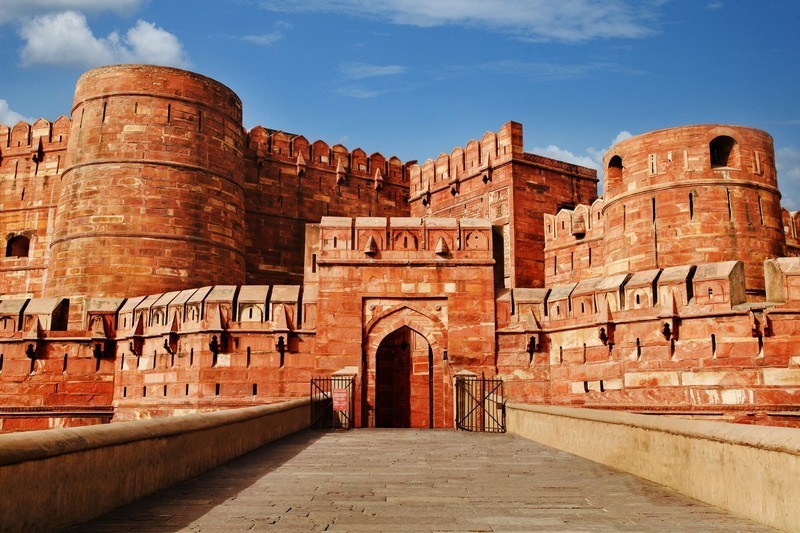
The siege of Chittor by Alauddin Khalji in 1303 CE remains one of the most significant and debated military expeditions in medieval Indian history. Located in the Mewar region of Rajasthan, the fortress of Chittor was a stronghold of the Guhila (Sisodia) Rajputs under the rule of Rawal Ratan Singh.
Strategic Motivation and Causes
Historical accounts, most notably Amir Khusrau’s Khazain-ul-Futuh and the later, semi-legendary Padmavat by Malik Muhammad Jayasi, cite multiple reasons for the campaign.
- Geopolitical Consolidation: Chittor lay on the strategic route connecting Delhi to Gujarat and Malwa. Control of this fortress was essential for the Sultan to maintain his lines of communication and commerce in Western India.
- Expansionist Policy: Following his success at Ranthambore, Alauddin aimed to establish total hegemony over the Rajput states of Rajasthan to neutralize potential rivals and secure his frontiers.
- Imperial Prestige: As the center of the Guhila power, Chittor represented a major challenge to the Sultan’s assertion of absolute authority in North India.
The Military Siege
Alauddin Khalji personally led the campaign against Chittor, marking the second time he took direct command of a siege after Ranthambore.
- Duration and Resistance: The siege lasted approximately eight months, from January to August 1303 CE. The Rajput defenders offered fierce resistance, utilizing the fort’s formidable natural elevation and high stone walls.
- Tactical Deployment: The Sultanate army utilized advanced siege engines, including manjaniqs (catapults) and pashibs (raised earthen platforms or mounds), to scale the walls and overcome the fortress’s defensive advantage.
- Fall of the Fort: After intense fighting and the exhaustion of supplies, the fort fell to the Sultanate forces on August 26, 1303 CE.
The Aftermath: Jauhar and Conquest
The fall of Chittor was marked by the tragic ritual of Jauhar, which has since become a pivotal theme in Rajput historiography.
- Jauhar and Saka: Faced with certain defeat, the women of the royal household and the noble families led by Rani Padmini performed Jauhar (mass self-immolation). Following this, Rawal Ratan Singh and his soldiers performed Saka, charging out of the fort to die fighting on the battlefield.
- Administrative Reorganization: After the capture, Alauddin handed over the administration of Chittor to his son, Khizr Khan, and renamed the city ‘Khizrabad’ in his honor.
- Subsequent Withdrawal: The Sultanate’s direct control of Chittor was short-lived. Due to the difficulty of maintaining a garrison in the face of local hostility, the fort was eventually handed over to a local Rajput ruler, Maldeo, a tributary of the Sultanate, before being reclaimed by the Sisodias under Hammir Singh during the Tughlaq period.
Historical Significance and Analysis
The Chittor campaign is analyzed by historians not only as a military event but as a symbolic clash between two distinct political cultures.
- Integration into Imperial Structure: The campaign effectively broke the back of the Guhila resistance in Mewar, though it did not result in permanent territorial annexation, highlighting the limits of the Sultanate’s power in remote mountainous regions.
- Evolution of Warfare: The siege showcased the maturation of the Delhi Sultanate’s siege craft, incorporating Persian and Central Asian techniques that made traditional Indian hilltop forts increasingly vulnerable.
- Literary Interpretation: While contemporary sources like Amir Khusrau emphasize the military and political aspects, the 16th-century work Padmavat introduced the narrative of Rani Padmini’s beauty as the primary cause for the attack, which has become a significant, albeit debated, element of the popular historical narrative.
Key Facts for UPSC Prelims
| Feature | Details |
| Year | 1303 CE |
| Rajput Ruler | Rawal Ratan Singh |
| Sultanate Ruler | Alauddin Khalji |
| Siege Duration | Approx. 8 months |
| Renamed Name | Khizrabad (after Khizr Khan) |
| Primary Source | Khazain-ul-Futuh by Amir Khusrau |
- Amir Khusrau, the court poet, accompanied Alauddin during the campaign and provided the earliest eyewitness account of the siege.
- The Chittor campaign is considered the climax of Alauddin’s North Indian expansionist phase, after which he shifted his focus primarily to the Deccan and South India.
- The fall of Chittor remains the most iconic example of Jauhar in medieval Indian records, serving as a foundational element of the Rajput ethos of sacrifice.