
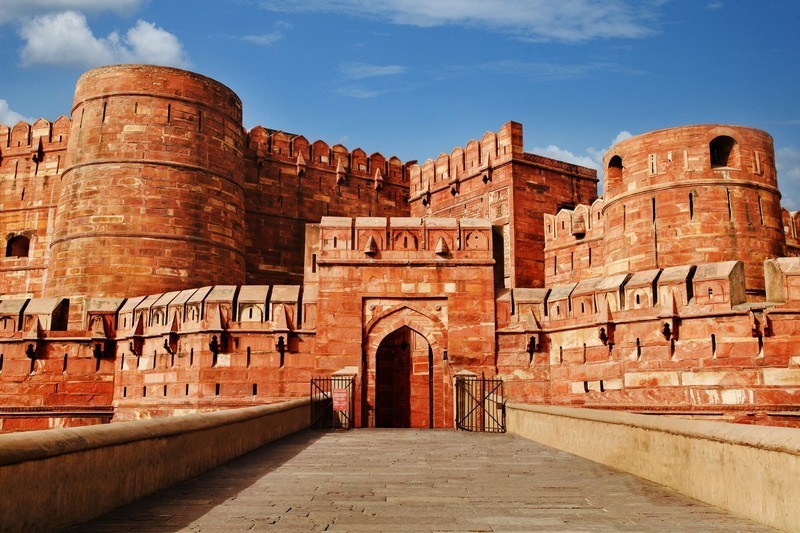
The Madurai campaign of 1311 CE represents the southernmost military expedition conducted by the Delhi Sultanate during the Khalji dynasty. Led by Malik Kafur, the expedition targeted the Pandya Kingdom in the Tamil region. This campaign marked the terminal point of the Sultanate’s aggressive expansionism under Alauddin Khalji, pushing the boundaries of the empire to the edge of the Indian peninsula.
Context and Casus Belli
The campaign was triggered by a bitter war of succession between the Pandya brothers, Sundara Pandya and Vira Pandya.
- Conflict of Succession: Following the death of the Pandya ruler Maravarman Kulasekhara Pandya, his two sons began a civil war. Sundara Pandya, finding himself losing the struggle, fled to Delhi to seek the assistance of Alauddin Khalji.
- Strategic Opportunity: Alauddin seized this as a pretext to intervene in the extreme south, allowing him to penetrate the wealth-concentrated temple cities that had remained untouched by previous northern invasions.
- Logistical Support: Malik Kafur marched from the Hoysala capital of Dwarasamudra, aided by the Hoysala monarch Veera Ballala III, who provided guides and essential intelligence on the complex river systems and terrain of the Tamil country.
Military Progression and the Sack of Madurai
Malik Kafur’s army navigated the dense geography of the Kaveri and Vaigai river basins with unprecedented speed, catching the Pandya forces off-guard.
- Rapid Incursion: Despite the lack of established roads, the Sultanate forces utilized highly mobile cavalry units to advance quickly. They bypassed heavily fortified cities when necessary to reach the economic and political heartlands.
- Sack of Cities: As the Sultanate army moved toward Madurai, they systematically raided wealthy urban centers and temple complexes, including Brahmastpuri and Chidambaram.
- Fall of Madurai: Upon reaching the capital, Madurai, the Pandya rulers retreated into the interior jungles to avoid a direct confrontation. The city was captured, looted, and its famous temple complex—a center of massive accumulated wealth—was stripped of its treasures.
Wealth Extraction and Tributary Results
The primary objective of the Madurai campaign was the massive accumulation of liquid wealth. Historical chronicles of the era detail the sheer scale of the plunder.
- Estimated Booty: Contemporary historians, such as Ziauddin Barani, report that the treasure seized from the Pandya kingdom was of such magnitude that it exceeded the combined wealth captured from all previous southern expeditions.
- Logistics of Plunder: The wealth, consisting of gold, silver, precious stones, and pearls, along with thousands of war elephants and horses, required a heavily guarded, slow-moving caravan to transport back to Delhi.
- Tributary Status: While Madurai was sacked, no permanent administrative structure or governor was stationed there. The Sultanate recognized the impracticality of direct rule at such a vast distance from the capital. The objective was purely to turn the region into a source of regular annual tribute.
Historical Significance and Analysis
The Madurai campaign is considered the climax of the Khalji Sultanate’s expansionist era. Its significance lies in both the military logistical achievement and the economic impact on the Sultanate.
- Limits of Empire: The campaign demonstrated the reach of the Delhi Sultanate while simultaneously highlighting its limitations. It proved that the Sultanate could militarily reach the southern tip of India but could not feasibly administer it as a province.
- Impact on the Khalji Treasury: The influx of wealth from the Madurai campaign was crucial for maintaining the market reforms and price control policies of Alauddin Khalji. It allowed the state to maintain a massive standing army, providing the financial buffer required to defend the northwestern frontier against the Mongols for the remainder of his reign.
- Destruction of Temple Wealth: The systematic looting of temples in the Tamil region initiated a period of significant cultural and economic disruption, marking a major turning point in the medieval history of South India.
Key Facts for UPSC Prelims
| Feature | Details |
| Year | 1311 CE |
| Sultanate Commander | Malik Kafur |
| Pandya Ruler(s) | Sundara Pandya and Vira Pandya |
| Capital Targeted | Madurai |
| Key Ally | Veera Ballala III (Hoysala Empire) |
| Primary Goal | Wealth extraction and tributary submission |
- Amir Khusrau, in his work Khazain-ul-Futuh, provides the most detailed narrative of this campaign, documenting the extreme hardships faced by the army due to the unfamiliar humid climate and geographical barriers.
- The Madurai campaign was the final major military achievement of Malik Kafur’s career under Alauddin Khalji; following his return to Delhi, the Sultan’s health began to decline, leading to increased political instability at the center.
- Unlike the Rajput campaigns, which were driven by territorial acquisition and ideological conflict, the Madurai expedition remained strictly focused on economic exploitation, fitting the broader “Tribute and Extraction” model of the Khalji Sultanate.