

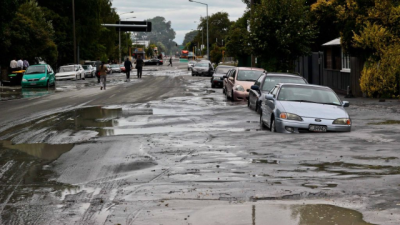
Earthquakes are natural phenomena that can wreak havoc on communities and infrastructures. One of the lesser-known but highly destructive effects of earthquakes is liquefaction. Liquefaction occurs when saturated soil loses its strength during an earthquake, transforming from a solid state to a liquid-like state. This phenomenon significantly impacts the stability of buildings, bridges, and other critical structures, leading to extensive damage and endangering lives.
Understanding Liquefaction
Liquefaction is a geotechnical phenomenon that occurs in loose, water-saturated sediments, such as sandy or silty soils. During an earthquake, the ground experiences rapid shaking, causing an increase in pore water pressure within the soil. This buildup of water pressure causes the soil particles to lose contact with each other, resulting in a loss of strength and stiffness. Consequently, the once-solid ground behaves like a liquid, leading to disastrous consequences for anything built upon it.
Causes of Liquefaction
Several factors contribute to the occurrence of liquefaction during earthquakes:
- Soil Composition: Soil type plays a crucial role in liquefaction susceptibility. Loose, cohesionless soils with poor grain-to-grain interaction, like sands and silts, are more prone to liquefaction.
- Saturated Conditions: The presence of a high groundwater table or excessive rain can saturate the soil, reducing its ability to bear loads during an earthquake.
- Earthquake Intensity: The magnitude and duration of an earthquake’s shaking directly influence the degree of liquefaction. Intense shaking over a prolonged period exacerbates the phenomenon.
- Depth of Water Table: A shallow water table increases the likelihood of liquefaction, as the water pressure can reach the soil layers more easily.
- Age of Sediments: Older sediments tend to be more compacted and less susceptible to liquefaction compared to younger, loosely packed sediments.
Impact of Liquefaction
The impact of liquefaction during an earthquake can be widespread and devastating:
- Building Damage: Liquefaction can cause buildings and structures to sink, tilt, or even collapse. The loss of foundation support compromises their structural integrity, leading to extensive damage and rendering them uninhabitable.
- Infrastructure Failures: Critical infrastructure such as roads, bridges, and pipelines can experience catastrophic failures, disrupting transportation networks and essential services.
- Underground Utilities: Liquefaction can damage underground utilities, such as water and gas pipelines, leading to leaks and potential hazards for the affected communities.
- Land Subsidence: After an earthquake, the liquefied soil settles, causing land subsidence. This can lead to long-term problems such as increased flooding risk in low-lying areas.
- Soil Lateral Spreading: In severe cases, liquefaction-induced lateral spreading can occur, pushing large masses of soil and causing ground displacement over significant distances.
Notable Examples
Throughout history, numerous earthquakes have caused significant liquefaction-induced damage. One notable example is the 1964 Great Alaska Earthquake. The quake, with a magnitude of 9.2, struck Southcentral Alaska, causing widespread liquefaction in areas with sandy or silty soils. The destruction was so severe that some entire neighborhoods in Anchorage sank and had to be abandoned.
Data Table: Liquefaction Susceptibility in Earthquake-Prone Regions
| Region | Liquefaction Susceptibility | Major Cities | Notable Earthquakes |
| San Francisco Bay Area, USA | High | San Francisco, Oakland, San Jose | 1906 San Francisco Earthquake, 1989 Loma Prieta Earthquake |
| Tokyo, Japan | Moderate to High | Tokyo, Yokohama, Kawasaki | 1923 Great Kanto Earthquake, 2011 Tohoku Earthquake |
| Istanbul, Turkey | High | Istanbul | 1999 Izmit Earthquake |
| Christchurch, New Zealand | High | Christchurch | 2010-2011 Canterbury Earthquakes |
| Kathmandu Valley, Nepal | Moderate to High | Kathmandu | 2015 Gorkha Earthquake |
Preventing and Mitigating Liquefaction Damage
While it is challenging to prevent earthquakes, there are measures to mitigate the impact of liquefaction:
- Site Selection: Avoid constructing critical infrastructure and buildings in high liquefaction-prone areas.
- Soil Improvement: Techniques like soil compaction, grouting, and soil replacement can enhance soil stability.
- Foundation Design: Buildings can be constructed with specialized foundation designs that can better withstand liquefaction-induced ground movements.
- Seismic Building Codes: Strict adherence to seismic building codes ensures that structures are built to withstand earthquakes, including liquefaction effects.
Liquefaction is a geotechnical hazard that poses a significant threat to earthquake-prone regions worldwide. Understanding its causes and impact is vital for devising effective mitigation strategies.
Last Modified: February 22, 2024