

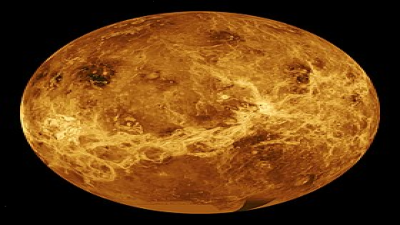
Venus, named after the Roman goddess of love and beauty, is often referred to as Earth’s twin due to its similar size and proximity to our planet. However, despite these initial similarities, Venus is a vastly different world, shrouded in mystery and extreme conditions.
Overview of Venus
Venus, the second planet from the Sun, has a diameter of approximately 12,104 kilometers (7,521 miles), making it slightly smaller than Earth. It orbits the Sun at an average distance of about 108 million kilometers (67 million miles). With a thick atmosphere composed primarily of carbon dioxide (CO2) and traces of nitrogen, Venus experiences an atmospheric pressure about 92 times greater than that of Earth.
The Runaway Greenhouse Effect
Venus is notorious for its runaway greenhouse effect, which has caused extreme temperatures on its surface. The thick atmosphere traps heat from the Sun, leading to a scorching average surface temperature of around 470 degrees Celsius (878 degrees Fahrenheit), higher than the temperature of Mercury, despite being farther from the Sun. This intense heat and pressure make Venus an inhospitable environment for life as we know it.
Composition of Venus’ Atmosphere
Venus’ atmosphere is primarily composed of carbon dioxide (CO2), accounting for about 96% of the total atmospheric gases. There are also traces of nitrogen, sulfur dioxide, and other minor components. The dense clouds of sulfuric acid in Venus’ atmosphere create a reflective layer that contributes to the planet’s high albedo, reflecting a significant portion of sunlight back into space.
Surface Conditions
Beneath its dense atmosphere, Venus boasts a rugged and volcanic surface. Volcanic features such as shield volcanoes, lava flows, and impact craters dot its landscape. Interestingly, Venus does not have tectonic plates like Earth, resulting in a lack of plate boundaries and associated geological activity.
Exploration Missions
Humans have long been intrigued by Venus and have sent several missions to study and explore this enigmatic planet. Notable missions include:
- Mariner 2 (1962): The first successful mission to Venus, Mariner 2 provided valuable data on the planet’s atmosphere and surface temperature.
- Venera Program (1961-1984): The Soviet Union’s Venera program consisted of multiple missions that successfully landed spacecraft on Venus, providing the first-ever images and data from its surface.
- Magellan (1989-1994): NASA’s Magellan spacecraft used radar mapping techniques to provide detailed topographic maps of Venus’ surface, revealing its volcanic nature.
- Venus Express (2005-2014): European Space Agency’s Venus Express mission focused on studying Venus’ atmosphere, climate, and plasma.
The following table provides significant data about Venus.
| Parameter | Venus |
| Diameter | 12,104 km (7,521 mi) |
| Average Distance from Sun | 108 million km (67 mi) |
| Average Surface Temp. | 470°C (878°F) |
| Atmospheric Composition | CO2, Nitrogen, Sulfur Dioxide, Trace Elements |
Venus, Earth’s twin in terms of size, has a vastly different environment. Its thick atmosphere, dominated by carbon dioxide, creates a runaway greenhouse effect and extreme surface temperatures. Despite these inhospitable conditions, Venus has been the subject of numerous exploration missions that have unveiled its unique geological features and atmospheric composition.
Last Modified: April 16, 2026