

Coastal landforms are dynamic and ever-changing features that result from the continuous interaction between land, sea, and various natural processes. These processes, including erosion, deposition, and tectonic activity, play a significant role in shaping the coastline and creating a diverse range of landforms.
Coastal landforms are the result of intricate interactions between geological, oceanic, and atmospheric processes. These features are constantly evolving due to the influence of factors such as waves, tides, currents, weathering, and sea-level changes.
Erosional Landforms
Erosional processes play a vital role in shaping the coastlines by wearing away rocks and sediment. Some prominent erosional landforms include:
- Sea Cliffs: These towering formations result from the gradual erosion of rocks by the pounding waves. For example, the dramatic chalk cliffs of Dover along the English Channel have been formed through the erosive action of the sea.
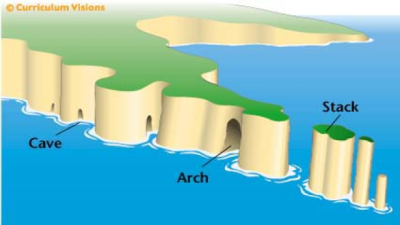
- Sea Caves, Arches, and Stacks: These features are often created in areas where different types of rock are present. The waves exploit weaknesses in the rocks, gradually eroding them to form caves, arches, and stacks. A well-known example is the Twelve Apostles along the Great Ocean Road in Australia.
Depositional Landforms
Depositional processes involve the accumulation of sediment and materials along the coastline. These processes are essential for building beaches, barrier islands, and other coastal features:
- Beaches: Beaches are formed when waves deposit sand and other sediments along the shore. They are continually reshaped by wave action and tides. The long stretches of sandy beaches in places like Waikiki Beach in Hawaii are the result of deposition.
- Spits and Tombolos: Spits are elongated ridges of sand or gravel that extend from the coast into the sea. Tombolos are similar, but they connect an offshore island to the mainland. A notable example is the Chesil Beach in England, connecting the Isle of Portland to the mainland.
Tectonic Landforms
Tectonic forces, such as the movement of Earth’s tectonic plates, also influence coastal landforms:
- Rias and Fjords: Rias are estuaries formed when sea levels rise, flooding river valleys. Fjords, on the other hand, are deep, U-shaped valleys carved by glaciers and later flooded by the sea. Norway’s Geirangerfjord is a classic example of a fjord.
- Emergent and Submergent Coastlines: Tectonic movements can cause the land to either rise or sink relative to sea level. Emergent coastlines result from uplift, leading to the exposure of previously submerged land. Submergent coastlines occur when land sinks, causing the sea to inundate coastal areas.
Key Data Table: Examples of Coastal Landforms
| Landform | Formation Process | Notable Examples |
| Sea Cliffs | Erosion of rocks by waves | Dover Cliffs, England |
| Sea Caves, Arches, Stacks | Erosion exploiting rock weaknesses | Twelve Apostles, Australia |
| Beaches | Deposition of sand and sediments by waves and tides | Waikiki Beach, Hawaii |
| Spits | Deposition of sand or gravel extending from the coast | Chesil Beach, England |
| Tombolos | Deposition connecting an offshore island to the mainland | Chesapeake Bay Bridge-Tunnel, USA |
| Rias | Flooding of river valleys due to rising sea levels | Ria de Vigo, Spain |
| Fjords | Glacial erosion followed by sea inundation | Geirangerfjord, Norway |
| Emergent Coastlines | Uplift of land relative to sea level | Pacific Coast, South America |
| Submergent Coastlines | Land sinking relative to sea level | Gulf of Mexico coastline |
Coastal landforms represent a dynamic interplay between natural processes and the Earth’s ever-changing landscape. Erosional forces carve out impressive cliffs, caves, and stacks, while depositional processes create inviting beaches and barrier islands. Tectonic movements further shape coastlines through the formation of fjords, rias, and emergent or submergent landscapes.
Last Modified: February 22, 2024