

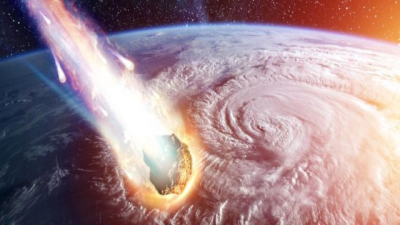
Meteors and meteorites have fascinated humanity for centuries, often appearing as bright streaks across the night sky. These celestial objects originate from various sources in space, and their study provides valuable insights into the formation and evolution of our solar system.
Comets: The Icy Messengers
Comets are celestial bodies composed mainly of dust, rocks, and icy materials, which orbit the Sun in highly elliptical paths. When comets venture close to the Sun, the intense solar radiation causes them to heat up, leading to the sublimation of their icy components. This process creates a glowing coma and a tail that points away from the Sun due to the solar wind.
Example: The famous Halley’s Comet is a periodic comet visible from Earth roughly every 76 years.
Asteroids: The Rocky Debris
Asteroids are rocky and metallic bodies that orbit the Sun, primarily found in the asteroid belt between the orbits of Mars and Jupiter. Occasionally, collisions or gravitational perturbations cause asteroids to be knocked out of their orbits and cross paths with Earth’s orbit.
Example: The Chelyabinsk meteor that exploded over Russia in 2013 was caused by a small asteroid entering Earth’s atmosphere.
Meteoroid Streams: The Cosmic Highways
Meteoroid streams consist of small particles shed by comets as they travel through space. These particles disperse along the comet’s orbit, creating vast clouds of debris. When Earth passes through these streams, the tiny meteoroids enter our atmosphere, producing meteor showers.
Example: The Perseid meteor shower occurs annually in August when Earth passes through the debris left behind by Comet Swift-Tuttle.
Interplanetary Dust: Cosmic Microscopic Particles
Interplanetary dust consists of fine particles that originate from asteroids, comets, or even shattered moons and planets. These microscopic particles are scattered throughout the solar system and can find their way into Earth’s atmosphere.
Example: The zodiacal light, a faint glow visible in the night sky after sunset or before sunrise, is caused by the reflection of sunlight off interplanetary dust particles.
Meteorites: The Survivors of Atmospheric Entry
Meteoroids that survive their journey through Earth’s atmosphere and land on the surface are known as meteorites. They come from various sources, including comets, asteroids, and even the Moon and Mars.
Example: The Nantan meteorite from China is an iron meteorite believed to have originated from the asteroid belt.
The following table explains some notable meteorite falls.
| Meteorite Name | Date of Fall | Location | Composition |
| Chelyabinsk | Feb 15, 2013 | Russia | Stone (Chondrite) |
| Sikhote-Alin | Feb 12, 1947 | Russia | Iron |
| Allende | Feb 8, 1969 | Mexico | Carbonaceous |
| Canyon Diablo | 50,000 years | Arizona, USA | Iron |
| Tunguska Event | June 30, 1908 | Russia | Airburst |
| Gibeon | prehistoric | Namibia | Iron |
Meteors and meteorites offer a glimpse into the vastness of our universe and its rich history. The sources of these cosmic wonders range from comets and asteroids to interplanetary dust and lunar fragments. The study of meteors and meteorites continues to contribute significantly to our understanding of the solar system’s formation and the dynamic processes that shape celestial bodies.
Last Modified: February 22, 2024