

Soil, the intricate web of minerals, organic matter, water, and air that forms the Earth’s crust, is a crucial resource for sustaining life. Understanding soil classification is essential for effective land use management, agriculture, environmental protection, and more. Soil Taxonomy is a system developed by the United States Department of Agriculture (USDA) to categorize and classify soils based on their properties.
The Basics of Soil Taxonomy
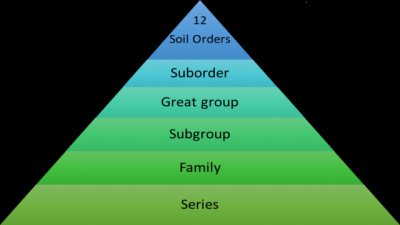
Soil Taxonomy, developed in the mid-20th century, is a hierarchical classification system that organizes soils into categories based on their characteristics. These characteristics include soil texture, mineral composition, organic content, moisture retention, drainage, and more. The classification starts from the broadest category down to the most specific, aiding in accurate soil description, assessment, and management.
Order
The highest level of soil classification is the “Order.” There are 12 soil orders in Soil Taxonomy, each characterized by specific soil-forming processes and properties. Some examples of these orders include:
- Entisols: These are soils with minimal profile development due to their recent formation. Examples include young volcanic ash soils and sandy dunes.
- Inceptisols: These soils show moderate profile development, exhibiting characteristics of both young and mature soils. They are often found in areas with variable moisture conditions.
- Mollisols: Known as “prairie soils,” Mollisols are fertile and rich in organic matter. They are commonly found in grasslands and are renowned for their agricultural productivity.
- Spodosols: Typically found in forested regions with high rainfall, Spodosols are characterized by their distinctive accumulation of organic material and iron-rich horizons.
- Alfisols: These soils are rich in minerals and clay content, making them fertile and suitable for agriculture. Alfisols are often found in temperate deciduous forests.
Suborder
Beneath the order level, soils are further classified into “Suborders.” Suborders provide additional information about the dominant processes and properties within a specific order. For instance, within the Entisols order, there is the “Aquents” suborder that describes soils with high water tables.
Great Group
Great Groups are the next level of classification, providing more specific information about the soil’s properties and behavior. They offer a bridge between the general order and the more specific subgroup levels. An example is the “Udolls” Great Group within the Mollisols order, which signifies Mollisols with a significant moisture regime.
Subgroup
Subgroups are even more detailed classifications within Great Groups. They highlight specific variations and characteristics of soils. For instance, the “Haplustolls” Subgroup within the Alfisols order represents soils with a specific set of characteristics that differ from other soils in the same Great Group.
Family
The Family classification level delves into finer distinctions, focusing on differences in soil horizon properties, mineralogy, and other features. An example would be the “Fine, mixed, thermic Typic Hapludalfs” Family within the Alfisols order, describing soils with specific temperature regimes, mineral composition, and horizon attributes.
Series
The most specific classification level is the Series. This is where individual soils are named based on local landmarks, geographic features, or other identifying criteria. The series classification emphasizes the uniqueness of each soil in a particular region.
Key Data in a Table
Here is a table summarizing the 12 soil orders in Soil Taxonomy:
| Soil Order | Characteristics | Example |
| Entisols | Minimal soil profile development | Recent volcanic ash soils |
| Inceptisols | Moderate profile development | Soils in areas with varying moisture |
| Mollisols | Rich in organic matter, fertile | Prairie soils |
| Spodosols | Accumulation of organic material and iron-rich horizons | Forested regions with high rainfall |
| Alfisols | Rich in minerals and clay content, fertile | Temperate deciduous forest soils |
| Ultisols | Intensely weathered, clay leaching | Older soils in warm, humid regions |
| Aridisols | Dry, arid climate conditions | Desert soils |
| Vertisols | High clay content, shrink-swell properties | Soils prone to cracking and self-mixing |
| Andisols | Formed in volcanic ash and other volcanic materials | Volcanic regions |
| Histosols | High organic matter content, wetland areas | Peatlands and bog soils |
| Gelisols | Permafrost-affected soils | Tundra regions |
| Spodosols | Acidic soils with distinct eluviation and illuviation layers | Acidic forested regions with coniferous trees |
Soil Taxonomy plays a critical role in understanding and managing our planet’s most fundamental resource. By categorizing soils into various orders, suborders, great groups, subgroups, families, and series, this classification system enables scientists, farmers, and policymakers to make informed decisions about land use, agriculture, and environmental conservation.
Last Modified: February 22, 2024