

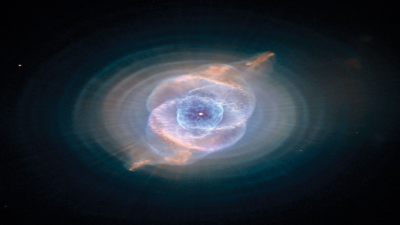
The vast expanse of the cosmos is adorned with numerous breathtaking celestial wonders. Among these wonders, nebulas stand out as mesmerizing and enigmatic formations. Nebulas are celestial clouds of dust, gas, and plasma, scattered throughout galaxies. These cosmic marvels offer a captivating insight into the birth, evolution, and death of stars.
Definition and Composition
Nebulas are vast interstellar clouds composed of dust, hydrogen gas, helium, and other ionized gases. They vary greatly in size, shape, and composition, spanning from a few light-years to hundreds of light-years in diameter. Nebulas are predominantly found in galaxies, particularly in regions of active star formation.
Formation
Nebulas form through various processes, including the death of stars, stellar explosions (supernovae), and the gravitational collapse of interstellar clouds. The intense heat and pressure within these regions cause the gases and dust to condense and clump together, eventually leading to the formation of new stars.
Types of Nebulas
- Emission Nebulas: Emission nebulae are vast clouds of ionized gas that emit light of various colors. These nebulas are often associated with regions of intense star formation. The ionization is caused by the energetic radiation emitted by hot, young stars. The famous Orion Nebula is a prime example of an emission nebula.
- Reflection Nebulas: Reflection nebulae are composed of dust particles that scatter and reflect the light of nearby stars. Unlike emission nebulas, they do not emit their own light. Instead, they appear as blue or blue-gray due to the scattering of shorter wavelengths of light by the tiny dust particles. The Pleiades star cluster is a well-known reflection nebula.
- Dark Nebulas: Dark nebulae are dense clouds of gas and dust that obscure the light from objects behind them. These nebulas are visible against the backdrop of bright emission or reflection nebulas. The iconic Horsehead Nebula in the constellation Orion is a prominent example of a dark nebula.
- Planetary Nebulas: Planetary nebulas are formed during the late stages of a star’s life. When a star exhausts its nuclear fuel, it sheds its outer layers, forming an expanding shell of gas and dust. The central star, now a white dwarf, illuminates this shell, resulting in a beautiful and often intricate planetary nebula. The Ring Nebula is a well-known example.
Significance and Scientific Contributions
- Star Formation and Stellar Evolution: Nebulas play a crucial role in the formation of stars. The gravitational collapse of interstellar clouds within nebulas initiates the process of star formation. By studying different types of nebulas, scientists gain valuable insights into the mechanisms and conditions under which stars are born and evolve.
- Chemical Enrichment of Galaxies: Nebulas are rich in heavy elements, which are synthesized through stellar nucleosynthesis and released into space during stellar death. These elements eventually become part of new stars and planetary systems, contributing to the chemical diversity of galaxies. The study of nebulas helps us understand the origin and distribution of elements crucial for life.
The table below provides data on important Nebulas and their characteristics:
| Nebula Name | Description | Type | Distance from Earth | Constellation | Notable Features |
| Orion Nebula | Bright and easily visible | Emission/Reflection Nebula | Approximately 1,344 light-years | Orion | Contains a young star cluster and protoplanetary disks |
| Crab Nebula | Result of a supernova explosion | Supernova Remnant | Approximately 6,523 light-years | Taurus | Pulsar at its center and filamentary structures |
| Helix Nebula | Resembles a cosmic eye | Planetary Nebula | Approximately 700 light-years | Aquarius | Expanding shell of gas ejected by a dying star |
| Eagle Nebula | Famous for its Pillars of Creation | Emission Nebula | Approximately 7,000 light-years | Serpens | Stellar nursery with young star-forming regions |
| Carina Nebula | Largest and brightest nebula in the southern sky | Emission Nebula | Approximately 7,500 light-years | Carina | Contains multiple star clusters and intricate structures |
| Horsehead Nebula | Dark nebula in the shape of a horse’s head | Dark Nebula | Approximately 1,500 light-years | Orion | Silhouette against the bright emission nebula IC 434 |
| Rosette Nebula | Resembles a rose in shape | Emission Nebula | Approximately 5,200 light-years | Monoceros | Clustered star-forming regions and a central open cluster |
| Lagoon Nebula | Filled with stellar nurseries | Emission Nebula | Approximately 4,000 light-years | Sagittarius | Contains a young star cluster and intricate dust lanes |
| Veil Nebula | Result of a supernova explosion | Supernova Remnant | Approximately 1,470 light-years | Cygnus | Filamentary structures and a network of intricate filaments |
| Ring Nebula | Appears as a ring in the sky | Planetary Nebula | Approximately 2,000 light-years | Lyra | Expanding shell of gas ejected by a dying star |
Nebulas are awe-inspiring cosmic phenomena that hold a pivotal role in unraveling the mysteries of the universe. Their diverse types and striking characteristics provide astronomers with invaluable clues about star formation, stellar evolution, and the chemical composition of galaxies.
Last Modified: April 16, 2026