

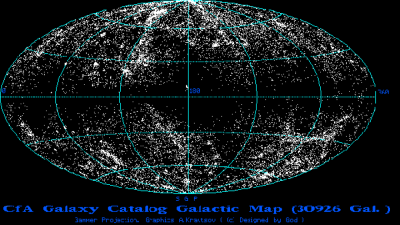
Some of the most notable galaxies are discussed here.
Primary Galaxies of the Local Group
The Local Group is a collection of over 50 galaxies spanning approximately 10 million light-years, dominated by the Milky Way and Andromeda.
The Milky Way (Home Galaxy)
- Classification: It is categorized as a barred spiral galaxy, characterized by a central bar-shaped structure composed of stars.
- Physical Dimensions: The diameter is approximately 100,000 to 120,000 light-years, containing an estimated 100 to 400 billion stars.
- Galactic Center: The core houses a supermassive black hole known as Sagittarius A★ (Sgr A^<strong>★</strong>), which has a mass approximately 4 million times that of the Sun.
- Solar Location: Our Solar System is situated in the Orion Arm (or Orion Spur), roughly 27,000 light-years from the galactic center.
Andromeda Galaxy (M31)
- Proximity: It is the nearest large galaxy to the Milky Way, located approximately 2.5 million light-years away.
- Morphology: A massive spiral galaxy that is larger than the Milky Way in terms of diameter and star count.
- Cosmic Interaction: Observations indicate Andromeda is approaching the Milky Way at 110 km/s. The two are predicted to collide and merge in approximately 4.5 billion years to form a new elliptical galaxy, often colloquially termed “Milkomeda.”
Triangulum Galaxy (M33)
- Status: It ranks as the third-largest member of the Local Group.
- Features: It is a spiral galaxy notable for its high rate of star formation, containing vast amounts of ionized hydrogen gas (H II regions).
- Visibility: Under exceptionally dark skies, it is one of the most distant objects visible to the naked human eye.
Satellite Galaxies and Magellanic Clouds
These are smaller “dwarf” galaxies that orbit larger galaxies like the Milky Way due to gravitational pull.
Large Magellanic Cloud (LMC)
- Observation: Highly visible from the Southern Hemisphere, it appears as a faint cloud in the night sky.
- Key Phenomenon: It hosts the Tarantula Nebula (30 Doradus), the most active star-forming region in the Local Group.
- Distance: Located approximately 163,000 light-years away.
Small Magellanic Cloud (SMC)
- Classification: An irregular dwarf galaxy that, along with the LMC, forms a pair of orbiting satellites.
- Interaction: Connected to the LMC by a “Magellanic Bridge” of gas, suggesting a history of tidal interactions between the two.
Notable Deep Space Galaxies
Beyond our Local Group, certain galaxies serve as benchmarks for astrophysical research and structural classification.
Messier 87 (M87)
- Classification: A giant elliptical galaxy located in the Virgo Cluster.
- Historic Significance: In 2019, the Event Horizon Telescope (EHT) captured the first-ever direct image of a black hole’s shadow located at the center of M87 (Powehi).
- Scale: It is significantly more massive than the Milky Way and contains a high population of globular star clusters.
The Sombrero Galaxy (M104)
- Visual Structure: An unbarred spiral galaxy viewed nearly edge-on. It features an unusually bright nucleus and a prominent dark dust lane across its disk, giving it the appearance of a wide-brimmed hat.
- Composition: It possesses a massive central bulge and is found on the southern edge of the Virgo Cluster.
The Whirlpool Galaxy (M51)
- Interaction Study: A classic example of a “grand design” spiral galaxy. It is famous for its visible interaction with a smaller companion galaxy (NGC 5195).
- Tidal Forces: The gravitational tug-of-war between the two has triggered intense star formation along the spiral arms, making it a primary subject for studying galactic structure.
Comparative Summary of Galactic Attributes
| Galaxy Name | Type | Key Fact for Prelims |
| Milky Way | Barred Spiral | Contains Sagittarius A” at its center. |
| Andromeda | Spiral | Largest in Local Group; on a collision course with Milky Way. |
| M87 | Elliptical | Site of the first photographed black hole. |
| LMC | Irregular | Contains the Tarantula Nebula. |
| Sombrero | Spiral (Edge-on) | Notable for its massive central bulge and dust ring. |
| Whirlpool | Spiral | Best example of a galaxy interacting with a companion. |
Technical Trivia for UPSC Aspirants
- Galactic Habitability: Most stars in the Milky Way are located in the disk, but the “Galactic Habitable Zone” is a ring-shaped region where conditions (metallicity and low radiation) are optimal for life.
- The Great Attractor: A gravitational anomaly in intergalactic space that is pulling the Milky Way and thousands of other galaxies toward it at millions of miles per hour.
- Dark Matter: It is estimated that approximately 85% of the matter in galaxies is dark matter, which provides the gravitational “glue” holding these structures together.