

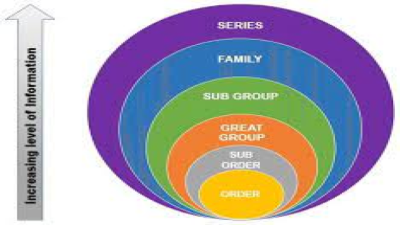
Soil is a precious and complex natural resource that plays a vital role in sustaining life on Earth. Understanding and classifying soils is essential for various purposes, from agriculture and land use planning to environmental management and conservation. Soil Taxonomy, a comprehensive soil classification system developed by the United States Department of Agriculture (USDA), provides a structured framework to categorize soils based on their physical, chemical, and morphological properties.
The Foundation of Soil Taxonomy
Soil Taxonomy was first introduced in the 1960s and has since evolved into a dynamic system that reflects advancements in soil science. It classifies soils into hierarchical categories based on several key factors, including soil texture, mineral composition, moisture content, temperature, and soil-forming processes. This classification aids in understanding the relationships between different soil types and their potential uses.
Soil Classification Levels
Soil Taxonomy consists of six hierarchical categories, which are:
- Order: The broadest classification level, focusing on the most general properties of soils. Examples of soil orders include Alfisols, Mollisols, and Spodosols.
- Suborder: This level provides additional detail about the properties and characteristics of soils within a particular order. For instance, Andisols are a suborder of the broader order of Entisols.
- Great Group: Great groups further refine the classification by considering specific features such as mineralogy, soil horizons, and other diagnostic properties. An example is the “Aridisols” great group, found within the Aridic suborder of the Entisols order.
- Subgroup: Subgroups distinguish soils within a great group based on variations in properties like color, texture, or mineral content. For instance, Fluventic Eutrudepts is a subgroup within the Aridisols great group.
- Family: Families focus on characteristics like mineralogy, temperature regime, and drainage class. An example is the “Typic Haploxerolls” family within the Mollisols order.
- Series: The most specific level of classification, series, is based on properties observable in the field. It reflects the unique combination of characteristics for a particular soil. An example is the “Ames” series, which falls within the Typic Haploxerolls family of the Mollisols order.
The Importance of Soil Taxonomy
Soil Taxonomy offers numerous benefits that aid in various applications, such as agriculture, forestry, land use planning, and environmental management. Some key advantages include:
- Agriculture: Soil Taxonomy provides insights into soil fertility, drainage, and water-holding capacity. Farmers can make informed decisions about crop selection, irrigation, and fertilization based on soil properties.
- Environmental Conservation: By classifying soils, land managers can identify areas prone to erosion, compaction, or contamination. This knowledge guides the implementation of conservation practices to mitigate environmental damage.
- Land Use Planning: Soil Taxonomy helps planners make informed decisions about land use suitability. For instance, it aids in determining the best locations for urban development, highways, and recreational areas.
- Natural Resource Management: Foresters use soil classification to determine appropriate tree species for reforestation efforts, considering soil moisture, texture, and nutrient availability.
- Ecosystem Restoration: Soil Taxonomy assists in restoring degraded ecosystems by matching appropriate plant species to specific soil conditions, enhancing successful restoration outcomes.
Key Data and Examples
| Soil Order | Key Characteristics | Example Soil Series |
| Alfisols | Rich in minerals; well-developed horizons | Hapludalfs (Typic Hapludalfs) |
| Mollisols | Dark and fertile; grassland soils | Argiudolls (Typic Argiudolls) |
| Spodosols | Acidic; characteristic spodic horizon | Cryochrepts (Typic Cryochrepts) |
| Entisols | Recent, little profile development | Fluventic Haplustolls (Fluventic Haplustolls) |
| Andisols | Volcanic ash content; high water retention | Melanudands (Aquic Melanudands) |
Soil Taxonomy stands as a fundamental tool for classifying and understanding soils based on their inherent properties and characteristics. Its hierarchical structure, ranging from orders to series, provides a comprehensive framework for categorizing diverse soils found across the globe.
Last Modified: February 22, 2024