

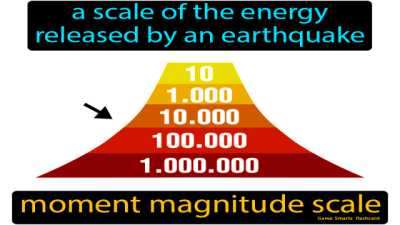
Earthquakes are one of the most powerful and destructive natural phenomena on Earth. Their ability to cause widespread devastation and loss of life has led scientists to develop various scales to measure and quantify earthquake magnitude accurately. One such scale widely used today is the Moment Magnitude Scale (Mw).
The Need for Accurate Earthquake Magnitude Measurement
Earthquakes release vast amounts of energy in the form of seismic waves. Measuring the magnitude of an earthquake is essential for several reasons, including:
- Assessing Earthquake Impact: Understanding the magnitude helps gauge the potential impact on buildings, infrastructure, and human settlements in the affected region.
- Tsunami Warnings: Large undersea earthquakes can trigger tsunamis, and accurate magnitude measurement aids in issuing timely warnings.
- Scientific Research: Seismologists rely on earthquake magnitude data to study tectonic plate movements, fault lines, and other geophysical phenomena.
The Moment Magnitude Scale Explained
The Moment Magnitude Scale (Mw) is a logarithmic scale used by seismologists to quantify the total energy released during an earthquake. Unlike the earlier Richter scale, the Moment Magnitude Scale is not limited by distance and is more suitable for measuring larger and distant earthquakes accurately.
Comparison with Richter Scale
The Richter scale, developed by Charles F. Richter in 1935, was the first widely used scale to measure earthquake magnitude. However, it has several limitations, especially for measuring large earthquakes. The primary differences between the Moment Magnitude Scale and the Richter scale are:
- Logarithmic Basis: Both scales are logarithmic, meaning each whole number increase on the scale represents a tenfold increase in seismic amplitude. However, the Moment Magnitude Scale takes into account a broader range of seismic frequencies and amplitudes, making it more accurate for larger quakes.
- No Upper Limit: The Richter scale becomes unreliable for earthquakes with magnitudes above 7.0. In contrast, the Moment Magnitude Scale has no theoretical upper limit, allowing it to measure even the most powerful earthquakes accurately.
Moment Magnitude Scale Calculation
The Moment Magnitude Scale is based on the seismic moment (M0) of an earthquake, which is calculated using the following formula:
M0 = μ * A * D
Where:
- M0 is the seismic moment,
- μ (mu) is the shear modulus of the rocks in the fault zone,
- A is the fault area,
- D is the average amount of slip along the fault.
The seismic moment represents the total energy released during an earthquake, and the Moment Magnitude Scale converts this value into a magnitude value.
Moment Magnitude Scale Examples
Let’s look at a few examples to understand how the Moment Magnitude Scale works:
- Example 1: Earthquake A has a seismic moment of 1.0 x 10^15 Nm (Newton-meters). Using the Moment Magnitude Scale formula, we can calculate its magnitude:
M0 = 1.0 x 10^15 Nm Mw = log10(M0) – 9.1
Mw = log10(1.0 x 10^15) – 9.1 Mw = 15.0 – 9.1 Mw = 5.9
- Example 2: Earthquake B has a seismic moment of 1.0 x 10^20 Nm. Let’s calculate its magnitude:
M0 = 1.0 x 10^20 Nm Mw = log10(M0) – 9.1
Mw = log10(1.0 x 10^20) – 9.1 Mw = 20.0 – 9.1 Mw = 10.9
Moment Magnitude Scale and Notable Earthquakes
The following table illustrates notable earthquakes and their respective magnitudes.
| Earthquake | Year | Magnitude (Mw) |
| Tohoku, Japan | 2011 | 9.1 |
| Sumatra-Andaman | 2004 | 9.1-9.3 |
| Great Chilean | 1960 | 9.4-9.6 |
| Cascadia | 1700 | ~9.0 |
The Moment Magnitude Scale has become the standard for measuring earthquake magnitude due to its ability to accurately capture the energy release of large earthquakes and its unrestricted upper limit.
Last Modified: February 22, 2024