

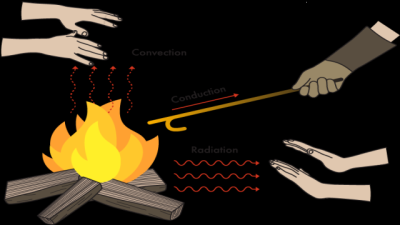
Heat transfer is a fundamental concept in physics and engineering that explains the movement of thermal energy from one object to another. It plays a crucial role in various natural and technological processes, from cooking food to designing spacecraft. While conduction and convection are widely known modes of heat transfer, radiation, the process by which energy is transferred through electromagnetic waves, is equally significant and often misunderstood.
Understanding Radiation Heat Transfer
Radiation is the process by which energy is transferred in the form of electromagnetic waves, such as light, infrared, and radio waves. Unlike conduction and convection, which require a medium to carry heat, radiation can occur in a vacuum, making it a unique mode of heat transfer. The transfer of heat through radiation doesn’t rely on direct physical contact between objects; instead, it’s based on electromagnetic waves emitted by a hot object and absorbed by a cooler one.
Principles of Radiation
The fundamental principles underlying radiation heat transfer include:
- Emission: Any object with a temperature above absolute zero emits electromagnetic radiation. The intensity and spectrum of this radiation depend on the object’s temperature and emissivity (its ability to emit radiation). For example, a red-hot piece of metal emits visible light, while a stove burner emits infrared radiation.
- Absorption: Objects have the ability to absorb incoming radiation. The amount of radiation absorbed depends on the object’s absorptivity, which is related to its color and surface properties. Dark, rough surfaces are better absorbers compared to light, smooth surfaces.
- Transmission: Some objects allow radiation to pass through them without being significantly absorbed or reflected. For instance, glass is transparent to visible light but can absorb and emit infrared radiation.
- Reflection: Just as radiation can be absorbed, it can also be reflected off a surface. The reflectivity of a surface affects its ability to exchange radiation with its surroundings.
Real-World Examples
Radiation heat transfer is ubiquitous in our daily lives. Here are a few examples:
- Solar Energy: The sun’s radiation reaches the Earth through the vacuum of space, providing heat and light that sustain life on our planet. Solar panels utilize radiation to convert sunlight into electricity.
- Thermal Radiation in Cooking: When grilling or broiling food, the intense heat generated by the source radiates energy, cooking the food even without direct contact.
- Radiators and Space Heaters: Radiators and space heaters use infrared radiation to warm a room by emitting heat energy that is absorbed by the objects and surfaces in the room.
- Thermal Imaging: Infrared cameras capture the radiation emitted by objects, creating images that represent variations in temperature. This technology finds applications in fields like medicine, building inspections, and security.
Key Data and Comparisons
Here is a table comparing the three modes of heat transfer: conduction, convection, and radiation:
| Heat Transfer Mode | Mechanism | Medium Required | Examples |
| Conduction | Direct contact and transfer of kinetic energy from particle to particle. | Solid materials. | Touching a hot pan. |
| Convection | Transfer of heat through the movement of fluids (liquids or gases). | Fluids (liquids or gases). | Boiling water in a pot. |
| Radiation | Transfer of energy through electromagnetic waves. | No medium required; can occur in a vacuum. | Sunlight heating the Earth. |
Radiation is a fascinating method of heat transfer that operates through electromagnetic waves. Unlike conduction and convection, it doesn’t require a medium to propagate, making it essential in scenarios where other modes of heat transfer are ineffective. From solar energy harnessing to everyday cooking, radiation’s impact on our lives is profound.
Last Modified: February 22, 2024