
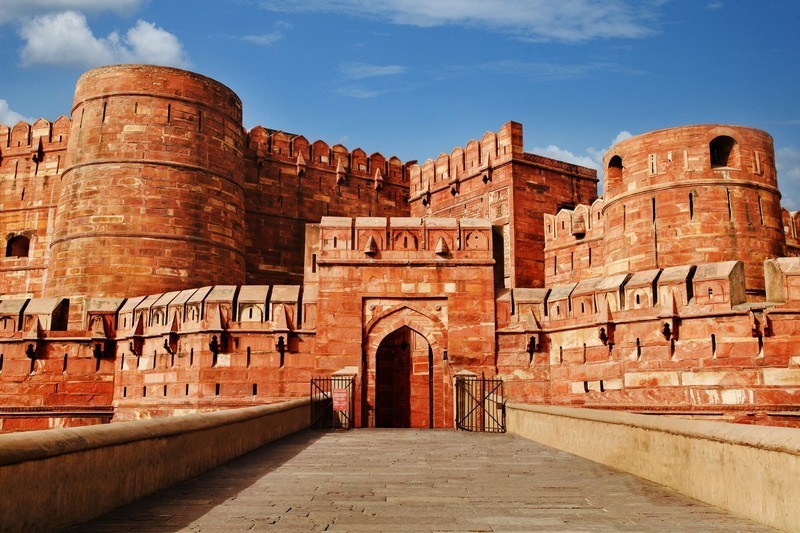
Firoz Shah Tughlaq (reigned 1351–1388) ascended the throne following the death of his cousin, Muhammad bin Tughlaq, at Thatta. His succession was not without difficulty, as he faced opposition from the followers of the late Sultan. Supported by the nobility and the Ulema, he inherited a fragmented empire characterized by financial instability, depleted resources, and a series of regional revolts. His reign is primarily noted for administrative consolidation, public welfare projects, and a policy of appeasement toward the clergy and the landed aristocracy.
Administrative and Revenue Reforms
Firoz Shah initiated significant structural changes to stabilize the Sultanate’s economy, which had been severely impacted by his predecessor’s policies.
- Abolition of Illegal Taxes: He abolished nearly 24 varieties of taxes (abwabs) that were not sanctioned by the Sharia. He limited the state’s taxation to four main categories: Kharaj (land tax), Khums (one-fifth of war booty), Jizya (religious tax on non-Muslims), and Zakat (religious tax on Muslims).
- Land Revenue Assessment: To avoid corruption and arbitrary taxation, he ordered a fresh measurement of land (masahat) and fixed the revenue based on the actual output. This assessment remained the standard for the remainder of the Tughlaq rule.
- Iqtadari System: He made the Iqta system hereditary, allowing officers to bequeath their land grants to their sons or heirs. This move appeased the nobility but weakened the central Sultanate’s direct control over the bureaucracy.
- Treatment of Slaves: Firoz Shah established a dedicated department for slaves, the Diwan-i-Bandagan. He was known to have amassed over 180,000 slaves, utilizing them in various handicrafts, military roles, and administrative services.
Public Works and Urban Development
The Sultan is remembered as one of the greatest builders of the medieval era. His architectural legacy was focused on utility and public service.
- Canal Construction: He commissioned the construction of several canals for irrigation, including a major canal connecting the Yamuna to Hissar. These projects significantly boosted agricultural production in the arid regions of Haryana and Western Uttar Pradesh.
- Foundation of Cities: He founded several prominent cities, including Firozabad (modern-day Feroz Shah Kotla in Delhi), Hissar, Firozpur, Fatehabad, and Jaunpur.
- Hospital and Charity: He established the Dar-ul-Shifa (a state-run hospital) in Delhi, where patients received free treatment and medication. He also created the Diwan-i-Khairat, a department responsible for providing financial aid for the marriages of daughters of poor Muslims.
- Educational Patronage: He patronized scholars and founded several madrasas to promote Islamic learning and literature.
Military and Foreign Policy
Unlike the aggressive expansionism of the early Tughlaq period, Firoz Shah’s military policy was largely defensive.
- Bengal Campaigns: He led two major campaigns into Bengal (1353 and 1359) to suppress independent rulers but failed to bring the province back under permanent Delhi control.
- Jajnagar and Nagarkot: He conducted expeditions to Jajnagar (Orissa) and Nagarkot (Kangra). During the capture of Nagarkot, he reportedly seized a library of Sanskrit manuscripts, some of which were translated into Persian under his patronage.
- Military Reorganization: His decision to make military offices hereditary served to stabilize the army but led to a decline in professional rigor and combat efficiency over the long term.
Religious Policy and Judicial Approach
Firoz Shah was deeply committed to the orthodox Sunni interpretation of Islam, which defined his social and judicial policies.
- Clerical Influence: He reversed Muhammad bin Tughlaq’s secular approach, granting significant influence to the Ulema in state affairs.
- Jizya on Brahmins: In a notable departure from historical precedent, he imposed the Jizya tax upon the Brahmin population, treating them as non-exempt subjects.
- Judicial Reforms: He sought to align the judicial system with the principles of the Quran, appointing Qazis to ensure that legal judgments reflected religious doctrines. He also prohibited certain punishments like mutilation that had been common under previous rulers.
Key Features of Firoz Shah’s Reign
| Feature | Description |
| Department | Function |
| Diwan-i-Bandagan | Department of Slaves |
| Diwan-i-Khairat | Department of Charity |
| Dar-ul-Shifa | State Hospital |
| Diwan-i-Istihqaf | Department of Pensions |
Legacy and Decline
The reign of Firoz Shah Tughlaq is viewed as a period of relative peace and prosperity, yet it contained the seeds of the Sultanate’s eventual decline.
- Administrative Decentralization: The hereditary nature of Iqtas and military positions stripped the Sultan of the ability to reassign officials, leading to the emergence of powerful provincial factions.
- Financial Weakness: While he reduced taxes, his excessive expenditure on building projects and maintenance of a large slave population put pressure on the imperial treasury.
- Succession Crisis: Following his death in 1388, the Sultanate faced a chaotic struggle for succession among his descendants. The weakness of his successors culminated in the devastating invasion of Timur (Tamerlane) in 1398, which effectively dismantled the Tughlaq dynasty’s authority.
Trivia
- Firoz Shah is credited with bringing two Ashokan pillars to Delhi—one from Topra in Ambala and another from Meerut—and reinstalling them in his capital.
- The autobiography attributed to him is titled Futuhat-i-Firozshahi.
- He was the first Sultan to establish a permanent department for the care of the poor and orphans, marking a rare instance of organized medieval social welfare.