
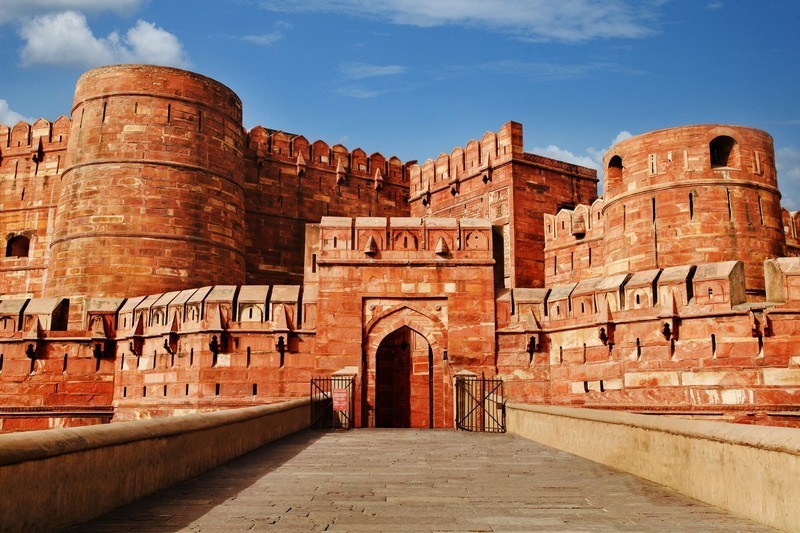
The Tughlaq dynasty, which reached its zenith under Muhammad bin Tughlaq, underwent a rapid territorial and political contraction following the death of Firoz Shah Tughlaq in 1388 AD. The subsequent succession crises and the catastrophic invasion of Timur in 1398 AD effectively ended the effective control of the Tughlaqs over Northern India. The period that followed was characterized by the fragmentation of the Delhi Sultanate and the rise of the Sayyid and Lodi dynasties.
The Collapse of Tughlaq Authority (1388–1414 AD)
The instability following the death of Firoz Shah Tughlaq led to internal conflicts among his descendants, including Ghiyas-ud-din Tughlaq II, Abu Bakr, and Nasir-ud-din Mahmud Shah. These internal struggles weakened the central authority, encouraging provincial governors to assert independence.
- The Invasion of Timur (1398 AD): Timur’s campaign decimated the Delhi Sultanate’s military and economic base. The city of Delhi was sacked, and the administrative machinery was left in ruins.
- Nasir-ud-din Mahmud Shah (1394–1413 AD): Considered the last ruler of the Tughlaq dynasty, his authority was reduced to a few districts around Delhi. His reign saw the empire fracture into smaller regional sultanates like Jaunpur, Gujarat, and Malwa.
- Fragmentation of Territory: By the early 15th century, the Delhi Sultanate had effectively ceased to be an empire, functioning merely as a regional power in the Doab and the surroundings of Delhi.
The Sayyid Dynasty (1414–1451 AD)
Following the death of Nasir-ud-din Mahmud Shah, Khizr Khan, the former governor of Multan and a vassal to Timur, established the Sayyid dynasty. This dynasty did not represent a strong, centralized state but rather a precarious transition period.
- Political Status: The Sayyid Sultans governed only a small territory and frequently paid tribute to the Timurid rulers. They were essentially local rulers of Delhi rather than imperial sovereigns.
- Key Rulers:
- Khizr Khan (1414–1421): Founder who initially recognized the authority of Timur’s successors.
- Mubarak Shah (1421–1434): Attempted to restore order but faced constant rebellion from the nobility and regional governors.
- Muhammad Shah (1434–1443) and Ala-ud-din Alam Shah (1443–1451): Both were weak rulers whose authority was increasingly challenged, ultimately leading to the takeover by Bahlul Lodi.
The Lodi Dynasty (1451–1526 AD)
The Lodi dynasty was the first Afghan dynasty to rule over the Delhi Sultanate. Their reign marked a shift in the nature of kingship, moving from the autocratic tradition of the Turkish Sultans to a more tribal, consultative model of governance.
- Rise of Bahlul Lodi: Bahlul Lodi replaced the last Sayyid ruler in 1451 AD. He was a capable administrator who strengthened the Sultanate by suppressing internal rebellions and restoring authority over parts of the Doab.
- Sikandar Lodi (1489–1517 AD): He was the most powerful ruler of the dynasty. He shifted the capital from Delhi to Agra in 1504 AD, largely to better control the Afghan nobility and keep an eye on the rebellious elements in the region.
- Ibrahim Lodi (1517–1526 AD): His attempt to establish absolute monarchical authority antagonized the powerful Afghan tribal chiefs. His confrontational style created significant internal divisions that severely weakened the state.
Structural Causes for the Decline of the Sultanate
The decline of the Sultanate from the late Tughlaq period through the Lodi era was driven by several systemic factors that eroded the foundations of centralized rule.
- Tribalism vs. Centralization: The Lodi Sultans attempted to rule an empire using Afghan tribal structures, where the Sultan was viewed as “first among equals.” This constant conflict between central authority and the ambitions of tribal leaders undermined state unity.
- Military Inefficiency: The transition from the professional, state-paid standing armies of the early Sultanate to a decentralized system of land-grant based recruitment led to a decline in military preparedness.
- Economic Dislocation: The repeated invasions, specifically those of Timur, caused significant economic disruption, leading to reduced state revenue and the inability to maintain a large administrative bureaucracy.
- Loss of Territorial Control: Regional powers such as the Vijayanagara Empire, the Bahmani Kingdom, and independent regional sultanates in Bengal, Gujarat, and Jaunpur continuously siphoned off tax revenues and military resources.
Comparison of the Late Sultanate Dynasties
| Dynasty | Period | Nature of Rule | Capital |
| Tughlaq (Late) | 1388–1414 | Centrally disintegrating | Delhi |
| Sayyid | 1414–1451 | Vassal/Limited authority | Delhi |
| Lodi | 1451–1526 | Afghan Tribal/Monarchical | Delhi/Agra |
Final Collapse: The First Battle of Panipat (1526 AD)
The political instability inherent in the Lodi dynasty culminated in the First Battle of Panipat in 1526 AD.
- Babur’s Invasion: Ibrahim Lodi’s internal conflicts, particularly with his governor of Punjab, Daulat Khan Lodi, and uncle, Alam Khan Lodi, led to an invitation for Babur, the ruler of Kabul, to intervene.
- Technological Disparity: Babur’s use of gunpowder, field artillery, and the Tulugma (encircling) tactic overwhelmed the traditional Lodi military formation.
- End of the Sultanate: The defeat and death of Ibrahim Lodi at Panipat marked the end of the Delhi Sultanate and paved the way for the establishment of the Mughal Empire.