
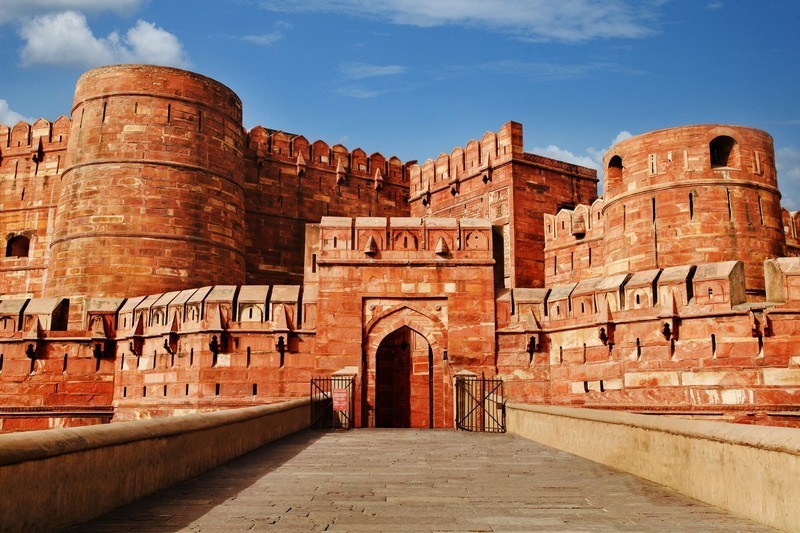
The foundation of Agra by Sultan Sikandar Lodi in 1504 AD was a calculated strategic move rather than a mere change of residence. By the turn of the 16th century, the Delhi Sultanate faced the dual challenge of controlling the rebellious Rajput states to the south and managing the restive Afghan nobility concentrated in the Delhi-Doab region.
Strategic Objectives of the New Capital
- Enhanced Control over the Doab: The Doab region was the economic heartland of the Sultanate. Shifting the capital to Agra provided the Sultan with closer administrative access to the fertile lands between the Ganges and the Yamuna, ensuring more consistent revenue collection.
- Proximity to Rajputana: Agra served as a vital forward base for military operations against the powerful Rajput principalities of Gwalior and Dholpur, which frequently challenged Lodi authority.
- Neutralizing the Nobility: By moving away from the traditional power center of Delhi, Sikandar Lodi sought to escape the stifling influence of the long-established Turkish and Afghan aristocratic factions. This relocation provided him the leverage to impose more centralized control and implement administrative reforms like the Gaj-i-Sikandari.
Development of Agra under the Lodis
Agra was transformed from a minor settlement into a major urban and administrative hub within a short period.
- Infrastructure and Planning: The site was chosen for its strategic location on the banks of the Yamuna River, which facilitated both trade and rapid troop mobilization.
- Administrative Centralization: The Sultan established a robust court and administrative machinery in Agra, which later served as the template for the imperial capital structures developed during the Mughal era.
- Trade and Economic Growth: The Sultan’s policy of abolishing internal trade duties (octroi) on food grains, combined with the emergence of Agra as a political center, stimulated commercial activity and attracted artisans and merchants to the city.
Historical Significance in the Context of Sultanate Decline
The founding of Agra represented the final attempt of the Lodi dynasty to revitalize the Sultanate.
- Consolidation Efforts: While Agra enabled Sikandar Lodi to maintain effective authority for over two decades, it also highlighted the Sultanate’s vulnerability. The shift underlined the fact that the Sultans were increasingly focused on holding the core territories rather than expanding the empire.
- Precursor to Mughal Grandeur: The urban foundations laid by the Lodis in Agra were eventually inherited and greatly expanded by the Mughal emperors, starting with Babur and culminating in the architectural dominance of Akbar and Shah Jahan.
- Failure of Centralization: Despite the strategic advantages provided by the new capital, the administrative centralization achieved in Agra could not overcome the deep-seated divisions among the Afghan tribal nobility, which ultimately accelerated the collapse of the dynasty under Ibrahim Lodi.
Comparative Table: Capitals of the Late Sultanate
| Dynasty | Capital City | Primary Strategic Focus |
| Tughlaq | Delhi / Firozabad | Centralized imperial control |
| Sayyid | Delhi | Maintaining nominal authority |
| Lodi (Bahlul) | Delhi | Consolidating Afghan power base |
| Lodi (Sikandar) | Agra | Controlling Rajputana and Doab |
Trivia and Key Facts
- The location of Agra on the Yamuna made it ideal for defense and communication, a factor that influenced subsequent rulers to maintain it as the primary seat of power for over a century.
- Sikandar Lodi’s choice of Agra marked the beginning of the end of Delhi’s undisputed dominance as the sole imperial capital of North India in the medieval period.
- The city grew in political stature so rapidly that by 1526 AD, it was the primary target for Babur during his invasion, underscoring its role as the nerve center of the Lodi Sultanate.