
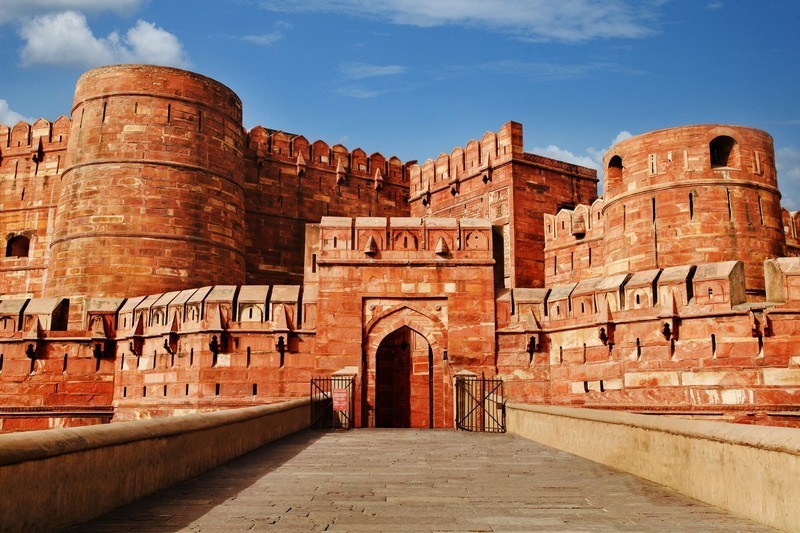
The Jaunpur Sultanate, known as the Sharqi (Eastern) Kingdom, was founded by Malik Sarwar, a powerful noble and former Wazir under Sultan Firoz Shah Tughlaq. In 1394 AD, Sultan Nasir-ud-din Mahmud Shah Tughlaq appointed him as the governor of the eastern provinces with the title Malik-us-Sharq (Lord of the East). Following the chaos of Timur’s invasion of Delhi in 1398 AD, the central authority of the Tughlaq dynasty collapsed, and Malik Sarwar declared independence, establishing the Sharqi dynasty with its capital at Jaunpur.
Strategic Significance of Jaunpur
Jaunpur, often referred to as the Shiraz-i-Hind (Shiraz of India) due to its intellectual and architectural prominence, occupied a critical geographical position. It controlled the fertile Gangetic plains and served as a cultural and economic rival to the declining Delhi Sultanate. Its independence prevented the Delhi Sultans from accessing the revenue and resources of Eastern Uttar Pradesh and Bihar, severely weakening the central Sultanate’s fiscal base.
The Sharqi-Delhi Conflict
The Sharqi dynasty maintained a state of perpetual rivalry with the Sayyid and early Lodi dynasties. The conflict was essentially a struggle for the political succession of the Delhi Sultanate.
- Territorial Disputes: The Sharqi Sultans frequently encroached upon the Doab region, the agricultural heartland of the Delhi Sultanate.
- Military Confrontations: Several military campaigns were launched by Delhi rulers, particularly during the Lodi period, to reclaim the lost territories and neutralize the Sharqi threat.
- Political Legitimacy: The Sharqi Sultans projected themselves as the true successors to the Tughlaq legacy, often challenging the legitimacy of the Delhi-based Sayyid and Lodi rulers.
Key Sharqi Rulers and Contributions
The dynasty was noted for its patronage of arts, architecture, and Islamic scholarship.
- Ibrahim Shah Sharqi (1402–1440 AD): Under his rule, Jaunpur reached the zenith of its power and cultural influence. He was a great patron of learning and construction.
- Architectural Legacy: The Sharqis developed a unique architectural style characterized by massive, sloping propylons (gateways), such as those seen in the Atala Masjid and the Jama Masjid of Jaunpur.
- Cultural Hub: The city attracted scholars, theologians, and poets from across the Islamic world, cementing its reputation as a major center for Islamic education in medieval India.
Annexation by Bahlul Lodi
The long-standing rivalry between Jaunpur and Delhi was definitively resolved by Bahlul Lodi, the founder of the Lodi dynasty.
- Protracted Struggle: Bahlul Lodi engaged in a decades-long struggle against the Sharqi Sultan, Hussain Shah Sharqi.
- Final Conquest (1484 AD): After a series of campaigns, Bahlul Lodi finally defeated Hussain Shah Sharqi and annexed Jaunpur into the Delhi Sultanate.
- Strategic Impact: The annexation of Jaunpur was a significant achievement for Bahlul Lodi. It removed a major political rival and restored the economic control of the Delhi Sultanate over the eastern provinces.
Comparison of Delhi and Sharqi Dynasties
| Feature | Delhi Sultanate (Sayyid/Lodi) | Sharqi Sultanate (Jaunpur) |
| Capital | Delhi / Agra | Jaunpur |
| Political Status | Declining central authority | Independent regional power |
| Major Focus | Military consolidation | Cultural and architectural patronage |
| Architectural Style | Indo-Islamic (Tughlaq/Lodi styles) | Sharqi style (Propylon arches) |
Historical Impact on Sultanate Decline
The rise and fall of the Jaunpur Sultanate serves as a case study for the fragmentation of the Delhi Sultanate.
- Resource Drain: The necessity of maintaining a standing army to defend against Jaunpur’s incursions significantly strained the treasury of the Sayyid and early Lodi rulers.
- Political Vacuum: The existence of an independent Jaunpur reduced the effective territorial reach of the Delhi Sultanate, limiting the Sultan’s ability to mobilize resources for large-scale imperial defense.
- Regional Identity: The Sharqi dynasty contributed to the development of distinct regional identities in North India, which persisted even after the territory was re-annexed by the Lodis.
- Educational Legacy: Despite the political fall of the dynasty, Jaunpur remained a premier center for Islamic studies throughout the medieval period, influencing the administrative and religious elite of Northern India for centuries.