
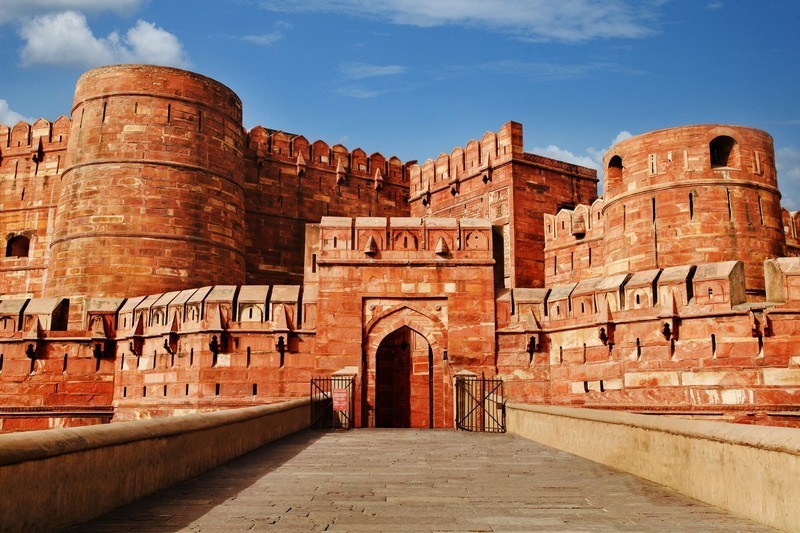
The Sultan was the absolute head of the Delhi Sultanate (1206–1526 AD), wielding supreme executive, legislative, military, and judicial authority. His position was defined by his personal competence, military prowess, and the ability to maintain the loyalty of the powerful military nobility. While the Sultan was theoretically the deputy of the Caliph, he exercised near-total autonomy in the governance of the Indian territories.
Executive and Legislative Powers
The Sultan functioned as the final authority in all state matters. His administration relied on a centralized bureaucracy of Persianized officials who managed the sprawling empire.
- The Sultan possessed the power to issue secular decrees known as Zawabit to regulate state affairs, as Sharia law was often insufficient for the complexities of imperial administration.
- He appointed and dismissed the highest officials of the state, including the Wazir (Prime Minister) and the Ariz-i-Mumalik (Minister of War).
- The Sultan was the ultimate arbiter in administrative disputes and exercised direct control over provincial appointments to ensure centralized oversight.
Military Authority
Military leadership was the most critical qualification for a Sultan. The safety of the Sultanate depended on his capability to lead campaigns and defend against both internal rebellions and external threats like the Mongol incursions.
- The Sultan was the Commander-in-Chief of the entire armed forces.
- He directly oversaw the recruitment and maintenance of the standing army during periods of centralization, such as the reign of Alauddin Khalji.
- The Sultan personally directed major military expeditions, and his presence on the battlefield was often the deciding factor in the morale of the troops.
Judicial and Religious Role
The Sultan was the highest court of appeal in the land. Although there were Qazis tasked with administering justice, the Sultan’s court remained the ultimate source of relief for his subjects.
- The Sultan was often viewed as the protector of the Islamic faith (Defender of the Ummah) and frequently sought investiture from the Abbasid Caliph to cement his legitimacy.
- While the Sadr-us-Sudur oversaw religious endowments and the judiciary, the Sultan retained the final power to intervene in judicial decisions if he deemed them contrary to state interests.
- Sultans like Muhammad bin Tughlaq and Alauddin Khalji were known to assert state interests over the orthodox advice of the Ulema, demonstrating that the Sultan’s will was superior to religious councils.
Constraints and Checks on Royal Power
Despite his absolute theoretical status, the Sultan’s authority was constrained by several practical and structural factors.
- Military Nobility: The Sultan’s power was often limited by the influence of powerful Turkish, Afghan, or local commanders. If a Sultan was weak, he effectively became a prisoner of the nobility, as seen during the later years of the Sayyid dynasty.
- Religious Framework: The Sultan was expected to govern in accordance with the Sharia. Any blatant violation of religious sentiments could lead to widespread unrest, though Sultans frequently used political pragmatism to bypass this.
- Bureaucratic Necessity: A Sultan could not rule without the support of the established bureaucracy and the record-keepers who managed the revenue and land grants, making him dependent on his ministers for day-to-day administration.
Key Historical Facts and Trivia
- The title Sultan was first adopted by Mahmud of Ghazni, but in the context of Delhi, it was institutionalized by Iltutmish.
- The Sultan’s authority was validated through the Khutba (sermon read in his name) and the Sikka (the minting of coins in his name), which were the two primary markers of sovereignty in the medieval Islamic world.
- Sultans were often buried in monumental tombs, a tradition that emphasized the continuity of the dynasty’s authority even after the ruler’s death.
- The concept of “Zill-i-Ilahi” (Shadow of God on Earth) was promoted by various Sultans to elevate their status above the nobility and secure absolute submission from their subjects.
Comparative Authority Across Dynasties
| Dynasty | Nature of Sultan’s Authority |
| Mamluk | Military-based; strong dependence on loyal slave commanders. |
| Khalji | Highly centralized; total control over nobility and market. |
| Tughlaq | Administrative; expansion of bureaucratic departments. |
| Lodi | Tribal/Consultative; Sultan was first among peers. |