
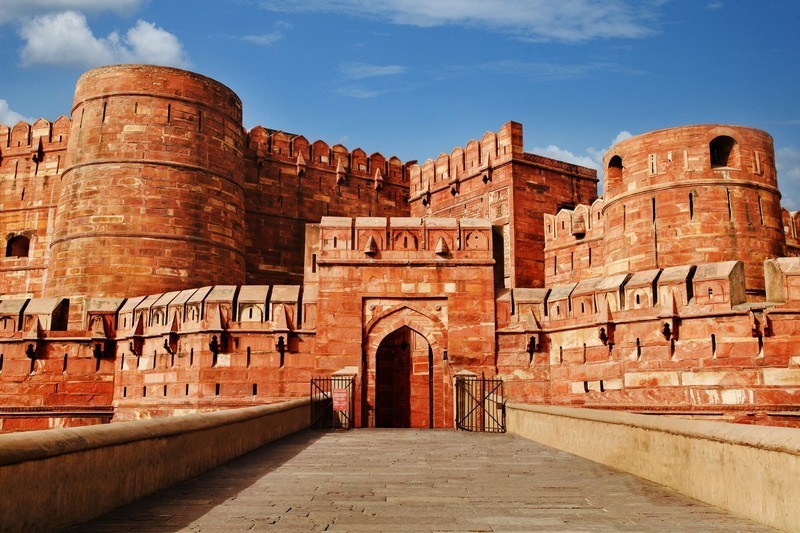
The Delhi Sultanate (1206–1526 AD) evolved from a military occupation into a centralized monarchy. The Sultan held absolute authority, serving as the supreme executive, judicial, and military head of the state. This centralization was designed to maintain control over a vast, diverse territory and to protect the Sultanate against both internal aristocratic rebellions and external threats like the Mongols.
Mechanisms of Centralization
The Sultan maintained central authority through a mix of bureaucratic oversight, personal surveillance, and the rigorous management of the nobility.
- The Sultan as Sovereign: Legitimacy was asserted through the Khutba (Friday sermon) and the Sikka (minting of currency) in the ruler’s name.
- Administrative Departments: The creation of specialized central departments, such as the Diwan-i-Wizarat (finance) and Diwan-i-Arz (military), ensured that the Sultan could bypass local power centers and govern through appointed officials.
- Espionage Network: The Barid-i-Mumalik (head of intelligence) managed an extensive system of spies, providing the Sultan with real-time reports on the activities of governors and nobles, which was critical in preventing conspiracies.
- Personal Accountability: Centralization often rested on the ruler’s personality. Sultans like Alauddin Khalji and Balban directly oversaw appointments and enforced strict discipline to ensure that administrative directives were implemented without deviation.
Centralized Military Control
Centralization was most visible in the Sultan’s management of the military, which was the ultimate guarantor of his power.
- Direct Recruitment: Alauddin Khalji implemented the branding of horses (Dagh) and the maintenance of descriptive rolls of soldiers (Chehra) to prevent corruption and ensure that the army was directly loyal to the Sultan rather than to individual commanders.
- Professionalization: The move from a feudal levy system to a professional, state-paid standing army reduced the Sultan’s dependence on the military nobility.
- Unified Command: The Sultan remained the Commander-in-Chief, with the Ariz-i-Mumalik acting as the head of the military department to execute the Sultan’s orders on recruitment and logistics.
Fiscal and Revenue Centralization
The Sultanate’s ability to function as a centralized state depended on the consistent extraction of agrarian surplus.
- Land Measurement (Masahat): Sultans like Alauddin Khalji introduced systematic land measurement to ensure that revenue collection was based on actual production rather than arbitrary estimates.
- Direct Revenue Collection: By minimizing the intermediaries (like local Khuts and Muqaddams), the central government aimed to collect revenue directly, increasing the royal treasury’s income.
- Uniform Taxation: Reforms, particularly those refined by the Tughlaqs and later the Lodis (Gaj-i-Sikandari), aimed at standardizing taxes like Kharaj (land tax) across the empire, providing a predictable revenue stream for imperial defense.
Judicial and Bureaucratic Supremacy
To ensure that the law was an instrument of state policy, the Sultan maintained control over the judicial hierarchy.
- Sadr-us-Sudur: This official managed the appointment of Qazis and the oversight of religious endowments, ensuring that the judicial system remained aligned with state interests.
- Legislative Decrees: The Sultan issued Zawabit (secular laws) to address matters of governance, state management, and military affairs, which superseded any conflicting interpretations of Sharia by independent religious scholars.
- Direct Oversight: The Sultan acted as the final court of appeal, a role that allowed him to intervene in local disputes and assert royal justice over local customs.
Comparative Degrees of Centralization
| Dynasty | Nature of Centralization | Key Strategy |
| Mamluk | Partial | Military reliance on elite slave-officers (Chahalgani). |
| Khalji | High | Market reforms, direct land measurement, and branding of horses. |
| Tughlaq | Bureaucratic | Expansion of administrative departments and regional oversight. |
| Sayyid | Low | Nominal authority; survival-focused governance. |
| Lodi | Low | Tribal confederation; consultative power sharing. |
Historical Facts and Trivia
- Zill-i-Ilahi: The theory that the Sultan is the “Shadow of God on Earth” was used to justify absolute obedience, a concept most aggressively promoted by Ghiyasuddin Balban.
- The Wazir: As the head of the Diwan-i-Wizarat, the Wazir was the most powerful official in the centralized bureaucracy, acting as the primary link between the Sultan and the state’s fiscal resources.
- Iqta Transition: While the Iqta system was inherently decentralized, strong Sultans successfully treated Iqtas as temporary administrative assignments, frequently transferring governors to prevent them from building local power bases.
- Persian Influence: The centralized administration was heavily modeled on Persian court practices, which provided a sophisticated bureaucratic framework for governance that the early Turkish conquerors adopted.
- Role of the Bureaucracy: The administrative continuity of the Sultanate was maintained by a permanent class of Persian-speaking scribes and accountants, known as the Tajiks, who functioned regardless of the dynasty in power.
Challenges to Centralized Rule
Despite these mechanisms, the Sultanate faced constant friction that inhibited total centralization.
- Regional Resurgence: The vastness of the Indian subcontinent made it difficult to project power effectively, leading to the rise of independent regional sultanates like Bengal, Gujarat, and Malwa.
- Aristocratic Resistance: The nobility often viewed centralization as an encroachment on their traditional rights, leading to persistent civil strife.
- Succession Instability: The absence of a formal, hereditary law of succession frequently triggered violent power struggles upon the death of a Sultan, which temporarily crippled the centralized administration.