
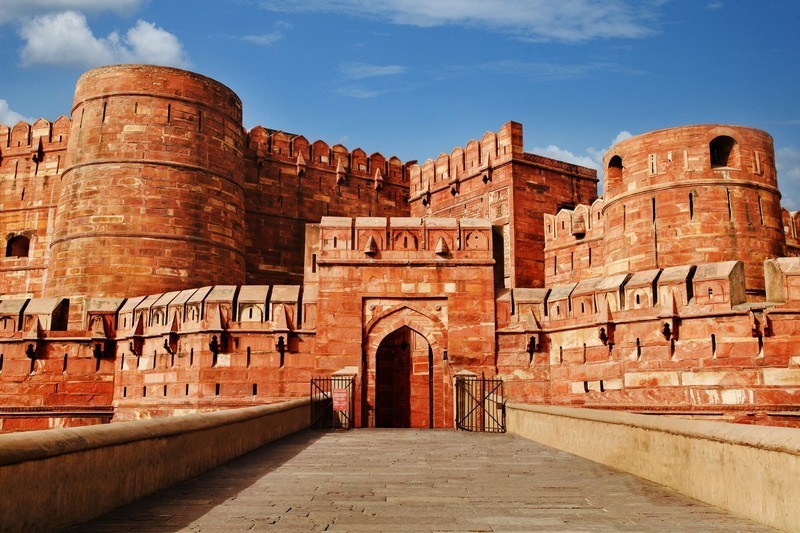
The provincial administrative machinery of the Bahmani Sultanate (1347–1527 CE) was structured around the geopolitical unit called the Taraf (province). The founder of the dynasty, Alauddin Hasan Bahman Shah, divided his sprawling kingdom into four primary Tarafs to consolidate power after revolting against the Delhi Sultanate. Each Taraf was placed under a powerful provincial governor known as a Tarafdar (or Amir). These governors acted as extensions of the Sultan’s authority, wielding concentrated military, judicial, and fiscal powers to secure the frontiers against northern powers and the southern Vijayanagara Empire.
Re-division and Decentralization under Mahmud Gawan
As the Bahmani Kingdom expanded to its territorial peak, the massive size of the four original Tarafs allowed Tarafdars to amass excessive revenue and personal armies, threatening central authority. To curb this decentralized power, the Persian-born Prime Minister (Khwaja-i-Jahan) Mahmud Gawan introduced sweeping administrative reforms in the late 15th century under Sultan Muhammad Shah III. He split the four original provinces into eight distinct Tarafs, significantly reducing the geographic jurisdiction, resource base, and military autonomy of individual Tarafdars.
The Original and Reformed Provincial Divisions
The Four Original Tarafs (1347–1470s CE)
The initial division of the kingdom allocated specific strategic commands to the highest-ranking nobles. The governor of Gulbarga held the premier status in the court hierarchy due to the province containing the imperial capital.
| Original Taraf | Title of the Tarafdar | Core Geopolitical Jurisdiction |
| Gulbarga | Malik Naib | Covered the southwestern territory, including Bijapur, Raichur, and Sholapur; front-line zone against Vijayanagara. |
| Daulatabad | Musnad-i-Ali | Covered the northwestern Deccan, including Junnar, Chaul, and Sanjan; controlled key Western Ghaut trade passes. |
| Berar | Majlis-i-Aali | Covered the northern frontier bordering Malwa and Khandesh; centered around Ellichpur and Gawilgarh. |
| Bidar | Azam-i-Humayun | Covered the central and eastern plateau up to Warangal and Telangana; shifted to imperial capital status in 1425 CE. |
The Eight Reformed Tarafs of Mahmud Gawan (Post-1470s CE)
Mahmud Gawan’s restructuring fractured the old administrative monopolies, breaking down the large geopolitical blocs into more manageable administrative units.
- Daulatabad Province: Split into the separate Tarafs of Gawil and Mahur.
- Berar Province: Divided into the distinct jurisdictions of Daulatabad and Junnar.
- Gulbarga Province: Segmented into the independent administrative commands of Bijapur and Ahsanabad (Gulbarga).
- Bidar Province: Fragmented into the downsized eastern Tarafs of Bidar and Telangana (Rajahmundry).
Functions, Powers, and Administrative Responsibilities
Military Commands and the Mansabdari Precursor
Tarafdars were primarily military commanders who maintained large provincial standing armies consisting of cavalry, infantry, and archers. They were legally obligated to lead their provincial contingents to join the Sultan’s central army (Khas-i-Khel) during major imperial campaigns, particularly the long wars over the fertile Raichur Doab. Before Mahmud Gawan’s reforms, Tarafdars exercised unchecked control over all military fortifications within their territory, appointing their own loyalists as Qiladars (fortress commanders).
Fiscal Management and Revenue Administration
The Tarafdars supervised the collection of agrarian revenue, primarily the Khiraj (land tax), within their provinces. They managed two types of land tenures: Jagirs (revenue assignments given to nobles for military upkeep) and Khalisa (royal crown lands). The Tarafdars deducted administrative and military expenses from the provincial collection before transferring the surplus (Fawazil) to the central treasury (Khizana) managed by the Amir-i-Jumla (Finance Minister) at Bidar or Gulbarga.
Judicial and Civil Governance
Within their provincial boundaries, Tarafdars served as the highest court of appeal below the Sultan, working alongside the locally appointed Qazis (judges). They maintained internal security, regulated transit duties on commercial trade highways, and appointed mid-level revenue officials such as Deshmukhs, Deshpandes, and Thanadars to ensure the continuous flow of agricultural production.
The Curbs of Mahmud Gawan on Tarafdari Autonomy
Territorial and Financial Reductions
Mahmud Gawan systematically stripped the Tarafdars of their absolute powers through a series of administrative edicts. By halving the size of the provinces, he reduced the revenue potential available to individual governors. Furthermore, he transferred large chunks of land from the provincial administration back into the direct management of the crown as Khalisa land, severely limiting the financial independence of the provincial aristocracy.
Military Centralization and Cash Pay
Gawan instituted a strict rule regarding fortifications: only one fort in each Taraf was allowed to remain under the direct control of the Tarafdar. All other strategic fortresses within the province were placed under Qiladars appointed directly by the Sultan, answering only to the central court. He also standardized military accounting, demanding that Tarafdars pay their soldiers in cash from fixed central allowances rather than through arbitrary local land assignments, introducing severe penalties for maintaining under-strength regiments.
The Deccani-Afaqi Conflict and the Rise of the Deccan Sultanates
The Factional Collapse at Court
The positions of Tarafdars became the primary prize in the bitter court struggle between the Deccanis (indigenous Deccani Muslims) and the Afaqis (foreign immigrants from Persia, Turkey, and Central Asia). The native Deccani nobility deeply resented the appointment of Afaqis to premier Tarafs, such as Mahmud Gawan’s allocation of Junnar to foreign commanders. This political friction led to a conspiracy among Deccani nobles that resulted in the execution of Mahmud Gawan in 1481 CE, removing the administrative check on provincial autonomy.
Metamorphosis into Independent Dynasties
Following the collapse of central authority after Gawan’s death, the puppet Bahmani Sultans could no longer control the provinces. The Tarafdars used their local army contingents, revenue networks, and fortress systems to declare independent sovereignty, fracturing the Bahmani state into the five Deccan Sultanates.
| Original Bahmani Taraf | Rebel Tarafdar / Governor | Independent Dynasty Founded | Year of Independence |
| Bijapur | Yusuf Adil Khan (Afaqi) | Adil Shahi Dynasty | 1489 CE |
| Junnar / Ahmadnagar | Malik Ahmad (Deccani) | Nizam Shahi Dynasty | 1490 CE |
| Berar / Gawil | Fathullah Imad-ul-Mulk (Deccani) | Imad Shahi Dynasty | 1490 CE |
| Telangana / Golconda | Sultan Quli Qutb-ul-Mulk (Afaqi) | Qutb Shahi Dynasty | 1518 CE |
| Bidar | Qasim Barid / Amir Ali Barid (Turk) | Barid Shahi Dynasty | 1528 CE |
Essential Historical Facts and Examination Trivia
- The Title of Malik Naib: The Tarafdar of Gulbarga held the special designation of Malik Naib (Royal Deputy), making him the de facto senior governor of the kingdom with precedence over all other provincial administrators.
- The Silahedar Recruitment System: Tarafdars frequently utilized the Silahedar system, hiring irregular independent horsemen who provided their own weapons and mounts for short-term provincial defense, a practice later adopted by the Maratha state.
- Indigenous Administrative Inclusion: To maintain the localized revenue registries, Tarafdars relied entirely on traditional Hindu administrative classes (Kulkarnis and Deshpandes), ensuring that village-level data remained insulated from changes in the ruling elite at court.
- The Fortification Inscriptions: Epigraphic records from forts like Narnala and Gawilgarh confirm that Tarafdars routinely placed their own heraldic symbols alongside the Sultan’s inscriptions, demonstrating the high degree of personal prestige attached to provincial governance before the centralizing reforms of 1472 CE.