
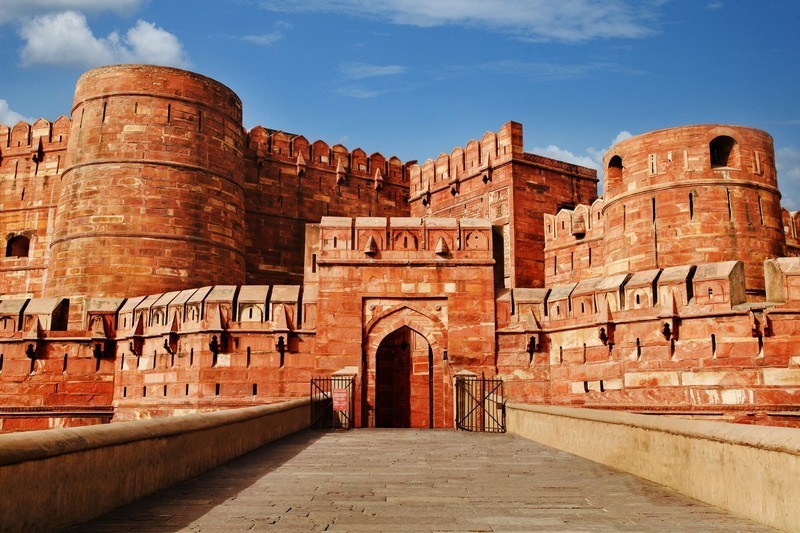
Mahmud Gawan (Khwaja Mahmud Gilani) was a Persian merchant, scholar, and diplomat who arrived at the Bahmani capital of Bidar in 1453 CE. Inducted into the nobility by Sultan Alauddin Ahmad Shah II, he rose to become the Vakil-us-Sultanat (Prime Minister/Regent) under Sultan Humayun Shah. He exercised de facto sovereign authority during the minority reign of Sultan Muhammad Shah III (r. 1463–1482 CE).
The Deccani-Afaqi Crisis
Gawan’s institutional reforms were designed to rescue the central Bahmani monarchy from an existential political rift. The administrative nobility was fractured into two hostile factions: the Dakhnis (indigenous Deccani Muslims, allied with African Habshis) and the Afaqis (foreign Muslim immigrants from Persia, Turkey, and Central Asia). As an Afaqi, Gawan sought to balance administrative power between both groups while implementing structural centralization to dismantle their independent regional strongholds.
Administrative and Territorial Restructuring
Expansion and Subdivision of the Taraf System
Prior to Gawan’s tenure, the Bahmani Kingdom was divided into four sprawling ancestral provinces (Tarafs) governed by powerful Tarafdars (provincial governors). Gawan realized that these massive territories allowed governors to accumulate independent military and financial capital. To neutralize this, he subdivided the four original provinces into eight downsized administrative units, effectively halving the geographic jurisdiction and resource base of individual nobles.
| Original Ancestral Taraf | Divided Post-Reform Tarafs | Assigned Governors and Factional Allocation |
| Gulbarga | 1. Ahsanabad (Gulbarga) 2. Bijapur | Malik Hasan Bahri (Dakhni) Yusuf Adil Khan (Afaqi) |
| Daulatabad | 3. Daulatabad 4. Junnar | Yusuf Adil Khan (Afaqi) Malik Ahmad (Dakhni) |
| Berar | 5. Gawil 6. Mahur | Fathullah Imad-ul-Mulk (Dakhni) Khudawand Khan (Habshi) |
| Bidar | 7. Bidar 8. Telangana (Rajahmundry) | Mahmud Gawan (Afaqi) Azam Khan (Dakhni) |
Centralization of Military Fortifications
Before these reforms, Tarafdars exercised absolute control over all military bastions, castles, and fortresses within their provincial borders, appointing personal loyalists as commanders. Gawan passed a royal decree stating that only one fort in each province could remain under the direct control of the local Tarafdar. All other strategic fortifications were placed under Qiladars (fortress commanders) appointed directly by the Sultan, making them directly accountable to the central court at Bidar.
Agrarian Revenue and Economic Reforms
Systematic Land Survey and Classification
Long before the implementation of the Zabt system by Raja Todar Mal under the Mughal Empire, Mahmud Gawan introduced systematic land measurement and assessment to the Deccan. He commissioned a comprehensive survey of all agricultural holdings, classified fields based on soil fertility and irrigation access, and fixed state land revenue demand based on actual production data. This drastically reduced the arbitrary and corrupt exactions of intermediary revenue collectors.
Expansion of Khalisa Lands and Cash Payouts
Gawan structurally weakened the nobility by converting vast tracts of land previously held as private Jagirs (revenue-producing land assignments given to nobles) back into the direct possession of the crown as Khalisa (royal domain) lands. This maximized the direct cash flow into the imperial treasury. He also altered the military accounting system, mandating that soldiers and officers be paid in cash (Naqd) from the central treasury rather than through local land revenue assignments.
Military Reforms and Technological Innovations
Standardization of Military Obligations
Gawan linked financial allowances directly to military readiness. He instituted strict inspections and regulations regarding the upkeep of horses, armor, and equipment. If a Tarafdar or Mansabdar failed to maintain the exact quota of cavalry or infantry assigned to his rank, he faced immediate financial penalties and was forced to return a proportionate amount of his salary to the state treasury.
Introduction of Advanced Gunpowder Warfare
As a merchant with extensive links to West Asia, Gawan modernized the Bahmani military apparatus by importing advanced firearms and establishing a dedicated artillery department (Karkhana). He systematically deployed heavy artillery and gunpowder mining during siege warfare. This strategy was illustrated during his Western campaign in 1472 CE, where gunpowder mines were used to breach the stone walls of the strategic fort of Goa, altering the paradigm of medieval siege operations in South India.
Socio-Cultural and Hydrological Infrastructure
The Madrasa of Mahmud Gawan (1472 CE)
To promote Islamic scholarship and administrative training, Gawan financed the construction of a three-story residential university (Madrasa) in the capital city of Bidar in 1472 CE. Built in the Central Asian Timurid architectural style, it featured massive arched porticos (iwans) and was covered in green, white, and turquoise glazed tiles bearing Quranic calligraphy. The institution housed an imperial library containing a collection of over 3,000 rare manuscripts from Persia, Arabia, and the Mediterranean.
Diffusion of Persian Karez Engineering
Under Gawan’s administrative supervision, advanced Persian engineering was applied to solve the acute water scarcity issues of the arid laterite plateau of Bidar. He directed the extension of the Karez (Qanat) system—a subterranean water-supply network composed of gently sloped underground tunnels and vertical inspection shafts that tapped into highland aquifers and transported clean groundwater using gravity directly to civic settlements, public fountains, and royal palaces.
The Conspiracy, Execution, and Imperial Collapse
The Forged Treason Letter
The centralization of revenue, land, and military power alienated the entrenched Dakhni aristocracy. In 1481 CE, a faction of Dakhni nobles led by Malik Hasan Bahri bribed Gawan’s royal seal-bearer to obtain an impression of his official signet. They forged a treasonous letter implicating the Prime Minister in a conspiracy to partition the Deccan with the rival Vijayanagara Empire. An intoxicated Sultan Muhammad Shah III believed the forgery and ordered the immediate execution of Gawan by decapitation at Kondapalli.
Disintegration into the Deccan Sultanates
The execution of Mahmud Gawan removed the administrative check that held the competitive nobility together. Upon discovering Gawan’s complete innocence, the Sultan died of grief within a year, and the central Bahmani administration collapsed. The provincial Tarafdars used their localized armies and fortified networks to assert complete sovereignty, fracturing the unified Bahmani state into five independent successor regimes known as the Deccan Sultanates.
- Bijapur (Adil Shahi Dynasty): Founded in 1489 CE by Yusuf Adil Khan, an Afaqi noble and close protege of Mahmud Gawan.
- Ahmadnagar (Nizam Shahi Dynasty): Founded in 1490 CE by Malik Ahmad, the son of Gawan’s chief political rival, Malik Hasan Bahri.
- Berar (Imad Shahi Dynasty): Founded in 1490 CE by Fathullah Imad-ul-Mulk, a prominent Dakhni military commander.
- Bidar (Barid Shahi Dynasty): Founded in 1528 CE by Qasim Barid, a Turkish noble who controlled the puppet late-Bahmani monarchs.
- Golconda (Qutb Shahi Dynasty): Founded in 1518 CE by Sultan Quli Qutb-ul-Mulk, an Afaqi commander who secured the eastern frontier.
Essential Facts for UPSC Prelims
Literary Works of Mahmud Gawan
Gawan was an accomplished prose writer and poet. He authored two celebrated compilations of medieval Persian literature: Riyaz-ul-Insha (a collection of his official administrative letters, state papers, and personal diplomatic correspondence) and Manazir-ul-Insha (a technical treatise on Persian composition, grammar, and literary style).
Trans-Continental Diplomacy
Gawan’s letters preserved in the Riyaz-ul-Insha reveal that he bypassed regional networks to maintain active diplomatic and commercial relations with the Ottoman Sultan Mehmed II (the conqueror of Constantinople). He attempted to forge a strategic economic axis linking the maritime ports of the Deccan directly with international Mediterranean markets.
Last Modified: June 22, 2026